

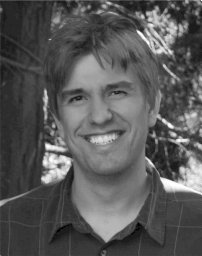
 Tor M. Aamodt
· 6 previous affiliations
- University of British ColumbiaSince 2006
- Full Professor · Since 2016
- Associate Professor · 2011–2016
- Assistant Professor · 2006–2011
- Stanford University2012–2013
- Visiting Associate Professor · 2012–2013
- Nvidia (United States)2004–2006
- Sr. Architect · 2004–2006
- University of Toronto1997–2006
- Ph.D., Electrical and Computer Engineering · 2001–2006
- M.A.Sc., Electrical and Computer Engineering · 1997–2001
- Intel (United States)2002–2003
- Intern · 2002–2003
- AlliedSignal Canada1995–1996
- Intern (UofT PEY Student) · 1995–1996
Research Overview
Tor M. Aamodt focuses on computer architecture, with an emphasis on graphics processing units, hardware acceleration for ray tracing, and energy-efficient machine learning. His trajectory spans foundational work in GPU simulation and scheduling to recent innovations in domain-specific accelerators for autonomous robotics and neural rendering. Currently, he investigates ultra-low precision quantization and training-free inference acceleration for real-time graphics and edge computing.
Research Trajectory
His early research established foundational techniques in GPU architecture, focusing heavily on control flow, scheduling, and simulation infrastructure. In 2007, he introduced Dynamic Warp Formation and Scheduling for Efficient GPU Control Flow, addressing the performance penalties of control flow divergence in parallel architectures. Recognizing the need for rigorous evaluation tools in the architecture community, he subsequently developed Analyzing CUDA workloads using a detailed GPU simulator (2009), which provided critical infrastructure for modeling modern graphics processors. He continued to refine GPU resource management with Cache-Conscious Wavefront Scheduling (2012), optimizing the interaction between thread scheduling and the memory subsystem. Broadening this architectural focus to include power modeling, he participated in the development of GPUWattch: enabling energy optimizations in GPGPUs (2013), which enabled researchers to accurately estimate and optimize energy consumption in general-purpose GPU workloads.
As deep learning workloads began to dominate hardware utilization, his focus expanded to algorithmic and architectural co-design for neural networks. In 2020, he and his collaborators presented Sparse Weight Activation Training, a method that reduces the computational footprint of neural networks during the training phase. This work contributed significantly to the research direction of Dynamic Sparse Training for Hardware Efficiency, as well as broader efforts in dataset distillation and efficient deep learning. He tackled the hardware implications of these sparse models directly in Anticipating and eliminating redundant computations in accelerated sparse training (2022), designing mechanisms to bypass ineffectual operations. Around the same time, he explored alternative data representations in Label Encoding for Regression Networks (2022). By generalizing binary classification techniques for regression tasks, this work advanced the broader area of ordinal preserving binary representations for efficient logic networks, bridging the gap between specialized hardware logic and generic regression accuracy.
A major, sustained theme in his recent trajectory is the architectural acceleration of ray tracing for real-time graphics. To support this research, he introduced Vulkan-Sim: A GPU Architecture Simulator for Ray Tracing (2022), providing a cycle-level evaluation platform for modern rendering workloads. He paired this infrastructure with LumiBench: A Benchmark Suite for Hardware Ray Tracing (2023) to systematically characterize performance bottlenecks in dedicated accelerator cores. Building on these insights, he developed specific hardware optimizations such as Treelet Prefetching For Ray Tracing (2023), which mitigates the high memory access costs associated with divergent rays traversing Bounding Volume Hierarchy (BVH) trees. To address the slow execution speed of cycle-accurate simulators during early-stage hardware design, he later proposed Zatel: Sample Complexity-Aware Scale-Model Simulation for Ray Tracing (2024), a prediction model that accelerates architectural evaluation while maintaining acceptable error margins.
Parallel to his work in graphics rendering, he has investigated domain-specific architectures for autonomous robotics, particularly focusing on the computational demands of safe navigation. In Energy-Efficient Realtime Motion Planning (2023), he analyzed the sources of redundant computation in collision detection, a bottleneck that consumes the vast majority of motion planning runtime. He extended this focus to hardware reliability in Characterizing and Improving Resilience of Accelerators to Memory Errors in Autonomous Robots (2024). This research introduced the Collision Exposure Factor (CEF), a novel metric designed to assess the vulnerability of spatial processing circuits to soft errors, ensuring that motion planning accelerators can be safely deployed in critical environments.
Most recently, his research bridges real-time rendering and ultra-low precision machine learning. In 2025, he developed ReFrame: Layer Caching for Accelerated Inference in Real-Time Rendering, which accelerates neural networks used in rendering pipelines (such as denoising and upscaling) by caching and reusing intermediate features across consecutive frames. This approach advances research directions in training-free inference acceleration and real-time neural rendering. Simultaneously, he addressed the fundamental training challenges of highly quantized models in Improving the Straight-Through Estimator with Zeroth-Order Information (2025). By introducing a hybrid gradient estimation method that corrects the biases of standard estimators, this work makes 1-bit and 2-bit networks more viable, contributing to the area of The Mechanics of Non-Uniform Quantization Sensitivity and advancing techniques for low-precision edge inference.
Current Directions
The most recent papers in the evidence address the intersection of real-time graphics, neural rendering, and extreme model quantization. A primary focus is accelerating inference for real-time applications without the need for model retraining. By exploiting temporal coherence in video and rendering pipelines, current work investigates how to cache and reuse high-level features to achieve significant speedups with negligible loss in perceptual quality.
Simultaneously, ongoing research tackles the fundamental optimization challenges of ultra-low precision (1-bit and 2-bit) neural networks. By developing hybrid gradient estimation techniques that combine straight-through estimators with zeroth-order information, this work aims to correct biased gradients and make highly quantized models viable for edge inference and specialized hardware deployment. Additionally, efforts continue in refining the simulation methodologies and architectural designs for complex spatial workloads, ensuring that hardware accelerators for ray tracing and robotic motion planning remain both highly performant and resilient to errors.
Profile updated
Loading new papers…
Other researchers whose papers cluster into the same research directions — a proxy for overlapping technical interests and shared intellectual neighborhoods.
See something wrong? Report a mistake