

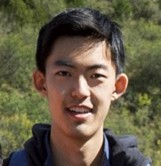
 Tonghe Zhang
· 2 previous affiliations
- Carnegie Mellon UniversitySince 2025
- MS student · 2025–2027
- Tsinghua University2021–2025
- Undergrad student · 2021–2025
Research Overview
Tonghe Zhang focuses on building scalable robot systems, reinforcement learning, and flow-based policies for robotic control. His research trajectory spans from provably efficient algorithms for partially observable environments to the development of behavioral foundation models for humanoid robots. Currently, he investigates online reinforcement learning techniques to fine-tune vision-language-action models for real-world deployment.
Research Trajectory
Early work addressed theoretical foundations in the area of The Function Approximation Gap in Reinforcement Learning Theory. He introduced Provably Efficient Partially Observable Risk-sensitive Reinforcement Learning with Hindsight Observation in 2024, developing the Beta Vector Value Iteration algorithm. This approach leverages hindsight observations—where hidden states are revealed after an episode concludes—to achieve polynomial regret for risk-sensitive agents. This theoretical contribution advanced the broader direction of Sample Efficient Learning with Hindsight Observability by matching or exceeding existing benchmarks for simpler scenarios.
Transitioning toward generative models for robotics, he developed ReinFlow: Fine-tuning Flow Matching Policy with Online Reinforcement Learning in 2025. This framework injects learnable noise into the deterministic paths of flow models, enabling exact likelihood computation and stable exploration. The method significantly improves reward growth and reduces training time compared to diffusion-based alternatives, contributing to the field of Single Step Generative Policies for High Frequency Control.
Expanding into complex physical systems, he collaborated on BFM-Zero: A Promptable Behavioral Foundation Model for Humanoid Control Using Unsupervised Reinforcement Learning. This project enables real-world humanoid robots to execute varied tasks—such as walking, dancing, and fall recovery—through a single policy. By learning a structured latent space via unsupervised reinforcement learning, the model can be prompted with new goals without task-specific retraining. This work intersects with research directions like Latent Space Adaptation for Fast Policy Transfer and Latent Conditioned Policies for Diverse Behavioral Repertoires.
Continuing to refine generative policies, he participated in the development of SAC Flow: Sample-Efficient Reinforcement Learning of Flow-Based Policies via Velocity-Reparameterized Sequential Modeling. This research treats the multi-step action sampling process of flow-based policies as a sequential modeling problem. By reparameterizing the policy's velocity network with GRU-style gates or Transformer-style decoders, the approach mitigates gradient explosions typical in off-policy reinforcement learning. This advances the broader area of Gradient Stability for Long-Horizon Differentiable Planning while achieving high sample efficiency on complex robotic tasks.
Current Directions
Recent work investigates the intersection of flow-based policies and large-scale robotic learning. The most recent papers in the evidence address the challenge of fine-tuning vision-language-action models using online reinforcement learning. By stabilizing the training of expressive generative policies and leveraging structured latent spaces, this ongoing research aims to build scalable, sample-efficient pipelines for real-world robotic control and multi-task humanoid loco-manipulation.
Profile updated
Loading new papers…
Other researchers whose papers cluster into the same research directions — a proxy for overlapping technical interests and shared intellectual neighborhoods.
See something wrong? Report a mistake