

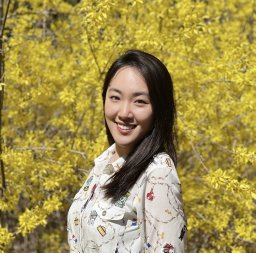
 Tong Jian
· 6 previous affiliations
- Analog Devices (United States)Since 2022
- Machine Learning Scientist · Since 2023
- Staff Research Scientist · Since 2022
- Meta (United States)2022–2023
- Research Scientist · 2022–2023
- Northeastern University2018–2022
- Research Assistant on Applied Machine Learning in Wireless Communication · 2018–2022
- Research Assistant on Lifelong Learning · 2020–2021
- Applied Scientist Intern · 2021
- Nokia Bell Labs2020
- Summer Research Intern · 2020
- Rensselaer Polytechnic Institute2016–2018
- Master's degree, Electrical and Electronics Engineering · 2016–2018
Research Overview
Tong Jian focuses on the intersection of deep learning and physical layer communications, with a primary emphasis on radio frequency (RF) fingerprinting, security in wireless networks, and the theoretical foundations of neural network generalization. Jian’s work investigates the use of hardware-level imperfections to identify wireless devices, the development of lifelong learning algorithms that mitigate catastrophic forgetting, and the application of information-theoretic principles to enhance the adversarial robustness of deep learning models.
Research Trajectory
Jian’s research trajectory began with a focus on the security and privacy of wireless communications through physical layer identification. In 2019, this work centered on the robustness of RF fingerprinting systems against adversarial tactics such as MAC ID spoofing. By leveraging deep learning to extract unique characteristics from raw signal data, Jian addressed the limitations of traditional hand-engineered features, particularly in the context of identifying devices across different protocols like WiFi and ADS-B. This period also involved exploring the detection of previously unseen devices in large populations, a critical challenge for open-set recognition in wireless security.
In 2020, Jian’s work scaled significantly, moving from small-scale protocol analysis to massive experimental studies involving thousands of radios. This phase emphasized the practical challenges of RF fingerprinting, including the impact of changing wireless channels and noise levels on model accuracy. Concurrently, Jian began addressing broader problems in machine learning, specifically the challenge of lifelong learning. This involved developing optimization frameworks to maintain model performance as new tasks arrive sequentially, utilizing techniques like ADMM-based pruning to balance knowledge retention with model parsimony.
By 2021 and 2022, Jian’s research shifted toward the theoretical underpinnings of deep learning, specifically Information Compression in Deep Neural Networks. This work utilized Scaling Mutual Information Estimation to High Dimensions to improve adversarial robustness. By regularizing intermediate layers to retain task-relevant information while discarding redundant data, Jian contributed to the understanding of how models can be made more resilient to external attacks. Most recently, this interest in efficiency and robustness has extended to sparse continual learning on edge devices, focusing on the synergy between weight, data, and gradient sparsity to enable cost-effective model updates in resource-constrained environments.
Machine Translation and Streaming Models
While the primary evidence in Jian’s research corpus focuses on RF security and machine learning theory, the work also encompasses significant themes in the optimization of translation systems. This includes the development of Unified Models for Robust Speech Translation, which aim to mitigate the error propagation inherent in traditional cascaded ASR-MT pipelines. Jian’s research in this domain addresses the trade-offs between latency and accuracy, exploring Flexible Latency Training for Unified Streaming Models to support real-time interaction.
Furthermore, Jian has investigated the physical and cognitive constraints of automated media processing, specifically Constrained Translation for Automatic Subtitling. This work treats subtitling as an engineering problem where text must be fitted into rigid spatial and temporal windows. To support these real-time applications, Jian’s research explores Balancing Latency and Quality in Simultaneous Translation, which allow systems to begin translating before a source utterance is complete, thereby reducing the "waiting time" in natural conversation.
Representative Work
In MAC ID Spoofing-Resistant Radio Fingerprinting, Jian serves as the lead author in an investigation of how deep learning classifiers can be trained to resist protocol-level spoofing. The research demonstrates that by classifying transmission slices rather than entire packets, a fixed-length input deep classifier can focus on inherent hardware imperfections—such as device-specific signal distortions—rather than the MAC ID. This approach enhances shift-invariance and ensures that the classifier remains effective even when an adversary attempts to mask their identity at the data link layer.
Jian’s leadership in large-scale empirical research is evidenced by Deep Learning for RF Fingerprinting: A Massive Experimental Study. This work analyzes a 400 GB dataset of in-phase (I) and quadrature (Q) signals from 10,000 individual radios. The study provides a comprehensive evaluation of deep convolutional neural network (CNN) architectures, demonstrating their ability to identify devices under varying practical conditions, including fluctuating signal-to-noise ratios and computational overhead constraints. This research established a benchmark for the scalability of RF fingerprinting systems in dense wireless environments.
In the domain of model optimization, Jian co-authored Learn-Prune-Share for Lifelong Learning, which introduces the LPS algorithm. This work addresses the problem of catastrophic forgetting by using an ADMM-based pruning strategy to split a neural network into task-specific partitions. The LPS framework allows for the sequential addition of new classification tasks without degrading performance on previous ones. A key contribution of this work is the selective knowledge sharing scheme, which enables the model to adaptively reuse features across tasks in an end-to-end optimization framework.
Jian’s contribution to the theoretical understanding of robustness is detailed in Revisiting Hilbert-Schmidt Information Bottleneck for Adversarial Robustness. This research investigates the Hilbert-Schmidt Independence Criterion (HSIC) bottleneck as a regularizer for deep neural networks. By adding regularization terms to every intermediate layer, the model is forced to compress latent representations while maintaining predictive power. The paper provides both theoretical proofs and experimental evidence that this information-theoretic approach reduces the sensitivity of classifiers to adversarial examples, outperforming standard cross-entropy loss in security-critical applications.
Jian also participated in research addressing the open-set problem in wireless security, as seen in Finding a 'New' Needle in the Haystack: Unseen Radio Detection in Large Populations Using Deep Learning. This work proposes a method for detecting signals from new, previously unobserved devices without the need to retrain the underlying neural network. By facilitating new class detection, the approach addresses a fundamental drawback of standard deep learning classifiers, which typically assign unknown inputs to the most similar known category.
Finally, Jian contributed to the development of SparCL: Sparse Continual Learning on the Edge. This research focuses on the training efficiency of continual learning systems, which is often overlooked in favor of accuracy. The SparCL framework leverages weight, data, and gradient sparsity to accelerate training on resource-limited edge devices. This work represents a shift toward making complex machine learning systems deployable in real-world, hardware-constrained scenarios by optimizing the synergy between different forms of sparsity.
Profile updated
Loading new papers…
Other researchers whose papers cluster into the same research directions — a proxy for overlapping technical interests and shared intellectual neighborhoods.
See something wrong? Report a mistake