

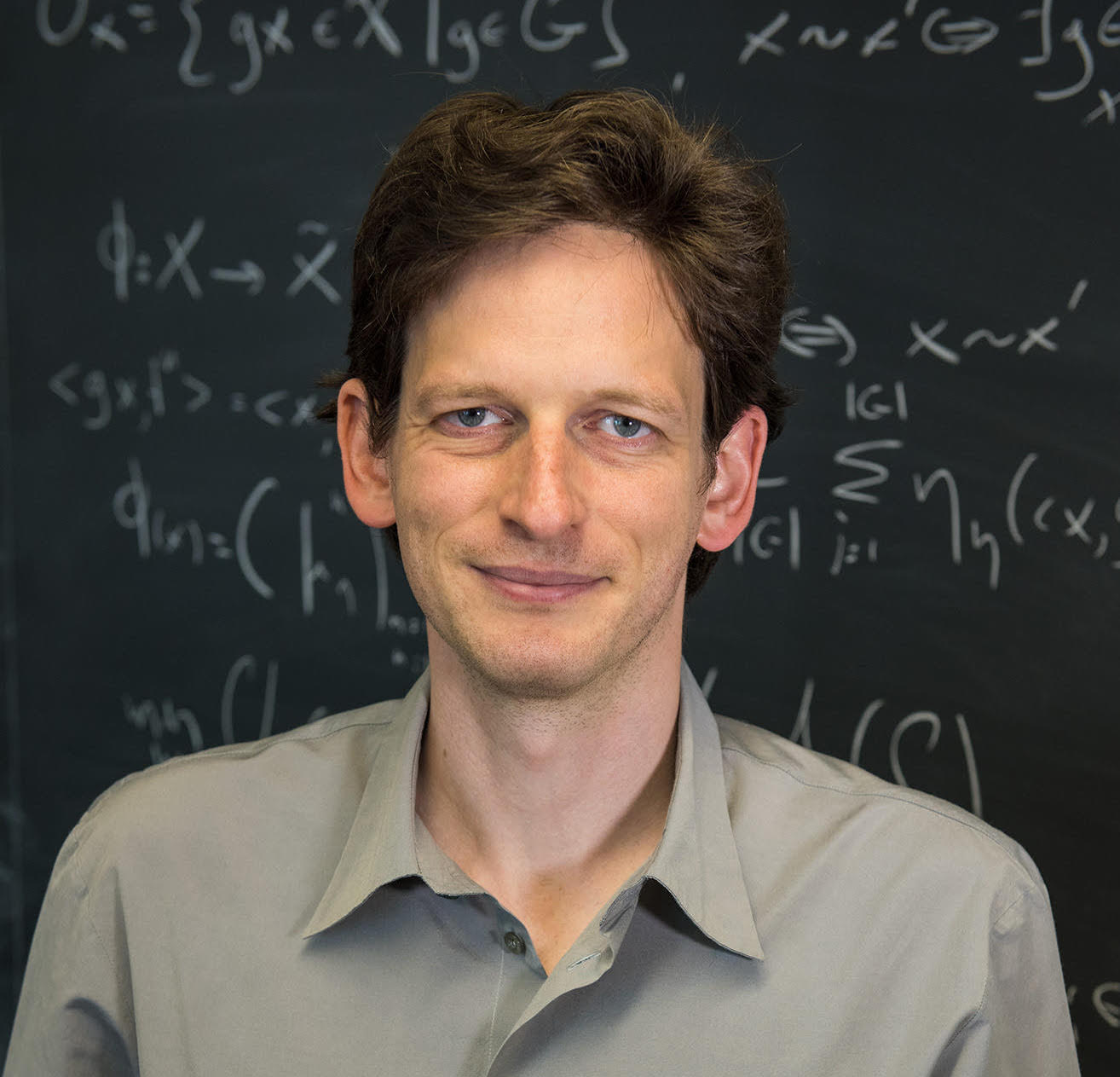
 Tomer Ullman
· 2 previous affiliations
- Harvard UniversitySince 2019
- Assistant Professor · Since 2019
- HarvardCurrent
- Current
Research Overview
Tomer Ullman focuses on cognitive science, intuitive physics, and common-sense reasoning in both humans and artificial intelligence. His trajectory spans developmental psychology and computational modeling, investigating how minds construct intuitive theories of the physical and social world. His current work examines the alignment, reasoning capabilities, and conceptual diversity of large language and vision models.
Research Trajectory
Ullman’s research frequently bridges human cognitive development and the evaluation of artificial intelligence, using computational models to formalize how agents understand their environments and each other. In 2023, his group explored how agents navigate conflicting goals through strategic communication. In Ambivalence by Design: A Computational Account of Loopholes, he and his collaborators introduced a computational model that extended the Rational Speech Act framework. They demonstrated that "loophole" behavior—intentional misunderstandings used to subvert requests—emerges as a rational trade-off between maximizing personal utility and minimizing the social cost of appearing uncooperative. This work contributed significantly to the broader research direction of Recursive Pragmatic Reasoning for Artificial Agents.
In 2024, Ullman applied cognitive science methodologies to understand the mechanics of large language models (LLMs). In In-Context Learning Dynamics with Random Binary Sequences, his team developed a "Cognitive Interpretability" framework to study how LLMs learn from simple binary sequences, such as coin flips. The study revealed that in-context learning in these models does not improve gradually; rather, it undergoes sharp phase transitions from random behavior to deterministic pattern-following. This finding advanced the area of Implicit Bayesian Inference in Large Language Models, suggesting that in-context learning functions similarly to a Bayesian model selection process.
By 2025, Ullman’s work expanded across both human psychology and AI evaluation. On the human cognition side, he investigated the underlying motivations of play in Fun isn't easy: Children selectively manipulate task difficulty when “playing for fun” versus “playing to win”.. The study showed that children deliberately choose easier settings when playing to win, but maintain consistent difficulty when playing purely for fun. He also explored the architecture of human imagination in Non-commitment in mental imagery is distinct from perceptual inattention, and supports hierarchical scene construction, addressing debates over whether the lack of detail in mental scenes reflects genuine non-commitment or mere recall failure. Returning to the social dynamics of loopholes, he examined their boundaries in Skirting the Sacred: Moral Contexts Increase the Cost of Intentional Misunderstandings. This research found that while loopholes mitigate social costs in neutral contexts, they are judged as harshly as outright non-compliance when used to dodge moral obligations.
Simultaneously in 2025, Ullman utilized cognitive paradigms to probe the limitations and capabilities of AI systems. He investigated the impact of alignment techniques on model representations in One fish, two fish, but not the whole sea: Alignment reduces language models' conceptual diversity, demonstrating that standard alignment processes actually make LLMs more conceptually homogeneous and less representative of human variation. To test the spatial and situational awareness of models, his lab published Evaluating Self-Orienting in Language and Reasoning Models, finding that state-of-the-art LLMs can efficiently self-orient in novel grid-world environments. Furthermore, to improve physical reasoning in AI, his team proposed a "Chain-of-Time" method in Let’s Simulate Frame-by-Frame: In-Context Physical Simulations with Vision-Language Models, which enhanced the ability of vision-language models to simulate the future states of physical objects.
Moving into 2026, Ullman’s research continues to merge cognitive models with AI interpretability and vision. He adapted psychological models of polite speech to map how LLMs balance competing values, such as truthfulness and kindness. This framework, detailed in Cognitive models can reveal interpretable value trade-offs in language models and its subsequent ICLR publication Cognitive models can reveal interpretable value trade-offs in language models, revealed that alignment training causes massive shifts in a model's underlying "personality" very early in the process. Finally, he has deeply investigated the area of Physical Commonsense and Intuitive Physics in AI. In Human-Like Coarse Object Representations in Vision Models and Towards aligned body representations in vision models, his team explored how smaller computer vision models naturally develop simplified, "coarse" representations of objects—similar to human intuitive physics—while larger models tend toward overly detailed pixel-perfect segmentation, suggesting that computational constraints may drive the emergence of efficient physical representations.
Current Directions
The most recent papers in the evidence address the intersection of cognitive science and artificial intelligence, specifically focusing on how human-like reasoning can be evaluated and instilled in machine learning models. Current work investigates the value trade-offs in large language models, using psychological frameworks to understand how these systems balance competing objectives like honesty and politeness during the alignment process. Additionally, recent research explores intuitive physics in vision models, examining how computational resource constraints might drive the emergence of coarse, human-aligned object representations rather than overly detailed pixel segmentation.
Profile updated
Loading new papers…
Other researchers whose papers cluster into the same research directions — a proxy for overlapping technical interests and shared intellectual neighborhoods.
See something wrong? Report a mistake