

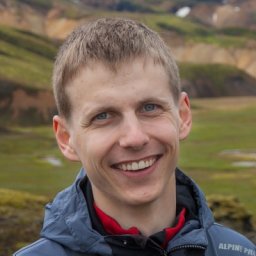
 Tomáš Souček
· 6 previous affiliations
- Meta (United States)Since 2025
- Researcher · Since 2025
- Postdoctoral Researcher · 2025
- SANEZOO2018–2024
- Head of GRASP, AI Research Lead · 2023–2024
- Computer Vision Researcher · 2018–2023
- Researcher · 2020–2024
- Czech Technical University in Prague2020–2024
- Doctor of Philosophy - PhD, Weakly supervised learning for visual recognition · 2020–2024
- Visiting Researcher · 2023
- Charles University2018–2021
- Researcher · 2019–2021
- Master's degree, Artificial Intelligence · 2018–2020
Research Overview
Tomáš Souček focuses on video understanding, generative modeling, and digital watermarking for artificial intelligence. His early work addressed efficient temporal modeling and action recognition in uncurated video data. More recently, he has concentrated on the security and provenance of generative AI, developing robust watermarking techniques for images, video, and text.
Research Trajectory
Souček’s early research addressed the computational challenges of video analysis, particularly in detecting shot boundaries and transitions. He introduced TransNet: A deep network for fast detection of common shot transitions, a modular convolutional architecture that utilized dilated 3D convolutions on low-resolution frames to achieve high-speed processing. This work advanced the research direction of Resolving Temporal Ambiguity in Gradual Video Transitions. He subsequently refined this architecture in TransNet V2: An effective deep network architecture for fast shot transition detection, improving the model's ability to handle diverse video contents and hard cuts while contributing to the broader area of Decomposing Spatiotemporal Convolutions for Efficient Video Learning. During this period, he also collaborated on SOMHunter: Lightweight Video Search System with SOM-Guided Relevance Feedback, participating in the design of interactive video retrieval systems.
Building on his expertise in video understanding, Souček shifted toward modeling object states and human actions in uncurated web videos. In Look for the Change: Learning Object States and State-Modifying Actions from Untrimmed Web Videos, he developed a self-supervised model that leverages causal ordering signals to jointly learn state-modifying actions and their corresponding object states. This temporal grounding naturally extended into generative modeling. He developed GenHowTo: Learning to Generate Actions and State Transformations from Instructional Videos, a framework that trains diffusion models on hundreds of thousands of instructional video triplets to perform complex semantic edits while preserving background consistency. This work aligns with the research area of Informed Priors for Efficient Diffusion Trajectories. He further expanded this generative approach in ShowHowTo: Generating Scene-Conditioned Step-by-Step Visual Instructions, creating a system that transforms a single image and text steps into personalized, consistent visual instructions.
As generative AI models became more capable, Souček’s research trajectory pivoted significantly toward digital provenance and watermarking. A major focus has been addressing the vulnerability of watermarks to geometric distortions. He introduced SyncSeal in Geometric Image Synchronization with Deep Watermarking, a pre-watermarking framework that embeds an imperceptible synchronization signal to reverse transformations like cropping and rotation. This contribution is central to the research direction of The Invisibility-Robustness Trade-off in Generative Watermarking. Continuing to optimize this trade-off, he developed Pixel Seal: Adversarial-only training for invisible image and video watermarking, which abandons traditional pixel-wise perceptual losses for an adversarial approach guided by Just-Noticeable Difference maps to achieve high robustness. Alongside defensive mechanisms, Souček has investigated adversarial vulnerabilities, exploring watermark forging in Transferable Black-Box One-Shot Forging of Watermarks via Image Preference Models.
Beyond continuous image domains, Souček has collaborated on extending watermarking techniques to discrete and latent spaces. He contributed to Watermarking Autoregressive Image Generation, which adapted Large Language Model techniques to watermark autoregressive image generation at the token level, addressing challenges in the area of Watermarking Low Entropy Generative Text. In Learning to Watermark in the Latent Space of Generative Models, he participated in designing DISTSEAL, a framework that distills watermarkers directly into the latent space of generative models for significant computational speedups. Finally, he explored text provenance in How Good is Post-Hoc Watermarking With Language Model Rephrasing?, investigating how smaller models and biased beam search can embed statistical signatures into existing text, a key problem in the research direction of Navigating the Large Language Model Watermarking Trilemma.
Current Directions
The most recent papers in the evidence indicate a strong focus on the security, efficiency, and robustness of generative AI watermarking. Recent work investigates how to embed resilient provenance signals across diverse modalities, including autoregressive image generation, latent space diffusion models, and post-hoc text rephrasing. A central theme in these current efforts is overcoming the traditional trade-offs between watermark imperceptibility, computational overhead, and robustness against both benign edits and adversarial forging attacks.
Profile updated
Loading new papers…
Other researchers whose papers cluster into the same research directions — a proxy for overlapping technical interests and shared intellectual neighborhoods.
See something wrong? Report a mistake