

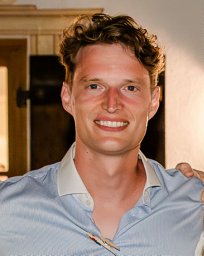
 Tom Wollschläger
6 previous affiliations
- Technical University of Munich2019–2026
- Researcher Ph.D. Student · 2021–2026
- Tutor - Machine Learning for Graphs and Sequential Data · 2019–2020
- Master of Science - MS, Mathematics in Data Science
- Google (United States)2025–2026
- Researcher · 2025–2026
- Researcher · 2024
- Valence Labs2024
- ML Research Scientist · 2024
- ENLYZE GmbH - We are hiring2019–2020
- Data Scientist / Part-time Intern · 2019–2020
- Exchange semester
Research Overview
Tom Wollschläger focuses on the intersection of adversarial robustness, uncertainty quantification, and the geometric interpretability of deep learning models. His work spans the development of formal certification methods for graph-structured data to the investigation of refusal mechanisms and aleatoric uncertainty in Large Language Models (LLMs). By bridging the gap between theoretical expressivity and practical reliability, his research addresses the vulnerabilities of modern architectures in high-stakes domains, particularly concerning how models represent and communicate their own limitations.
Research Trajectory
Wollschläger’s early research, beginning around 2022, was primarily concerned with the formal verification and robustness of neural networks. During this period, he contributed to the development of collective robustness certificates, which aim to provide provable guarantees for models that map a single input to multiple labels, such as image segmentation or node classification. This work addressed the limitations of existing methods that were restricted to strictly local models, proposing more general frameworks for "softly local" models where outputs may depend on the entire input but maintain varying levels of importance across the input space. Concurrently, he explored the application of quantum computing to robustness verification, investigating how hybrid quantum-classical algorithms could solve the complex combinatorial optimization problems inherent in certifying ReLU networks.
By 2023, his focus shifted toward the structural and theoretical limitations of Graph Neural Networks (GNNs). He investigated the "expressivity gap" in GNNs, demonstrating that even architectures with high theoretical expressivity often fail to generalize under adversarial pressure or when faced with out-of-distribution graph data. This line of inquiry led to a deeper examination of how GNNs handle specific structural features, such as molecular fragments, and how inductive biases can be better aligned with the requirements of domains like drug discovery.
In 2024, Wollschläger expanded his work on robustness to include uncertainty quantification (UQ) and active learning. He addressed the problem of model overconfidence in GNNs by developing energy-based models that estimate uncertainty across multiple structural scales. This period also marked his transition into the study of Large Language Models, specifically focusing on the efficiency and efficacy of adversarial attacks. He demonstrated that traditional optimization techniques like Projected Gradient Descent (PGD), when carefully adapted for continuous relaxations of discrete prompts, could significantly outperform existing discrete optimization methods in terms of computational speed.
His most recent work (2025–2026) explores the internal representations of safety and ambiguity in LLMs. This research moves beyond simple attack success rates to analyze the geometric structure of how models refuse harmful prompts and how they distinguish between their own lack of knowledge and inherent linguistic ambiguity. As a senior researcher in this phase, he has overseen the development of new benchmarks and datasets designed to test UQ methods under conditions of factual co-occurrence and semantic uncertainty.
Current Directions
Wollschläger’s current research is organized around several key themes that address the reliability and safety of generative AI. A primary focus is Disentangling Data Ambiguity from Model Ignorance. This work challenges the assumption that uncertainty estimators perform consistently across all types of queries, revealing that current methods often fail when faced with inherently ambiguous prompts. By developing datasets with ground-truth answer distributions, he aims to create more nuanced UQ systems that can signal when a question is poorly posed versus when the model lacks the necessary information.
In the domain of model safety, he is investigating the "geometry of refusal," moving away from the view of safety alignment as a single linear direction. This involves identifying multi-dimensional concept cones and independent refusal pathways within the model's latent space. Relatedly, he is developing more sophisticated adversarial objectives, such as those based on REINFORCE, which optimize for the semantic harmfulness of an entire response rather than just the initial tokens. This work is critical for bypassing state-of-the-art defenses and understanding the Understanding Gradient Masking in Adversarial Defenses, where models appear robust only because they have distorted the loss surface used by gradient-based attackers.
Wollschläger is also active in the development of Open Source Evaluator Models for Reliable Benchmarking. As traditional overlap metrics like ROUGE become obsolete, his work explores the "LLM-as-a-judge" paradigm, specifically focusing on Continuous Scoring via LLM Probability Distributions. By leveraging the model's internal probability distributions rather than discrete token outputs, this approach seeks to capture finer-grained preferences and reduce the information bottleneck inherent in categorical scoring. Finally, he continues to work on Single Pass Uncertainty Estimation and Amortized Feed Forward Adversarial Generation, aiming to make safety testing and uncertainty estimation computationally feasible for real-time applications.
Representative Work
Localized Randomized Smoothing for Collective Robustness Certification In this work, Wollschläger and his collaborators address the challenge of certifying models that produce multiple predictions from a single input. They propose a collective robustness certificate that generalizes beyond strictly local models, allowing for provable bounds on the number of robust predictions in tasks like image segmentation. This method utilizes localized randomized smoothing to account for varying receptive fields, providing a more flexible framework for formal safety guarantees.
Expressivity and Generalization: Fragment-Biases for Molecular GNNs As the lead author, Wollschläger investigates why standard GNNs often fail to recognize critical chemical substructures. The paper identifies a fundamental bias in how these models process molecular fragments and proposes a more computationally efficient alternative to higher-order GNNs. The work highlights the tension between theoretical expressivity and the ability of a model to generalize to novel molecular structures in drug discovery contexts.
Energy-based Epistemic Uncertainty for Graph Neural Networks This research introduces GEBM (Graph Energy-Based Model), a post hoc method for estimating epistemic uncertainty in GNNs. By regularizing the energy function with a Gaussian prior, the approach allows models to detect out-of-distribution data across multiple structural scales. The method effectively mitigates model overconfidence, providing a tool for more reliable deployment of GNNs in sensitive applications.
The Geometry of Refusal in Large Language Models: Concept Cones and Representational Independence In this first-author paper, Wollschläger explores the internal mechanisms that govern how LLMs refuse to answer harmful prompts. Using gradient-based optimization, the study identifies that refusal is not a simple linear operation but is instead organized into multi-dimensional "concept cones." This discovery suggests that safety alignment is more structurally complex than previously thought, involving multiple independent pathways that can be targeted or bypassed.
REINFORCE Adversarial Attacks on Large Language Models: An Adaptive, Distributional, and Semantic Objective This work proposes a new adversarial objective for LLMs that focuses on the semantic harmfulness of the entire generated response. By using a REINFORCE-based optimization strategy, the authors demonstrate that they can bypass "circuit breaker" defenses that typically rely on detecting specific affirmative prefixes. The approach significantly increases the success rate of attacks on highly aligned models like Llama 3.
The Illusion of Certainty: Uncertainty quantification for LLMs fails under ambiguity Serving as the senior author, Wollschläger presents a critical evaluation of uncertainty quantification in LLMs. The paper introduces new datasets, MAQA and AmbigQA, which incorporate ground-truth answer distributions to account for linguistic ambiguity. The findings reveal a significant performance degradation in existing UQ methods when faced with ambiguous data, highlighting a critical gap in the development of trustworthy AI systems.
Profile updated
Loading new papers…
Other researchers whose papers cluster into the same research directions — a proxy for overlapping technical interests and shared intellectual neighborhoods.
See something wrong? Report a mistake