

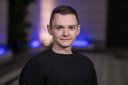
 Tobias Riedlinger
· 3 previous affiliations
- Technische Universität BerlinSince 2023
- Postdoctoral Researcher · Since 2023
- Current
- University of Wuppertal2019–2023
- PhD student · 2019–2023
- University of Tübingen2013–2019
- Graduate Teaching Assistant · 2019
- Undergraduate Teaching Assistant · 2018–2019
- Undergrad student · 2013–2019
Research Overview
Tobias Riedlinger focuses on uncertainty quantification in deep learning, the theoretical foundations of generative learning, and the reliability of object detection models. His work spans from developing gradient-based metrics for evaluating prediction quality to designing active learning frameworks that account for annotation noise. Recently, he investigates mathematically principled approaches, such as conditional marked point processes, to ensure safe and calibrated spatial predictions in autonomous environments.
Research Trajectory
Riedlinger's early research centers on improving the reliability of deep neural networks in safety-critical applications, particularly through advanced uncertainty quantification. In Uncertainty Quantification for Object Detection: Output- and Gradient-Based Approaches, he introduced a framework that fuses standard output-based metrics with gradient-based signals to better distinguish between true detections and false alarms. This work contributed to the broader area of Calibrating Uncertainty in Deep Neural Networks and touched upon methods relevant to Hybrid Uncertainty Estimation for Large Language Models. He expanded on this methodology in Gradient-Based Quantification of Epistemic Uncertainty for Deep Object Detectors, developing a technique that utilizes "self-learning gradients"—gradients produced when a model treats its own predictions as ground truth—as features for meta-classification. This approach provided a computationally efficient alternative to sampling methods for identifying false positives, aligning with research in the direction of Out of Distribution Detection via Parameter Gradients.
Recognizing that model reliability is deeply tied to the quality of training data, Riedlinger's focus broadened to address the challenges of dataset annotation and curation. He developed frameworks in the research direction of Active Learning with Variable Annotation Costs, notably presenting Deep Active Learning with Noisy Oracle in Object Detection. This work proposed a composite active learning strategy that explicitly models human labeler mistakes, allocating annotation budgets to model-guided review modules to improve overall performance. This also advanced the area of Adaptive Scheduling and Budgeting for Active Learning. To further support research in this domain, he proposed a standardized sandbox environment for rapid development and transparent evaluation in Towards Rapid Prototyping and Comparability in Active Learning for Deep Object Detection. Concurrently, he addressed the pervasive issue of messy data in Identifying Label Errors in Object Detection Datasets by Loss Inspection, detailing an automated method to flag missing bounding boxes and incorrect classifications by analyzing training loss.
In 2025, Riedlinger extended his uncertainty and data quality methodologies to new modalities and more complex pipelines. He introduced LidarMetaDetect (LMD) in LMD: Light-Weight Prediction Quality Estimation for Object Detection in Lidar Point Clouds, a post-processing method that estimates the quality of 3D object detection predictions from Lidar data without increasing inference time or requiring architectural changes. Alongside collaborators, he also advanced automated dataset refinement with Learning to Detect Label Errors by Making Them: A Method for Segmentation and Object Detection Datasets. By intentionally injecting simulated errors into ground truth data, this learning-based framework trains models to successfully identify real-world human annotation mistakes across both object detection and segmentation tasks.
Parallel to his applied work in computer vision, Riedlinger has led theoretical investigations into generative machine learning models. He oversaw the development of mathematical proofs for the consistency of sparse grid quadrature in high-dimensional numerical integration in Consistency of Learned Sparse Grid Quadrature Rules using NeuralODEs. This research established a decomposition of numerical and statistical errors within the framework of empirical risk minimization. He further explored these theoretical underpinnings in Numerical and statistical analysis of NeuralODE with Runge-Kutta time integration, providing a detailed account of the consistency of Maximum Likelihood-based empirical risk minimization for NeuralODEs when mapping simple source measures to target distributions.
Most recently, Riedlinger has returned to the core problem of spatial uncertainty in autonomous navigation. In Towards Reliable Detection of Empty Space: Conditional Marked Point Processes for Object Detection, he introduced a mathematically principled framework that moves beyond merely assigning confidence to detected objects. By leveraging conditional marked point processes, the approach yields calibrated probability estimates for "empty space," a critical requirement for verifying traversable regions in autonomous driving. He continues to refine foundational uncertainty metrics, as seen in his analysis of Advanced Analysis of Pixel-Wise Gradient Uncertainty for Convolutional Neural Networks.
Current Directions
Riedlinger’s most recent work investigates the mathematical foundations of spatial reliability and generative modeling. A primary focus is the development of robust probabilistic frameworks, such as conditional marked point processes, to provide calibrated guarantees about empty and traversable space in autonomous environments. This represents a shift from bounding-box uncertainty to holistic spatial verification. Concurrently, he continues to explore the statistical learning theory behind generative models, specifically analyzing the numerical and statistical consistency of Neural Ordinary Differential Equations (NeuralODEs) for high-dimensional integration and density estimation.
Profile updated
Loading new papers…
Other researchers whose papers cluster into the same research directions — a proxy for overlapping technical interests and shared intellectual neighborhoods.
See something wrong? Report a mistake