

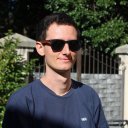
 Tobias Ladner
· 1 previous affiliation
- Technical University of MunichSince 2016
- PhD student · Since 2022
- Current
- MS student · 2019–2022
- Undergrad student · 2016–2019
Research Overview
Tobias Ladner focuses on the formal verification of neural networks, trustworthy AI, and safety-critical cyber-physical systems. His research trajectory centers on developing scalable mathematical techniques, such as set-based computing and abstraction refinement, to guarantee the safety and robustness of complex models. Recently, his work has expanded to address provable fairness in large language models and the generation of formal explanations for machine learning predictions.
Research Trajectory
The early focus of Ladner’s work addresses the computational bottlenecks inherent in verifying large neural networks. In 2023, he introduced Specification-Driven Neural Network Reduction for Scalable Formal Verification, proposing an on-the-fly, conservative reduction approach that merges neurons with similar outputs to verify networks against specific constraints. Alongside this, he contributed to Automatic Abstraction Refinement in Neural Network Verification using Sensitivity Analysis, establishing a foundation in abstraction techniques to manage verification complexity.
To handle the intricate set representations required for these mathematical guarantees, he developed Exponent Relaxation of Polynomial Zonotopes and Its Applications in Formal Neural Network Verification. This work restructures polynomial zonotopes to tightly enclose network outputs while significantly reducing the computational overhead of subsequent operations. Expanding beyond standard feedforward architectures, he also addressed graph-structured data by introducing Formal Verification of Graph Convolutional Networks with Uncertain Node Features and Uncertain Graph Structure, providing robustness guarantees for models operating in perturbed environments.
In 2024, his research integrated verification objectives directly into the model training phase, advancing the area of Formal Verification of Adversarial Robustness. He designed End-To-End Set-Based Training for Neural Network Verification, a procedure that treats inputs as zonotopes and introduces gradient sets to train models that are inherently easier to verify in polynomial time. In a related collaborative effort, he applied reachability analysis to continuous control tasks in Training Verifiably Robust Agents Using Set-Based Reinforcement Learning. This work maximizes worst-case rewards over sets of perturbed inputs, contributing to the research direction of Adversarial Perturbations on Reinforcement Learning Observations and the broader goal of Scaling Neural Network Verification via Optimization Relaxations.
Continuing to scale verification methodologies in 2025, he developed Fully Automatic Neural Network Reduction for Formal Verification. This approach utilizes reachability analysis for sound, on-the-fly network reduction across various activation functions, advancing the area of Neuron Merging for Functional Model Abstraction. He also applied abstraction to proof generation, collaborating on Abstraction-Based Proof Production in Formal Verification of Neural Networks to bridge high-performance verification with absolute mathematical trust through a modular framework.
Simultaneously, his work expanded into interpretability and natural language processing. He contributed to Explaining, Fast and Slow: Abstraction and Refinement of Provable Explanations, which accelerates the generation of provably sufficient explanations by finding them on simplified networks first, supporting the field of Formal Logic and Abductive Reasoning for Provable Explanations. Addressing transformer architectures, he introduced Language Models That Walk the Talk: A Framework for Formal Fairness Certificates, leveraging zonotope-based verification to mathematically guarantee consistent predictions across gendered terms or toxic synonyms.
Most recently, he collaborated on Out of the Shadows: Exploring a Latent Space for Neural Network Verification. This 2026 work prunes the verification search space by mapping output constraints back to the input space, using zonotopes as shadows of higher-dimensional hypercubes to efficiently isolate regions that could lead to unsafe outputs.
Current Directions
Recent work investigates methods to scale formal verification and extend its guarantees to complex model architectures and properties. A primary focus is mitigating the state space explosion inherent in neural network verification. This involves developing fully automatic network reduction techniques, abstraction-based proof production, and novel latent space explorations that efficiently prune the branch-and-bound search space.
Additionally, the most recent papers in the evidence address the application of formal methods to broader concepts of trustworthy AI. This includes generating mathematical fairness certificates for transformer-based language models via contrastive pre-training and accelerating the computation of provably sufficient explanations for machine learning predictions using abstraction-refinement frameworks.
Profile updated
Loading new papers…
Other researchers whose papers cluster into the same research directions — a proxy for overlapping technical interests and shared intellectual neighborhoods.
See something wrong? Report a mistake