

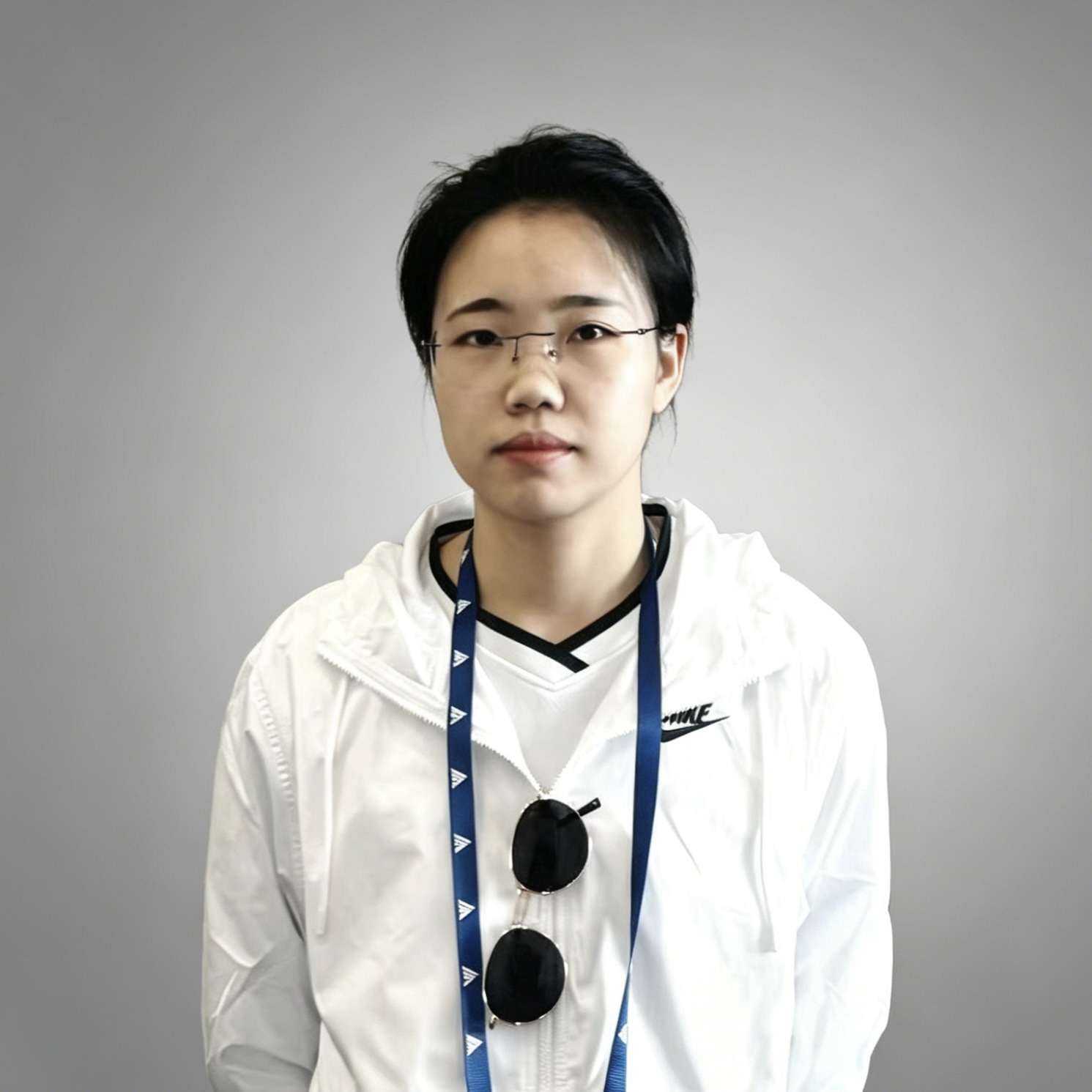
 Tingyi Cai
· 1 previous affiliation
- Zhejiang Normal UniversitySince 2019
- PhD student · 2023–2029
- Current
- Undergrad student · 2019–2023
Research Overview
Tingyi Cai focuses on machine learning for graphs and hypergraphs, with a particular emphasis on out-of-distribution detection and structural robustness. His work addresses the vulnerabilities of complex network models to adversarial attacks and data shifts. Recently, he has concentrated on developing robust detection frameworks and evaluating the security of hypergraph neural networks.
Research Trajectory
In 2025, Tingyi Cai's research output centered on the reliability and security of graph machine learning, spanning both out-of-distribution (OOD) detection and adversarial robustness. A major focus of this period has been formalizing and expanding the scope of OOD detection for graph-structured data. He provided a comprehensive overview of this emerging field in Out-of-Distribution Detection on Graphs: A Survey. This work systematically categorizes existing methodologies into four primary approaches, outlining the critical challenges and future pathways necessary for making graph models robust to real-world data shifts.
Building on these foundational concepts, he introduced specific frameworks to handle complex graph distributions. He developed ML-GOOD: Towards Multi-Label Graph Out-Of-Distribution Detection, extending OOD detection capabilities to multi-label graph environments where nodes or graphs possess multiple concurrent attributes. Additionally, he participated in research addressing the broader area of Overcoming the Homophily Assumption in Graph Neural Networks. This collaboration resulted in All Roads Lead to Rome: Exploring Edge Distribution Shifts for Heterophilic Graph Learning, which reframes edge attribute inference as an OOD detection problem. By treating heterophilic edges as out-of-distribution samples, the proposed H₂OGNN framework utilizes signed energy regularization to robustly distinguish between homophilic and heterophilic connections, improving performance on challenging heterophilic graphs.
Parallel to his work on distribution shifts, he has investigated the security vulnerabilities of higher-order network models, contributing to the research direction of Structural Robustness in Graph Neural Networks. As hypergraph neural networks are increasingly deployed to model complex, multi-way relationships, their susceptibility to adversarial manipulation has become a pressing concern. Addressing this gap, he designed HyperNear: Unnoticeable Node Injection Attacks on Hypergraph Neural Networks. This framework represents a black-box node injection attack specifically tailored for hypergraphs, advancing the area of Preserving Graph Invariants for Stealthy Node Injection. By constraining the attack to preserve the network's inherent homophily—the tendency of similar nodes to connect—the method successfully degrades model performance while remaining virtually undetectable to standard defense mechanisms.
Current Directions
The most recent papers in the evidence, all published in 2025, indicate a continued focus on the intersection of graph machine learning, out-of-distribution detection, and adversarial robustness. Current work investigates how complex relational data—such as multi-label graphs and hypergraphs—can be made more resilient to both natural distribution shifts and intentional structural perturbations. This includes refining OOD detection mechanisms for specialized graph environments and exploring the theoretical and practical security limits of higher-order graph neural networks against stealthy injection attacks.
Profile updated
Loading new papers…
Other researchers whose papers cluster into the same research directions — a proxy for overlapping technical interests and shared intellectual neighborhoods.
See something wrong? Report a mistake