

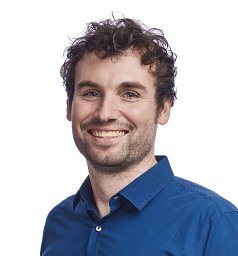
 Tim Verdonck
· 6 previous affiliations
- KU LeuvenSince 2010
- Professor · Since 2010
- Associate Professor · 2016–2019
- Assistant Professor · 2010–2016
- Master, Financial and Actuarial Engineering · 2007–2008
- UAntwerpenSince 2019
- Professor · Since 2019
- University of AntwerpSince 2019
- Full Professor · Since 2019
- Postdoc · 2009–2010
- PhD student · 2005–2009
- Co-director · Since 2020
- IMECSince 2022
- Principal Investigator · Since 2022
- Ludwig Boltzmann Gesellschaft2018–2021
- Managing Partner · 2018–2021
Research Overview
Tim Verdonck focuses on robust statistics, causal inference, and the application of machine learning to complex, noisy datasets. His early work developed foundational methods for handling multivariate outliers and cellwise contamination in statistical models. More recently, his research addresses causal discovery, automated treatment effect estimation, and the evaluation of predictive models in domains ranging from finance to environmental science.
Research Trajectory
Verdonck’s early research established foundational techniques in robust statistics, focusing on methods that maintain their integrity in the presence of outliers. In A Robustification of the Chain-Ladder Method, he addressed the sensitivity of classical claims reserve forecasting in non-life insurance to outlying data. Expanding on robust estimators for multivariate data, his work on A Deterministic Algorithm for Robust Location and Scatter introduced DetMCD, a permutation-invariant algorithm that computes initial estimators deterministically, avoiding the randomness of prior approaches while improving computational speed. He further extended robust techniques to high-dimensional data reduction in Robust Sparse Principal Component Analysis.
A major theme in his subsequent work is the broader area of Statistical Learning Under Cellwise Contamination. Traditional robust methods often discard entire rows of data when only a single feature is corrupted. In Cellwise robust M regression, Verdonck and collaborators introduced an estimator that identifies cellwise outliers and imputes their values, preserving more information than casewise counterparts while maintaining robustness against vertical outliers and leverage points. He also advanced the modeling of complex variance structures in Robust Inference and Modeling of Mean and Dispersion for Generalized Linear Models, utilizing double exponential distributions to handle over- and underdispersion when data deviates from standard exponential family assumptions.
In recent years, Verdonck's trajectory has increasingly integrated causal inference with machine learning. He contributed to the area of Aligning Predictive Models with Causal Objectives through applied work such as Optimizing the preventive maintenance frequency with causal machine learning. His research also explores the capacity of generative models to capture causal mechanisms; in On the causality-preservation capabilities of generative modelling, he investigated the extent to which Generative Adversarial Networks (GANs) can maintain complex, time-dependent causal structures from real-world data.
Concurrently, he has addressed the evaluation and explainability of predictive models in high-stakes domains. In the context of financial fraud, Network Analytics for Anti-money Laundering—A Systematic Literature Review and Experimental Evaluation provided a standardized benchmarking framework, contributing to the research direction of Precision Recall Evaluation for Extreme Class Imbalance. He also proposed new metrics for local interpretability in anomaly detection in Enhancing explainability in real-world scenarios: Towards a robust stability measure for local interpretability. His applied machine learning work extends to environmental science, where he contributed to the area of Modeling Non-linear Environmental Dynamics with Hybrid Machine Learning by identifying biotic and abiotic drivers of carbon dioxide removal in Machine learning-based identification of key biotic and abiotic drivers of mineral weathering rate in a complex enhanced weathering experiment. Additionally, he analyzed the intersection of AI and regulatory frameworks in How regulation and generative AI shape the evolution of risk factor disclosures: Evidence from two decades of changes in content and format.
Verdonck’s most recent methodological work focuses on automating causal inference and extending robust statistics to new domains. He participated in developing AutoCATE, an end-to-end AutoML framework detailed in AutoCATE: End-to-End, Automated Treatment Effect Estimation, which formalizes model selection and hyperparameter tuning for causal pipelines, advancing the field of Model Selection for Individual Treatment Effect Estimation. In signal processing, he helped develop a robust independent component analysis method in Independent Component Analysis by Robust Distance Correlation, utilizing a novel bowl transform to recover independent sources in noisy environments.
His work on causal structure learning includes Identifiable Nonlinear Differentiable Causal Discovery via Independence and Adaptive Group Sparsity, which introduces NOTIME-CAM, a differentiable method that identifies causal relationships in nonlinear data with non-Gaussian noise. This contributes directly to the research direction of Causal Discovery in the Presence of Latent Confounders. Finally, he continues to expand his foundational work on data contamination with Cell-TRICC: a Model-Based Approach to Cellwise-Trimmed Co-Clustering and explores cost-sensitive classification in Diverse ensemble cost-sensitive logistic regression.
Current Directions
The most recent papers in the evidence indicate a strong focus on the intersection of causal inference, automated machine learning, and robust statistical methods. Current work investigates differentiable approaches to causal discovery, particularly in complex, nonlinear environments with non-Gaussian noise. Additionally, Verdonck is addressing the automation of causal effect estimation through end-to-end frameworks that optimize model selection for conditional average treatment effects. Alongside these causal objectives, he continues to advance robust statistics, developing new techniques for independent component analysis and cellwise-trimmed co-clustering that maintain performance in the presence of severe data contamination. His recent research also emphasizes the explainability and stability of predictive models in high-stakes, real-world applications such as anomaly detection and financial analytics.
Profile updated
Loading new papers…
Other researchers whose papers cluster into the same research directions — a proxy for overlapping technical interests and shared intellectual neighborhoods.
See something wrong? Report a mistake