

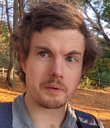
 Tim Kaler
1 previous affiliation
- Researcher · 2023–2025
- Postdoc · 2020–2023
Research Overview
Tim Kaler focuses on parallel computing, distributed systems, and the scalable execution of graph neural networks. His early work addressed deterministic scheduling and memory analysis for parallel programs before shifting toward optimizing graph learning systems for massive relational datasets. Most recently, his research investigates multi-agent frameworks for large language models and subgraph representation learning for financial security.
Research Trajectory
His early research began in the domain of mobile computing and crowdsourcing. He introduced methods for collaborative mobile sensing in Code in the air: simplifying sensing on smartphones (2010), exploring how the diverse sensors on modern smartphones could be utilized cooperatively for distributed data collection.
By 2016, his focus had shifted to the foundations of parallel computing and distributed systems. He developed Prism, a chromatic-scheduling algorithm detailed in Executing Dynamic Data-Graph Computations Deterministically Using Chromatic Scheduling. This work enabled deterministic updates for active vertices in data-graph computations, a critical challenge in systems like GraphLab and Pregel. In the broader context of distributed systems, he investigated strategies for mitigating non-deterministic delays, presenting optimal approaches for managing redundant requests in Optimal Reissue Policies for Reducing Tail Latency (2017).
In 2018, his work expanded to include applied graph learning, participating in early research on using scalable graph convolutional networks to detect illicit financial flows in Scalable Graph Learning for Anti-Money Laundering: A First Look.
Returning to parallel programming foundations in 2020, he introduced Cilkmem in Cilkmem: Algorithms for Analyzing the Memory High-Water Mark of Fork-Join Parallel Programs, providing algorithms to bound the worst-case memory usage of deterministic Cilk programs across all possible processor executions. Around the same time, he contributed to the research area of Evolving Graph Neural Network Weights for Dynamic Systems through his collaboration on EvolveGCN: Evolving Graph Convolutional Networks for Dynamic Graphs. This work addressed dynamically evolving graphs by using recurrent architectures to regulate node embeddings over time, touching on the broader area of Adaptive Fusion of Graph Structure and Node Features. He also applied high-performance computing techniques to computational neuroscience, developing the Quilter and Stacker algorithms in High-Throughput Image Alignment for Connectomics using Frugal Snap Judgments to process petabyte-scale electron microscopy datasets efficiently.
In 2021, he continued advancing parallel algorithms with PARAD: A Work-Efficient Parallel Algorithm for Reverse-Mode Automatic Differentiation. By 2022 and 2023, his work heavily emphasized the systems-level optimization of graph neural networks. He led the development of techniques to speed up GNN operations in Accelerating Training and Inference of Graph Neural Networks with Fast Sampling and Pipelining. He further explored communication-efficient architectures in Communication-Efficient Graph Neural Networks with Probabilistic Neighborhood Expansion Analysis and Caching.
In 2024, he returned to the domain of financial security, contributing to the research direction of Topological Signatures of Malicious Financial Activity. This was highlighted by his participation in The Shape of Money Laundering: Subgraph Representation Learning on the Blockchain with the Elliptic2 Dataset, which introduced a massive dataset of labeled subgraphs to detect complex criminal patterns like peeling chains. This work also advanced the broader areas of Scaling Graph Neural Networks for Massive Relational Data and Scaling Graph Neural Networks via Partitioning and Sampling. Additionally, he explored software performance engineering education in Speedcode: Software Performance Engineering Education via the Coding of Didactic Exercises.
Most recently, in 2025, his research has expanded into large language models. He collaborated on Lessons Learned: A Multi-Agent Framework for Code LLMs to Learn and Improve, which investigates multi-agent systems for code generation and aligns with the emerging research direction of Learning from Failed Trajectories for Robust Agent Adaptation.
Current Directions
The most recent work in the evidence points toward two primary research directions: the application of multi-agent frameworks to large language models, and the continued scaling of graph neural networks for complex relational data. In the domain of language models, recent efforts investigate how multi-agent systems can be used to improve code generation, specifically focusing on how models can learn from failed trajectories to adapt and improve robustly. Concurrently, ongoing work in graph representation learning focuses on identifying topological signatures of malicious activity within massive financial networks, leveraging subgraph analysis and advanced partitioning techniques to scale these models to blockchain-sized datasets.
Profile updated
Loading new papers…
Other researchers whose papers cluster into the same research directions — a proxy for overlapping technical interests and shared intellectual neighborhoods.
See something wrong? Report a mistake