

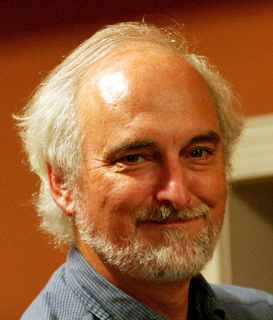
 Tim Finin
· 9 previous affiliations
- University of Maryland, Baltimore CountySince 1991
- Professor Emeritus · Since 2026
- Research Professor · 2025–2026
- Willard and Lillian Hackerman Chair in Engineering · 2017–2025
- Full Professor · 1991–2025
- Current
- Association for Computing Machinery2013–2022
- Co-chair, Viewpoints, Communications of the ACM · 2013–2022
- Johns Hopkins University2007–2022
- Principal Staff Scientist · 2007–2022
- Elsevier Journal of Web Semantics2005–2016
- Editor In Chief · 2005–2016
- Unisys (United States)1987–1991
- Principal Researcher · 1987–1991
- University of Pennsylvania1980–1987
- Assistant Professor · 1980–1987
- Ph.D., Computer Science · 1974–1980
- Researcher · 1971–1974
- Undergrad student · 1967–1971
Research Overview
Tim Finin focuses on automated knowledge base construction, entity linking, and the application of machine learning to cybersecurity. His early work addressed adversarial classification and spam detection in weblogs before shifting toward large-scale information extraction systems. Most recently, his research investigates the creation of cybersecurity knowledge graphs from unstructured threat intelligence to improve early threat detection.
Research Trajectory
Finin's early research addressed the challenges of adversarial classification, particularly in the context of weblog spam. With collaborators, he investigated the growing problem of "splogs"—machine-generated blogs designed to manipulate search engine rankings or host illicit advertisements. This work included Detecting Spam Blogs: A Machine Learning Approach (2006), which demonstrated how support vector machine models utilizing local and link-based features could effectively identify malicious content. This research contributed to the broader methodological area of Linear Separability in High Dimensional Feature Spaces. Recognizing that spammers constantly adapt their tactics to evade detection, he subsequently developed adaptive systems to handle concept drift. In Ensembles in adversarial classification for spam (2009), his lab introduced an ensemble-based method capable of detecting performance degradation and retraining itself without expensive manual intervention. During this period, he also explored broader frameworks for secure data exchange, outlining systematic approaches in Assured Information Sharing Life Cycle (2009).
In the early 2010s, Finin's focus shifted toward natural language processing, specifically entity linking and automated knowledge base construction. A major challenge in entity linking is resolving ambiguous mentions in text to a background knowledge base. To address this, his group proposed A Context-Aware Approach to Entity Linking (2012), which explicitly modeled discourse context to facilitate the joint resolution of entities, drawing on linguistic theories of cooperative communication.
This foundational work in entity resolution supported the development of large-scale information extraction systems. Finin was a key contributor to the KELVIN project, a system designed to distill structured knowledge bases about persons, organizations, and locations from massive unstructured text corpora. The architecture and initial capabilities of this system were detailed in KELVIN: a tool for automated knowledge base construction (2013), advancing the broader research area of Automated Knowledge Graph Construction from Unstructured Data. As automated extraction systems matured, establishing rigorous evaluation methodologies became critical; he addressed these measurement challenges in Comparing and Evaluating Semantic Data Automatically Extracted from Text (2013). The KELVIN system was rigorously tested in community-wide evaluations, as documented in HLTCOE Participation in TAC KBP 2015: Cold Start and TEDL (2015), where the system was tasked with populating a knowledge base from scratch using news and web text.
In recent years, Finin has synthesized his expertise in knowledge representation and cybersecurity, focusing on the automated extraction of threat intelligence. He proposed frameworks that mimic human reasoning to identify sophisticated attacks earlier than traditional systems. Cognitive Techniques for Early Detection of Cybersecurity Events (2018) introduced a system that fuses unstructured threat intelligence, such as security blogs, with real-time sensor data into a semantically rich knowledge graph. This research spans several critical security domains, advancing work in areas like Mitigating Alert Fatigue in Security Operations Centers and Detecting Zero Day Exploits Beyond Historical Signatures. By connecting disparate indicators of compromise, the framework also contributes to the research direction of Semantic Abstraction for System Logs and Audit Traces and the broader field of Automating Cyber Threat Intelligence Extraction from Unstructured Text.
Building on this cognitive approach, Finin and his collaborators developed specialized pipelines for processing technical security documents. Creating Cybersecurity Knowledge Graphs From Malware After Action Reports (2020) described a system utilizing a customized named entity recognizer to extract and fuse malware entities from post-incident analyses, predicting their relationships using neural networks. To further improve the underlying extraction technologies, he participated in research on Gazetteer Generation for Neural Named Entity Recognition (2020). Concurrently, he continued to refine his earlier knowledge extraction architectures, providing a comprehensive overview of cross-document coreference and entity resolution strategies in KELVIN: Extracting knowledge from large text collections (2021).
Current Directions
The most recent papers in the evidence, published between 2020 and 2021, indicate a continued focus on the intersection of natural language processing and cybersecurity. Finin's recent work investigates the automated construction of domain-specific knowledge graphs, particularly for modeling malware and cyber threats from unstructured text. This involves refining neural named entity recognition techniques and developing specialized extraction pipelines that can parse technical documents like After Action Reports. Additionally, his ongoing updates to the KELVIN system suggest a sustained interest in the foundational challenges of large-scale knowledge base population, including cross-document entity coreference and relation extraction in environments where background knowledge bases are limited or unavailable.
Profile updated
Loading new papers…
Other researchers whose papers cluster into the same research directions — a proxy for overlapping technical interests and shared intellectual neighborhoods.
See something wrong? Report a mistake