

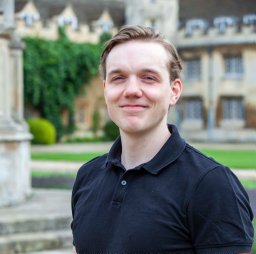
 Tilman Räuker
· 6 previous affiliations
- Pivotal ResearchSince 2021
- Co-Director · Since 2024
- Researcher · 2021–2024
- Meridian Institute2024–2025
- Technical Advisor · 2024–2025
- Self-Employed2022–2024
- Researcher · 2022–2024
- Existential Risk Alliance2023
- Research Manager · 2023
- Rohde & Schwarz (Germany)2020–2021
- Embedded Software Engineer · 2020–2021
- Leibniz University Hannover2019–2021
- MS student · 2019–2021
- Bachelor of Science - BS, Electrical Engineering and Information Technology
Research Overview
Tilman Räuker focuses on mechanistic interpretability, the internal representations of deep neural networks, and the emergence of structured world models in artificial intelligence. His early work provided comprehensive surveys of inner interpretability techniques designed to reverse-engineer neural computation. More recently, his research investigates how autoregressive transformers construct causal representations of their environments during complex reasoning tasks.
Research Trajectory
Räuker’s published work centers on understanding the internal mechanisms of deep neural networks, moving from broad surveys of the interpretability landscape to targeted empirical studies of transformer architectures. In 2022 and 2023, Räuker served as the first author on a foundational survey detailing the state of the field, culminating in the publication of Toward Transparent AI: A Survey on Interpreting the Inner Structures of Deep Neural Networks. This work highlighted the limitations of treating deep neural networks as opaque systems and emphasized the necessity of "inner" interpretability techniques. By categorizing methods used to reverse-engineer solutions and guide manual modifications of network weights, this research provided a structural overview for the research direction of Mechanistic Circuit Discovery in Neural Networks.
Following this foundational overview, Räuker’s trajectory shifted toward collaborative, empirical investigations into how models learn to represent their environments. In 2023, he was a co-author on Linearly Structured World Representations in Maze-Solving Transformers. This research investigated whether autoregressive transformers trained on maze-solving tasks simply memorize sequences or actually learn to model the underlying spatial environment. The study demonstrated that these networks develop linear representations of maze structures, and that the formation of these internal models coincides with a sharp increase in the network's ability to generalize. This finding contributed to the broader area of Emergent Geometric Structure in Latent Representations, suggesting that sophisticated behavior in artificial networks often relies on the decomposition of tasks into reusable perceptual primitives.
This focus on spatial and algorithmic reasoning continued into 2025. Räuker participated as a middle author in Transformers Use Causal World Models in Maze-Solving Tasks. Building on the previous findings, this work sought to prove that the structured representations found in maze-solving transformers are not merely correlational, but causally drive the model's predictions. By utilizing Sparse Autoencoders (SAEs) and analyzing attention patterns, the research team isolated specific features within the network. They then performed causal interventions on these isolated features to confirm their direct impact on the model's behavior, aligning closely with the research theme of Extracting Interpretable Features from Neural Superposition.
Current Directions
The most recent papers in the evidence indicate a continued focus on the causal mechanisms underlying world models in transformer architectures. Rather than simply observing that models learn structured representations of their training domains, this current work emphasizes rigorous intervention to prove how these representations function mechanistically.
By employing advanced interpretability tools like Sparse Autoencoders alongside circuit-based analysis, recent collaborative efforts aim to disentangle complex, polysemantic neural activations into understandable, causal features. This approach seeks to bridge the gap between observing emergent geometric structures in latent spaces and definitively proving that these structures act as causal world models that govern a network's decision-making process in structured environments.
Profile updated
Loading new papers…
Other researchers whose papers cluster into the same research directions — a proxy for overlapping technical interests and shared intellectual neighborhoods.
See something wrong? Report a mistake