

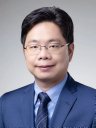
 Tieyong Zeng
· 2 previous affiliations
- Full Professor · Since 2025
- Current
- Full Professor · 2021–2025
Research Overview
Tieyong Zeng focuses on mathematical imaging, optimization algorithms, and deep learning architectures for image restoration and inverse problems. Early work established rigorous variational models and convex optimization techniques for image segmentation and denoising. Recent research investigates the intersection of differential equations with neural networks, efficient transformer architectures, and theoretically guaranteed data pruning frameworks.
Research Trajectory
The trajectory begins with foundational contributions to mathematical imaging and variational methods. In 2010, Zeng introduced a theoretical study of dictionary learning in On the Total Variation Dictionary Model, proving the existence of solutions and demonstrating that dictionaries must sparsely represent image curvatures to achieve optimal denoising. Subsequent research expanded on convex optimization for complex noise models. With collaborators, Zeng developed A Convex Variational Model for Restoring Blurred Images with Multiplicative Noise (2013), which utilized a quadratic penalty function and a primal-dual algorithm to ensure unique solutions and algorithmic stability. That same year, this line of inquiry yielded A Two-Stage Image Segmentation Method Using a Convex Variant of the Mumford-Shah Model and Thresholding, a convergent approach that bypassed the need to pre-specify the number of segments by solving a convex variant of the Mumford-Shah model prior to thresholding.
As deep learning began to transform computational imaging, the research integrated neural architectures with domain-specific constraints. Work in 2021 included participation in the development of Pixel-Attention CNN With Color Correlation Loss for Color Image Denoising. Concurrently, Zeng addressed the area of Efficient Image Restoration for Edge Devices with Rank-One Prior: Toward Real-Time Scene Recovery, proposing an intensity projection strategy for real-time light correction in degraded environments such as sandstorms and underwater scenes. The integration of advanced mathematical representations into modern frameworks continued with Efficient Color Image Segmentation via Quaternion-based L1/L Regularization.2 (2022), which applied quaternion representations to handle inherent color structures across channels.
Around 2022 and 2023, the focus expanded to hybrid neural architectures that balance computational efficiency with high-fidelity reconstruction. Contributing to the direction of Integrating Local Inductive Biases with Global Visual Context, Zeng developed Lightweight Bimodal Network for Single-Image Super-Resolution via Symmetric CNN and Recursive Transformer, an architecture designed for resource-constrained edge devices. This was followed by EWT: Efficient Wavelet-Transformer for Single Image Denoising (2023), which mitigated the high computational cost of transformers by performing feature extraction in the wavelet domain, advancing the broader area of Preserving Tiny Features Against Spatial Resolution Degradation. In the domain of binocular vision, the research also explored the field of Epipolar Constrained Attention for Binocular Feature Fusion through the introduction of PFT-SSR: Parallax Fusion Transformer for Stereo Image Super-Resolution.
More recently, the trajectory has emphasized the synthesis of classical numerical methods, differential equations, and deep learning for inverse problems. In 2024, Zeng introduced Inertial Proximal Difference-of-Convex Algorithm with Convergent Bregman Plug-and-Play for Nonconvex Imaging, establishing global convergence for a novel inertial proximal algorithm designed for nonconvex imaging tasks. This rigorous mathematical approach to neural networks was further formalized in the 2025 review Deep Neural Networks Inspired by Differential Equations, which detailed how viewing neural networks as continuous-time dynamical systems leads to more interpretable and efficient models. Practical applications of these principles include DGNN: A Neural PDE Solver Induced by Discontinuous Galerkin Methods (2025), which couples shallow neural networks via numerical fluxes to achieve high accuracy on complex geometries where standard physics-informed neural networks struggle.
Throughout 2025 and 2026, the research has continued to refine optimization algorithms and specialized priors for imaging. Zeng developed Deep Spectral Prior, an unsupervised framework that optimizes amplitude and phase in the frequency domain to separate signal from noise. For complex inverse problems, Learning Cocoercive Conservative Denoisers via Helmholtz Decomposition for Poisson Imaging Inverse Problems introduced a novel training strategy combining Hamiltonian and spectral regularization to ensure convergence in plug-and-play methods. Algorithmic acceleration for deblurring and medical imaging was addressed in An Improved Optimal Proximal Gradient Algorithm for Non-Blind Image Deblurring, A lightweight self-ensemble feedback recurrent network for fast MRI reconstruction, and Kernel FISTA and Application to Image Deblurring. Finally, addressing the computational burden of training large models, Zeng introduced OrderDP: A Theoretically Guaranteed Lossless Dynamic Data Pruning Framework (2026), providing a mathematically grounded approach to unbiased data pruning. Recent 2026 investigations also advance flow matching and generative sampling across continuous dynamics and video synthesis. Zeng contributed to Manifold Attracting Flow Matching: Physics-Constrained Sampling via Continuous Geometric Dynamics, introducing a persistent anchor ODE framework that enforces physical equality constraints during inference without retraining. In functional sampling, Zeng participated in creating NAGO: Noise-Aware Generative Operator via Flow Matching, which optimizes source measure designs to accelerate flow-matching sampling from invariant measures of stochastic PDEs. In streaming video generation, Zeng co-developed Molt Forcing in The Old Scene Lives in the Cache: Diagnosing and Shedding Stale History in Streaming Video Generation, selectively retaining subject tokens while rebuilding scene history to discard stale cache objects during scene transitions.
Current Directions
The most recent papers in the evidence indicate a strong focus on the mathematical foundations of deep learning, particularly the integration of differential equations and advanced optimization techniques into neural architectures. Current work investigates neural partial differential equation (PDE) solvers, leveraging classical numerical methods like Discontinuous Galerkin to improve the stability and accuracy of physics-informed models on irregular domains. Additionally, recent research addresses the theoretical guarantees of machine learning workflows, developing unbiased dynamic data pruning frameworks that reduce training costs without sacrificing generalization. Another active direction involves refining plug-and-play methods and proximal gradient algorithms for complex inverse problems, such as Poisson imaging and non-blind deblurring, ensuring that deep denoisers maintain rigorous convergence properties.
Profile updated
Loading new papers…
Other researchers whose papers cluster into the same research directions — a proxy for overlapping technical interests and shared intellectual neighborhoods.
See something wrong? Report a mistake