

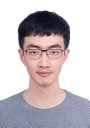
 Tiehang Duan
· 4 previous affiliations
- Grand Valley State UniversitySince 2025
- Assistant Professor · Since 2025
- Mayo Clinic2024–2025
- Researcher · 2024–2025
- Meta (United States)2020–2023
- Research Scientist · 2020–2023
- Research Assistant · 2015–2020
Research Overview
Tiehang Duan focuses on continual learning, meta-learning in non-stationary environments, and robust neural decoding for brain-computer interfaces. His trajectory spans early work in non-parametric Bayesian clustering to recent advancements in mitigating catastrophic forgetting across shifting data distributions. Currently, he investigates dynamic memory transformation and distributionally robust optimization to improve online learning, particularly for streaming electroencephalography signals.
Research Trajectory
Tiehang Duan’s early research focused on probabilistic modeling and time-series analysis, beginning with Auto Regressive Dynamic Bayesian Network and Its Application in Stock Market Inference (2016). He subsequently expanded into non-parametric Bayesian methods to handle complex, high-dimensional datasets. He developed Parallel clustering of single cell transcriptomic data with split-merge sampling on Dirichlet process mixtures (2019), contributing to the broader area of Adaptive Complexity through Dirichlet Process Mixture Models. He also applied these principles to natural language processing, introducing a sequential embedding approach in Sequential Embedding Induced Text Clustering, a Non-parametric Bayesian Approach (2019).
By 2021, his focus shifted toward the challenges of training machine learning models in non-stationary environments where data distributions change over time. With collaborators, he proposed a framework to manage highly imbalanced domains in Meta Learning on a Sequence of Imbalanced Domains with Difficulty Awareness (2021), advancing the research direction of Meta-Learning for Non-Stationary Task Distributions. This theme continued in Learning to Learn and Remember Super Long Multi-Domain Task Sequence (2022), where he helped design a meta-optimizer to mitigate catastrophic forgetting in sequential domain meta-learning. Further expanding this work, he participated in developing the SETS benchmark and an optimal transport-based framework to filter out-of-distribution noise in Meta-Learning with Less Forgetting on Large-Scale Non-Stationary Task Distributions (2022).
Simultaneously, he contributed to the area of Task-Free Continual Learning in Non-Stationary Environments and the related field of Experience Replay for Continual Learning. A key collaborative contribution in this space was Improving Task-free Continual Learning by Distributionally Robust Memory Evolution (2022), which utilized Wasserstein Gradient Flow to evolve memory buffers, making them more representative of past data distributions and harder to memorize.
A major, parallel focus of his trajectory involves applying these continual and robust learning techniques to brain-computer interfaces (BCIs), specifically electroencephalography (EEG) decoding. He introduced an efficient transfer learning method to handle subject-to-subject variance in Ultra Efficient Transfer Learning with Meta Update for Continuous EEG Classification Across Subjects (2021). To address the inherent noise and variance in these signals, he developed the UNCER framework, detailed initially in Uncertainty Detection in EEG Neural Decoding Models (2022) and expanded in UNCER: A framework for uncertainty estimation and reduction in neural decoding of EEG signals (2023). This work significantly advanced the research direction of Overcoming Inter-Subject Variability in Neural Signal Decoding by combining Bayesian neural networks and dropout techniques to quantify both signal and model uncertainties.
He continued to refine EEG decoding by integrating distributionally robust optimization in Distributionally Robust Cross Subject EEG Decoding (2023). Addressing the specific challenges of streaming clinical data, he developed methods for online continual EEG classification, including Replay with Stochastic Neural Transformation for Online Continual EEG Classification (2023) and Online continual decoding of streaming EEG signal with a balanced and informative memory buffer (2024), which aim to prevent catastrophic forgetting as new subjects arrive sequentially.
Most recently, his work has focused on fundamentally improving memory replay mechanisms in continual learning. With collaborators, he explored continuous neural transformations to prevent memory overfitting in Make Memory Buffer Stronger in Continual Learning: A Continuous Neural Transformation Approach (2023). This culminated in Release the Potential of Memory Buffer in Continual Learning: A Dynamic System Perspective (2025), which frames memory buffer transformation through the lens of dynamic systems to enhance data diversity and hardness.
Current Directions
The most recent papers in the evidence indicate a strong focus on optimizing memory replay mechanisms for continual learning, particularly through the lens of dynamic systems. Recent work investigates continuous and reversible memory transformations to prevent memory overfitting, enhancing the diversity and hardness of stored samples without requiring massive data retention. Concurrently, this theoretical work is applied to the domain of brain-computer interfaces, where ongoing research addresses the online, continual decoding of streaming EEG signals. By developing balanced memory buffers and distributionally robust optimization techniques, these efforts aim to maintain high classification accuracy across sequentially arriving subjects while mitigating catastrophic forgetting in highly noisy, non-stationary environments.
Profile updated
Loading new papers…
Other researchers whose papers cluster into the same research directions — a proxy for overlapping technical interests and shared intellectual neighborhoods.
See something wrong? Report a mistake