

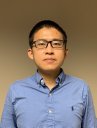
 Tianyun Zhang
· 2 previous affiliations
- Cleveland State UniversitySince 2021
- Assistant Professor · Since 2021
- Syracuse University2016–2021
- PhD student · 2016–2021
1 other author named Tianyun Zhang: Tianyun Zhang (1 paper)
Research Overview
Tianyun Zhang focuses on the optimization of deep neural networks, specifically addressing model compression through weight pruning and the evaluation of model robustness via adversarial attack generation. His trajectory spans the development of systematic pruning frameworks using advanced optimization techniques and the design of low-distortion adversarial examples. Recently, his work emphasizes structured pruning methods to achieve highly efficient, real-time inference on resource-constrained platforms.
Research Trajectory
Tianyun Zhang's research trajectory is primarily defined by two intersecting themes: the optimization of deep neural networks (DNNs) for computational efficiency and the rigorous evaluation of their robustness against adversarial perturbations.
Beginning in the domain of model compression, he addressed the limitations of heuristic, iterative weight pruning. In 2018, he introduced a systematic approach to this problem in A Systematic DNN Weight Pruning Framework Using Alternating Direction Method of Multipliers. By formulating weight pruning as a nonconvex optimization problem with combinatorial constraints, this work leveraged the alternating direction method of multipliers (ADMM) to provide stronger guarantees on weight reduction ratios and convergence times.
Parallel to his work on model efficiency, Zhang began investigating the vulnerabilities of deep learning models. In Generation of Low Distortion Adversarial Attacks via Convex Programming, he proposed an optimization-based method to generate adversarial examples. Moving away from standard gradient descent techniques, this approach utilized convex programming to create imperceptible perturbations that effectively alter a network's classification, providing a new mechanism for testing DNN robustness.
Returning to network compression in 2020, Zhang's focus evolved toward making sparse models highly accurate and hardware-friendly for edge devices. He collaborated on An Image Enhancing Pattern-Based Sparsity for Real-Time Inference on Mobile Devices, which introduced a new sparsity dimension combining pattern and connectivity sparsity to overcome traditional trade-offs between model accuracy and regularity.
In 2021, his research advanced along both the adversarial and optimization tracks. He expanded on adversarial attack generation methodologies in Adversarial Attack Generation Empowered by Min-Max Optimization, where he and his collaborators reformulated the minimization of worst-case attack loss as a min-max problem over multiple domains. Simultaneously, he continued to refine pruning methodologies by developing A Unified DNN Weight Pruning Framework Using Reweighted Optimization Methods. This framework utilized dynamically updated regularization terms to increase compression rates and reduce the extensive tuning times typically associated with dynamic regularization-based pruning.
To further facilitate the deployment of complex models on resource-limited platforms, Zhang participated in research combining pruning with architectural design, exemplified by his involvement in Achieving on-Mobile Real-Time Super-Resolution with Neural Architecture and Pruning Search. Building on his foundational work with ADMM, he subsequently introduced StructADMM: Achieving Ultrahigh Efficiency in Structured Pruning for DNNs in 2022. This unified framework targeted structured weight pruning to overcome the limitations of irregular network structures, aiming to maintain accuracy while significantly improving actual hardware acceleration.
Current Directions
The most recent papers in the evidence, dating to 2021 and 2022, indicate a sustained focus on bridging the gap between theoretical model compression and practical hardware acceleration. Recent efforts investigate structured pruning techniques that align with the architectural constraints of modern GPUs and mobile processors. By integrating advanced optimization frameworks—such as the alternating direction method of multipliers—with automated neural architecture search, this line of research addresses the open problem of deploying computationally intensive tasks, like real-time super-resolution, directly onto resource-constrained edge devices without sacrificing inference accuracy.
Profile updated
| Paper | Venue | Year |
|---|---|---|
| Adversarial Attack Generation Empowered by Min-Max OptimizationGitHubwangjksjtu/ | NeurIPS | 2021 |
Loading new papers…
Loading research neighbors…
See something wrong? Report a mistake