

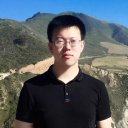
 Tianjian Huang
· 5 previous affiliations
- Pinterest (United States)Since 2026
- Applied Scientist · Since 2026
- Current
- PhD student · 2018–2023
- Applied Research Scientist Intern (LLM Customization) · 2024
- Meta (United States)2021–2022
- Research Scientist Intern (Conversational AI) · 2022
- Research Scientist Intern (Conversational AI) · 2021
- Research Assistant Intern · 2017
Research Overview
Tianjian Huang focuses on the development of scalable training and fine-tuning methodologies for robust and responsible artificial intelligence. His research spans several critical areas of machine learning, including non-convex optimization, model quantization, distribution shift robustness, and differential privacy. By integrating theoretical rigor with algorithmic development, he addresses the challenges of training deep learning models that are both computationally efficient and reliable under adversarial or shifting environments.
Research Trajectory
The early stage of Huang’s research was primarily concerned with the foundational theory of non-convex optimization, specifically focusing on min-max saddle point problems. These problems are central to various machine learning applications, such as training generative adversarial networks (GANs) and fair beamforming. In 2019 and 2020, he investigated the convergence properties of iterative first-order methods in regimes where the objective functions do not satisfy standard convexity-concavity assumptions. This work established conditions under which stationary points could be efficiently computed, particularly when one player’s objective satisfies the Polyak-Łojasiewicz (PL) condition.
Following this foundational work in optimization, Huang transitioned toward model efficiency and compression. Between 2020 and 2021, he explored the problem of parameter quantization in deep neural networks. This research addressed the difficulty of solving constrained optimization problems where the constraint set is a Cartesian product of discrete sets. He adapted the Alternating Direction Method of Multipliers (ADMM) to these discrete settings, providing what was among the first convergence analyses for ADMM-type methods applied to discrete variables in machine learning.
In 2021, Huang’s focus shifted toward the robustness of empirical risk minimization (ERM) against distribution shifts and spurious correlations. He identified that while data augmentation is a common remedy for poor generalization, standard consistency regularization methods often fail when dealing with covariant data augmentation—where the label of an augmented sample may change relative to the original. To address this, he developed frameworks for loss consistency that force models to maintain stable performance across original and augmented samples, thereby improving robustness to adversarial attacks and out-of-distribution data.
Most recently, from 2022 to 2024, Huang has expanded his research into responsible AI, specifically focusing on explainability and differential privacy (DP). His work in explainability involved a mathematical re-evaluation of attribution methods, identifying theoretical gaps in existing proofs and proposing new axioms to ensure the reliability of model explanations. In the domain of privacy, he has investigated the fundamental limits of training DP models when auxiliary public data is available. This work explores how public data can be leveraged to improve the constants of error rates in both local and central DP models, bridging the gap between theoretical lower bounds and practical performance on real-world benchmarks.
Current Directions
Huang’s current research is centered on the intersection of scalability and privacy in large-scale model training. He is particularly interested in how public data can be used to optimize the trade-offs between privacy guarantees and model utility. This involves developing new algorithms for differentially private fine-tuning that can handle the high dimensionality of modern neural networks without incurring the prohibitive accuracy costs typically associated with pure DP. Additionally, he continues to refine methodologies for robust training, seeking to create models that are inherently resistant to the types of distribution shifts encountered in deployment.
Representative Work
In Non-convex Min-Max Optimization: Applications, Challenges, and Recent Theoretical Advances, Huang provides a comprehensive survey of the saddle point problem within the context of signal processing and data science. The work categorizes the challenges inherent in non-convex regimes and reviews recent algorithmic advances that allow for the identification of equilibrium solutions in complex games, such as those found in robust machine learning and fair resource allocation.
The study of Solving a Class of Non-Convex Min-Max Games Using Iterative First Order Methods contributes to the understanding of gradient-based methods in non-convex-concave settings. The research demonstrates that an $\varepsilon$-first order stationary point can be computed efficiently if the objective of one player can be optimized to global optimality, specifically under the PL condition. This work provides a theoretical basis for the convergence of multi-step gradient descent-上升 algorithms.
In Alternating Direction Method of Multipliers for Quantization, Huang introduces ADMM-Q, an algorithm designed for the quantization of machine learning model parameters. By treating quantization as a discrete constrained optimization problem, the work establishes the convergence of ADMM iterates to stationary points. This contribution is significant for its application of a traditionally continuous optimization framework to the discrete constraints required for efficient model deployment on hardware with limited precision.
Huang addressed the limitations of empirical risk minimization in Robustness through Data Augmentation Loss Consistency. He proposed Data Augmented Invariant Regularization (DAIR), a method that enforces consistency between the loss of an original sample and its augmented counterpart. This approach is specifically designed to handle covariant data augmentation, ensuring that the model remains robust to distribution shifts even when the augmentation process modifies the underlying features in a way that would typically confound standard consistency regularization.
In the area of model interpretability, A Rigorous Study of Integrated Gradients Method and Extensions to Internal Neuron Attributions provides a mathematical critique of the Integrated Gradients (IG) method. Huang and his co-authors identified flaws in the original uniqueness claims of IG and introduced the Non-Decreasing Positivity (NDP) axiom to rectify these theoretical foundations. The work also presents a computationally efficient method for attributing model predictions to specific internal neurons, enhancing the granularity of deep learning explanations.
His work on Optimal Differentially Private Learning with Public Data investigates the theoretical and practical implications of using auxiliary public datasets to bolster privacy. The research settles open questions regarding the optimal worst-case error of DP models in this hybrid data regime. While proving that public data does not necessarily change asymptotic error rates, the work develops algorithms that significantly improve the practical constants of these rates, leading to measurable accuracy improvements in private model training.
Profile updated
| Paper | Venue | Year |
|---|---|---|
| DAIR: Data Augmented Invariant RegularizationGitHubshaunak27/ | Unknown | 2021 |
Loading new papers…
Other researchers whose papers cluster into the same research directions — a proxy for overlapping technical interests and shared intellectual neighborhoods.
See something wrong? Report a mistake