

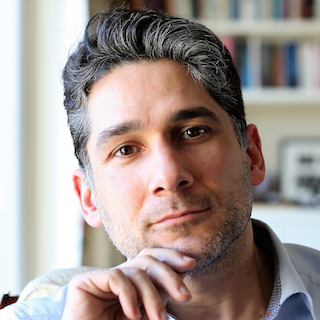
 Thore Graepel
· 6 previous affiliations
- University College LondonSince 2013
- Professor of Computer Science · Since 2013
- Google DeepMind (United Kingdom)2015–2026
- Distinguished Research Scientist · 2025–2026
- Research Lead · 2015–2022
- Altos Labs2021–2025
- Senior Vice President · 2021–2025
- Google (United States)2015–2022
- Research Lead · 2015–2022
- Microsoft (United States)2003–2015
- Principal Researcher · 2003–2015
- Technische Universität Berlin1996–2001
- 1996–2001
Research Overview
Thore Graepel focuses on multi-agent reinforcement learning, game theory, and scalable optimization algorithms. His early work established foundational methods in margin-based learning and probabilistic ranking systems. More recently, he investigates the dynamics of n-player differentiable games, cooperative multi-agent coordination, and the application of machine learning to computational biology.
Research Trajectory
Graepel’s early research addressed fundamental problems in machine learning theory and optimization. In 2000, he collaborated on A PAC-Bayesian Margin Bound for Linear Classifiers: Why SVMs work, exploring the area of Implicit Bias and Max Margin Convergence in Neural Networks by deriving generalization bounds based on geometrical arguments in the space of linear classifiers. In 2003, he introduced Semi-Definite Programming by Perceptron Learning, advancing the broader field of Scalable Semidefinite Programming for High Dimensional Optimization. This work demonstrated that a modified perceptron learning algorithm could solve semidefinite programs in polynomial time by treating them as sequences of constraint satisfaction problems.
His research then expanded into probabilistic modeling and large-scale ranking systems. He oversaw the publication of TrueSkill in 2006, establishing a Bayesian skill rating system. Building on these large-scale probabilistic methods, he led work on Web-Scale Bayesian Click-Through rate Prediction for Sponsored Search Advertising in Microsoft's Bing Search Engine (2010), which utilized a probit regression model with Gaussian online updates and approximate message passing to handle massive-scale prediction tasks.
In the mid-2010s, Graepel participated in highly visible efforts to solve the game of Go using deep reinforcement learning. He was part of the team that developed Mastering the game of Go with deep neural networks and tree search (2016), combining supervised learning from human experts and self-play with Monte Carlo tree search. This was followed by Mastering the game of Go without human knowledge (2017), which achieved superhuman proficiency entirely tabula rasa via reinforcement learning.
Concurrently, his focus shifted heavily toward multi-agent systems and game theory. To address the challenge of Credit Assignment in Cooperative Multi-Agent Systems, his group developed Value-Decomposition Networks For Cooperative Multi-Agent Learning (2017). This architecture allowed a single team reward to be decomposed into individual value functions, enabling centralized training with decentralized execution.
He also investigated the fundamental optimization challenges in multi-agent settings, particularly the area of Last-Iterate Instability in Multi-Agent Learning. This led to The Mechanics of n-Player Differentiable Games (2018) and its subsequent expansion The mechanics of n-player differentiable games (2021), which introduced Symplectic Gradient Adjustment (SGA) to find stable fixed points in scenarios like GANs where standard gradient descent fails.
In 2021, his lab produced several key contributions to multi-agent evaluation and coordination. They introduced Scalable Evaluation of Multi-Agent Reinforcement Learning with Melting Pot, a suite designed to test zero-shot generalization in novel social situations across diverse substrates. He also oversaw A Neural Network Auction For Group Decision Making Over a Continuous Space, which approximated preference functions to maximize total utility without incentivizing misreporting. Further exploring the research direction of Equilibrium Selection and Coordination in Multi-Agent Systems, his team published Multi-Agent Training beyond Zero-Sum with Correlated Equilibrium Meta-Solvers, addressing the computational intractability of Nash Equilibria in general-sum environments.
This line of inquiry continued into 2022 with Game Theoretic Rating in N-player general-sum games with Equilibria, which extended rating methodologies to complex equilibrium settings, and NeuPL: Neural Population Learning, which proposed a method to efficiently grow diverse policy populations in strategy games without the wastefulness of repeated basic skill learning.
Alongside reinforcement learning, Graepel pioneered a novel perspective on classical algorithms, contributing to the research direction of Eigendecomposition as a Competitive Multi-Player Game. This was formalized in EigenGame: PCA as a Nash Equilibrium (2021), framing principal component analysis as a decentralized, parallelizable game where each approximate eigenvector is controlled by a utility-maximizing player. The approach was refined in EigenGame Unloaded: When playing games is better than optimizing (2022), which introduced an unbiased stochastic update to improve convergence and scalability for massive datasets and graph clustering.
Current Directions
The most recent work in the evidence indicates an expansion toward applying machine learning methodologies to computational biology and drug discovery. Specifically, his 2025 research introduces PerturBench: Benchmarking Machine Learning Models for Cellular Perturbation Analysis. This work focuses on establishing a standardized framework and novel metrics to evaluate models that predict cellular responses to genetic and chemical perturbations, emphasizing the need for robust and reliable evaluation protocols in complex biological domains.
Profile updated
Loading new papers…
Other researchers whose papers cluster into the same research directions — a proxy for overlapping technical interests and shared intellectual neighborhoods.
See something wrong? Report a mistake