

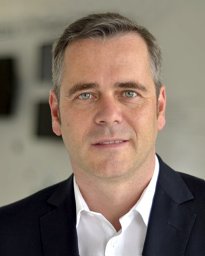
 Thomas Wiegand
· 7 previous affiliations
- International Telecommunication UnionSince 2000
- Associate Rapporteur · Since 2000
- Technische Universität BerlinSince 2008
- Full Professor · Since 2008
- Executive Director · Since 2014
- Head of Image Processing Department · 2008–2013
- Group Leader · 2000–2008
- ITU-WHO Focus Group on AI for Health2018–2023
- Chair · 2018–2023
- Vidyo2006–2014
- Technical Advisory Board · 2006–2014
- Dr.-Ing., Video Coding and Transmission · 1995–2000
- Hamburg University of Technology1991–1995
- Dipl.-Ing., Electrical Engineering · 1991–1995
Research Overview
Thomas Wiegand focuses on explainable artificial intelligence, neural network compression, and the robust application of machine learning in clinical settings. His work spans from foundational techniques in layer-wise relevance propagation and efficient model communication to recent advancements in data attribution and physics-informed neural networks. Currently, he investigates scalable methods for interpreting complex models and ensuring the safety of medical AI systems.
Research Trajectory
Wiegand's early work in this corpus establishes a dual focus on model interpretability and efficient machine learning systems. He explored foundational explainability techniques in Opening the machine learning black box with Layer-wise Relevance Propagation. Concurrently, he addressed the challenges of deploying large models over limited networks. He surveyed the shift from cloud-based to embedded machine learning in Trends and Advancements in Deep Neural Network Communication, contributing to the area of Energy Efficient Semantic Communication for Edge Networks. This interest in model efficiency also led to the development of DeepCABAC: A Universal Compression Algorithm for Deep Neural Networks, which provided a universal compression algorithm for neural network parameters.
Expanding into visual models and feature representation, he investigated how overparameterized models can predict image quality using random noise features in Curiously Effective Features For Image Quality Prediction. As his focus on interpretability deepened, he examined how computer vision models often rely on spurious background correlations rather than the objects themselves. With collaborators, he addressed this challenge in Revealing Hidden Context Bias in Segmentation and Object Detection through Concept-specific Explanations, advancing the research direction of Contextual Co-occurrence Bias in Visual Representation Learning.
A major theme in his subsequent trajectory is training data attribution—understanding which specific training examples cause a model to make a certain prediction. He introduced a highly efficient surrogate modeling approach in DualView: Data Attribution from the Dual Perspective, which intersects with the broader areas of Scalable Data Attribution via Sparse Recovery and Sparse Counterfactual Explanations for Actionable Algorithmic Recourse. This methodology was further refined in Sparse, Efficient and Explainable Data Attribution with DualXDA. Alongside these interpretability advancements, he continued his work on efficient distributed systems with Neural Network Coding of Difference Updates for Efficient Distributed Learning Communication.
Wiegand has increasingly applied these interpretability frameworks to critical domains, particularly healthcare. He developed methods to semi-automatically detect and unlearn spurious correlations in medical imaging in Ensuring medical AI safety: interpretability-driven detection and mitigation of spurious model behavior and associated data. Complementing this technical work, he contributed to the policy and evaluation side of clinical machine learning in Künstliche Intelligenz auf dem Prüfstand: Anforderungen, Qualitätskriterien und Prüfwerkzeuge für medizinische Anwendungen, aligning with work in the direction of Dynamic Regulatory Frameworks for Adaptive Clinical AI.
Most recently, his research has expanded to physics-informed machine learning and large language models. He participated in the development of LieSolver: PDE-Constrained Learning for IBVPs via Lie Symmetries, a framework that exactly enforces partial differential equations to outperform standard physics-informed neural networks. Bridging his expertise in data attribution with the physical sciences, he co-authored PINNfluence: Interpreting PINNs through Influence Functions, which extends influence functions to composite physics-informed training objectives. In the domain of natural language processing, he contributed to Attribution-Guided Decoding, a decoding strategy that leverages post-hoc interpretability to improve the factual accuracy and instruction adherence of large language models.
Current Directions
The most recent papers in the evidence indicate a strong focus on applying explainability and data attribution techniques to specialized, high-stakes domains. One major direction involves ensuring the safety and reliability of medical AI, where recent work investigates frameworks for detecting spurious correlations in clinical data and establishing rigorous quality criteria for medical applications.
Additionally, current research addresses the interpretability and physical consistency of machine learning models in the sciences. This includes developing frameworks that enforce partial differential equations via Lie symmetries and extending influence functions to interpret physics-informed neural networks. Finally, recent efforts explore how post-hoc interpretability methods can be integrated directly into the decoding processes of large language models to mitigate factual hallucinations and improve instruction adherence.
Profile updated
Loading new papers…
Other researchers whose papers cluster into the same research directions — a proxy for overlapping technical interests and shared intellectual neighborhoods.
See something wrong? Report a mistake