

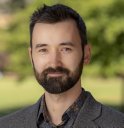
 Thomas Thebaud
· 6 previous affiliations
- Johns Hopkins UniversitySince 2022
- Assistant Research Professor · Since 2025
- Researcher · Since 2022
- Assistant Research Scientist · 2023–2024
- Orange (France)2019–2022
- PHD Candidate · 2019–2022
- Datascientist · 2019
- Le Mans Université2019–2022
- Doctor of Philosophy - PhD, Computer Science · 2019–2022
- École Nationale Supérieure des Mines de Nancy2016–2019
- Formation Ingenieur Civil des Mines, Ingénierie · 2016–2019
- Masters Student · 2018
- Assistant Researcher · 2018
Research Overview
Thomas Thebaud focuses on the security of speech systems, multimodal emotion recognition, and the use of behavioral biometrics for clinical diagnostics. His trajectory spans early work in antispoofing and adversarial defenses to the development of explainable metrics for neurodegenerative diseases. Currently, he investigates vulnerabilities in speech-based large language models and the alignment of audio features with text representations.
Research Trajectory
Thebaud’s early research established a foundation in biometric security, particularly concerning the vulnerabilities of behavioral recognition systems. In 2022, he explored embedding theft and reconstruction in Attaques par reconstruction de données biométriques comportementales à l’aide d’alignements d’embeddings. This focus on system integrity expanded into defenses against data poisoning. With Clustering Unsupervised Representations as Defense Against Poisoning Attacks on Speech Commands Classification System (2023), he introduced a method leveraging unsupervised representations to filter out poisoned data, significantly reducing attack success rates and addressing stealthy clean-label backdoor attacks in neural networks.
Parallel to his security research, Thebaud investigated generative modeling for atypical speech. In DuTa-VC: A Duration-aware Typical-to-atypical Voice Conversion Approach with Diffusion Probabilistic Model (2023), he developed a nonparallel voice conversion framework that transforms typical speech into dysarthric speech. By explicitly modeling phoneme duration, the system generated high-quality synthetic data to improve automatic speech recognition for users with speech disorders, advancing methods for learning speech transformations without parallel data.
In 2024, his work on behavioral biometrics and adversarial defenses matured. He formalized the study of embedding theft across both voice and handwriting modalities in Supervised and Unsupervised Alignments for Spoofing Behavioral Biometrics. Concurrently, he contributed to Unraveling Adversarial Examples against Speaker Identification - Techniques for Attack Detection and Victim Model Classification, proposing a binary classifier to detect adversarial examples and identify the targeted victim model, which advanced the broader area of Adversarial Transferability in Audio Neural Networks.
This period also marked a significant expansion into clinical diagnostics, where he applied his expertise in behavioral signals to neurodegenerative diseases. He extracted task-agnostic and task-specific features from digital tablet interactions in Explainable Metrics for the Assessment of Neurodegenerative Diseases through Handwriting Analysis. Extending this clinical focus to audio, he collaborated on Unveiling early signs of Parkinson’s disease via a longitudinal analysis of celebrity speech recordings, demonstrating that deep learning embeddings could detect markers of Parkinson’s up to a decade before clinical diagnosis. This research supported broader efforts in the area of Universal Speech Biomarkers for Cross-Linguistic Clinical Diagnostics. Additionally, he explored affective computing in Multimodal Emotion Recognition Harnessing the Complementarity of Speech, Language, and Vision.
By 2025, Thebaud’s research increasingly intersected with large language models (LLMs) and multimodal foundation models. He addressed critical vulnerabilities in these emerging architectures with Backdoor Attacks Against Speech Language Models, presenting a systematic study of trigger injection in multimodal pipelines. This highlighted the audio encoder as a primary vulnerability, contributing directly to the research direction of Stealthy Backdoors and Sleeper Agents in AI Systems. In a more constructive application of LLMs, he participated in Enhancing Dialogue Annotation with Speaker Characteristics Leveraging a Frozen LLM, which used lightweight connectors to enrich speech transcripts with metadata like age and emotion without expensive fine-tuning.
His focus on emotion and speech synthesis continued to yield novel frameworks. In Multimodal Emotion Diarization: Frame-Wise Integration of Text and Audio Representations (2025), he synchronized audio features with text embeddings at the frame level to identify precisely when emotions occur in continuous streams. He also introduced a comprehensive benchmark for style-captioned text-to-speech in CapSpeech: Enabling Downstream Applications in Style-Captioned Text-to-Speech, addressing the need for standardized datasets in expressive speech synthesis. To evaluate speech processing systems, he oversaw the development of ReFESS-QI: Reference-Free Evaluation For Speech Separation With Joint Quality And Intelligibility Scoring, a framework utilizing self-supervised learning representations to predict metrics like SI-SNR and Word Error Rate without clean reference audio.
Thebaud also advanced his clinical and data synthesis methodologies in 2025. He led research into Cross-Corpus and Cross-domain Handwriting Assessment of NeuroDegenerative Diseases via Time-Series-to-Image Conversion, converting dynamic temporal data into spatial images to leverage pretrained vision architectures for disease detection. In the domain of natural language processing, he developed Paired by the Teacher: Turning Unpaired Data into High-Fidelity Pairs for Low-Resource Text Generation, a two-stage pipeline that synthesizes high-quality training data using intermediate representations from large teacher models.
Most recently, in 2026, his work has expanded to address equity in AI systems with FaiST: Fairness in Speech Technology. This dataset curates natural conversational audio with grounded demographic labels, enabling the community to assess and improve the fairness of speech and language technologies under realistic conditions, a key contribution to the research direction of Demographic Metadata for Auditing and Modeling Subjectivity.
Current Directions
Recent work investigates the intersection of multimodal foundation models, system security, and algorithmic fairness. The most recent papers in the evidence address the vulnerabilities of SpeechLLMs to backdoor attacks and the need for rigorous, reference-free evaluation metrics in speech separation. Additionally, there is a strong emphasis on curating demographic metadata to audit subjectivity and ensure equitable performance across diverse speaker populations. This includes leveraging frozen large language models for efficient dialogue annotation and developing unified frameworks that translate time-series behavioral data into spatial representations for robust clinical diagnostics.
Profile updated
Loading new papers…
Other researchers whose papers cluster into the same research directions — a proxy for overlapping technical interests and shared intellectual neighborhoods.
See something wrong? Report a mistake