

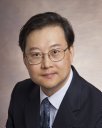
 Thomas Hou
· 4 previous affiliations
- Virginia TechSince 2002
- Full Professor · Since 2012
- Bradley Distinguished Professor of Electrical and Computer Engineering · Since 2002
- Fujitsu Laboratories of America1997–2002
- Member of Research Staff · 1997–2002
- Ph.D. · 1998
- M.S. · 1993
1 other author named Thomas Hou: Thomas Hou (0 papers)
Research Overview
Thomas Hou focuses on the optimization of wireless networks, real-time resource management, and security in cyber-physical systems. His early work addressed quality-of-service guarantees and interference alignment in multi-hop architectures, establishing foundational models for network performance. Recently, his research has expanded to include deep reinforcement learning for 5G architectures, robust machine learning, and intellectual property protection for large language models.
Research Trajectory
Hou’s early research addressed foundational challenges in network quality of service (QoS) and bandwidth provisioning. He introduced a bandwidth broker architecture in Decoupling QoS control from core routers: A novel bandwidth broker architecture for scalable support of guaranteed services, which decoupled QoS control from core routers to enable scalable guaranteed services. Building on this, he explored service level agreements and bandwidth provisioning in Service overlay networks: SLAs, QoS, and bandwidth provisioning.
In the following decade, his focus shifted toward the physical and link layers of wireless communications, particularly in multi-hop MIMO and sensor networks. This work contributed to the broader research area of Joint Optimization for Coupled Wireless Resource Management. He developed an optimal link-layer model for these systems in An optimal link layer model for multi-hop MIMO networks. Addressing the energy constraints of wireless sensors, he proposed an energy-renewal approach utilizing wireless power transfer in Making sensor networks immortal: an energy-renewal approach with wireless power transfer. He also advanced the field of Uplink-Downlink Duality in Wireless Network Optimization by investigating interference alignment techniques in On interference alignment for multi-hop MIMO networks.
As network architectures evolved to integrate more computation and machine learning, Hou's trajectory expanded to encompass hardware security and robust machine learning. He explored cache-assisted secure execution on ARM processors in CaSE: Cache-Assisted Secure Execution on ARM Processors, aligning with the research direction of Secure Computation with Hardware Enclaves. He later addressed vulnerabilities in distributed learning systems, defending federated learning against model poisoning attacks via latent space representations in FLARE: Defending Federated Learning against Model Poisoning Attacks via Latent Space Representations. Extending this security focus to automotive networks, he contributed to the area of Securing Legacy Communication Protocols in Cyber-Physical Systems with CANShield: Deep-Learning-Based Intrusion Detection Framework for Controller Area Networks at the Signal Level, a deep learning framework that detects sophisticated cyberattacks on vehicle CAN buses by analyzing data at the signal level.
Recently, Hou has investigated the security and intellectual property challenges of generative AI. He developed a fingerprinting-based copyright protection scheme for large language models in ProFLingo: A Fingerprinting-based Copyright Protection Scheme for Large Language Models, providing a mechanism to verify model ownership when open-source models are fine-tuned or reproduced. His work in applied machine learning also includes computer vision, where he guided the development of an adaptive multi-region fusion network for detecting small and occluded faces in An Adaptive Multi-region Fusion Network for Dense Face Detection. Additionally, he has applied computational optimization to educational platforms, introducing an automated system for outcome-based education in Design of Course Goal Achievement System based on OBE Concept, which reflects his interest in the broader area of Closed Loop Feedback for Dynamic Adaptive Learning.
Returning to his foundational expertise in network optimization, Hou's most recent work leverages deep reinforcement learning (DRL) to manage resources in 5G Open-RAN (O-RAN) architectures. This research advances the direction of Joint Communication and Computation Resource Allocation. He introduced xSlice, an xApp that adaptively partitions MAC-layer resources based on live network conditions, in Near-Real-Time Resource Slicing for QoS Optimization in 5G O-RAN using Deep Reinforcement Learning. He further addressed the multiplexing of high-speed data (eMBB) and ultra-reliable, low-latency traffic (URLLC) in Cyrus+: A DRL-based Puncturing Solution to URLLC/eMBB Multiplexing in O-RAN. Expanding his evaluation of AI robustness, he introduced VocalBench-DF: A Benchmark for Evaluating Speech LLM Robustness to Disfluency, which tests the performance of speech-based large language models on atypical and disfluent speech. Finally, he participated with collaborators in the development of a class-conditional diffusion framework for time series open-set recognition in DiffOSR: A Class-Conditional Diffusion Framework for Time Series Open-Set Recognition.
Current Directions
The most recent papers in the evidence indicate a dual focus on intelligent resource management for next-generation cellular networks and the robustness of advanced machine learning models. In the telecommunications domain, Hou is investigating the use of deep reinforcement learning and graph convolutional networks to optimize 5G Open-RAN architectures. This includes developing real-time network slicing techniques and multiplexing solutions to balance ultra-reliable, low-latency communications with high-bandwidth traffic. Concurrently, his work addresses the security and reliability of large language models, exploring fingerprinting methods for copyright protection and benchmarking the performance of speech-based models against real-world disfluencies.
Profile updated
Loading new papers…
Other researchers whose papers cluster into the same research directions — a proxy for overlapping technical interests and shared intellectual neighborhoods.
See something wrong? Report a mistake