

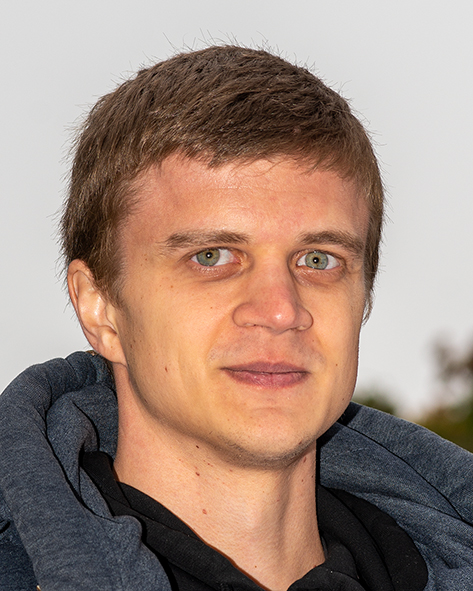
 Thomas Graave
· 1 previous affiliation
- Technische Universität BraunschweigSince 2023
- PhD student · Since 2023
Research Overview
Thomas Graave focuses on automatic speech recognition, parameter-efficient deep learning, and the quantization of large language models. His trajectory spans cross-lingual audiovisual systems and domain adaptation for children's speech, addressing acoustic and stylistic mismatches in end-to-end models. Most recently, his work investigates low-bit weight compression techniques to optimize the deployment of large-scale neural networks.
Research Trajectory
Graave’s early research examined parameter-efficient methods for speech processing, particularly in multilingual contexts. In 2023, he contributed to the development of Parameter-Efficient Cross-Language Transfer Learning for a Language-Modular Audiovisual Speech Recognition. This work addressed the scarcity of audiovisual data in non-English languages by applying bottleneck adapters to an English base model. By fine-tuning only a small fraction of the encoder's parameters alongside the decoder, the approach achieved performance comparable to full fine-tuning in French and Spanish. The project demonstrated how modular linguistic transfer learning could effectively extend audiovisual speech recognition (AV-ASR) systems to new languages without the computational overhead of retraining entire models.
Building on his expertise in speech recognition and domain adaptation, Graave subsequently investigated the challenges of applying end-to-end (E2E) ASR models to children's speech. Because most E2E models are pre-trained on adult speech, they suffer from significant performance degradation when processing children's voices due to both acoustic and stylistic differences. He addressed this in Mixed Children/Adult/Childrenized Fine-Tuning for Children's ASR: How to Reduce Age Mismatch and Speaking Style Mismatch. In this study, he explored mixed fine-tuning strategies using partially matched datasets—specifically, read adult speech and spontaneous children's speech—to improve recognition accuracy on read children's speech. By isolating the distinct impacts of age mismatch and speaking style mismatch, the research provided a clearer framework for adapting adult-trained models to younger speakers when child-specific training data is limited.
More recently, Graave's focus has expanded to the efficiency of large language models (LLMs), specifically addressing the memory and computational constraints of deploying massive architectures. With collaborators, he developed Improving Block-Wise LLM Quantization by 4-bit Block-Wise Optimal Float (BOF4): Analysis and Variations. This research introduced a new family of quantizers designed to minimize error in 4-bit weight compression. By optimizing the quantization codebook for unnormalized weights and incorporating a signed normalization technique, the BOF4 approach outperformed existing industry standards. This publication contributes to several broader research areas, including the direction of Optimal Reconstruction for Low-Bit Neural Networks and the area of Outlier Isolation for Low Bitwidth Neural Network Quantization. The methodology also intersects with efforts to resolve challenges in the area of The Metadata Bottleneck in Neural Network Compression, while advancing techniques in the broader area of Aligning Quantization Grids with Neural Weight Distributions and the research direction Asymmetric Quantization for Skewed Neural Distributions.
Current Directions
The most recent papers in the evidence indicate a shift toward the optimization and compression of large-scale neural networks. Graave's current work investigates block-wise quantization strategies for large language models, focusing on how to maintain model accuracy while drastically reducing memory footprints. This involves designing specialized quantization codebooks and outlier-preserving strategies that handle the skewed weight distributions typical of modern LLMs. Alongside these compression techniques, his broader research themes continue to encompass data augmentation and domain adaptation, particularly in specialized speech recognition tasks where target data is scarce or mismatched from pre-training distributions.
Profile updated
Loading new papers…
Other researchers whose papers cluster into the same research directions — a proxy for overlapping technical interests and shared intellectual neighborhoods.
See something wrong? Report a mistake