

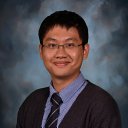
 Thien Le
2 previous affiliations
- PhD student · 2019–2024
- Undergrad student · 2016–2019
Research Overview
Thien Le focuses on the theoretical foundations of geometric deep learning, continuous optimization, and learning under invariances. His work investigates the generalization behaviors of graph neural networks using graph limit techniques, alongside the implicit bias of gradient-based algorithms. Recently, he has explored algorithmic alignment and the computational hardness of learning symmetric models.
Research Trajectory
Early research focused on algorithmic biology and computational phylogenetics. In Using INC Within Divide-and-Conquer Phylogeny Estimation, he evaluated the incremental tree building (INC) algorithm on simulated datasets, demonstrating its limitations compared to standard methods and exploring modifications for divide-and-conquer strategies. This was followed by Using Constrained-INC for Large-Scale Gene Tree and Species Tree Estimation, which further assessed the accuracy of constrained variants of the algorithm for merging disjoint trees in large-scale phylogenetic pipelines.
Transitioning toward the theoretical foundations of deep learning, his focus shifted to continuous optimization and the implicit bias of gradient-based methods. In Training invariances and the low-rank phenomenon: beyond linear networks, he extended theoretical results regarding rank-1 matrix convergence from deep linear networks to nonlinear ReLU-activated feedforward networks. By analyzing specific local training invariances, this work contributed to the broader area of Weight Balancing and Conservation Laws in Gradient Flow and the research direction of Implicit Bias of Gradient Descent in Overparameterized Models.
A major theme in his subsequent work involves geometric deep learning and the application of graph limit techniques to understand generalization in graph neural networks (GNNs). Addressing the challenge of out-of-distribution size generalization, he provided a theoretical framework for sparse graphs in Limits, approximation and size transferability for GNNs on sparse graphs via graphops. By shifting the analytical perspective from graphons to operator limits (graphops), he derived quantitative bounds for transferring GNNs trained on small graphs to much larger ones. This advanced the area of Continuous Graph Limits for Transferable Neural Networks and the research direction of Overcoming the Dense Graph Assumption in Graph Learning. Continuing to explore the mathematical properties of large graphs, he investigated signal sampling consistency in A Poincaré Inequality and Consistency Results for Signal Sampling on Large Graphs, contributing to the area of Spectral Node Selection for Graph Signal Reconstruction.
Alongside generalization, he has investigated the computational complexity of learning algorithms. With collaborators, he proved in On the hardness of learning under symmetries that incorporating symmetries—such as equivariance in GNNs or CNNs—does not resolve fundamental computational hardness. The study demonstrated that learning shallow symmetric networks via gradient descent can still require exponential time, informing the broader research direction concerning The Practical Tractability of Theoretically Hard Problems. Most recently, he analyzed model compression in Towards distillation guarantees under algorithmic alignment, rigorously characterizing how algorithmic alignment between a distillation process's target class and the underlying task can ensure efficient knowledge transfer from large neural networks.
Current Directions
The most recent papers in the evidence address the theoretical guarantees of knowledge distillation and algorithmic alignment. A primary focus is understanding the mathematical conditions under which large, data-intensive neural networks can be efficiently condensed into smaller models suitable for deployment. By formalizing linear representation hypotheses, this work seeks to rigorously characterize algorithmic alignment and provide concrete guarantees for distillation processes. Additionally, ongoing research continues to explore the intersection of geometric deep learning and computational complexity, particularly regarding how structural symmetries, invariances, and graph limits influence both the generalization capabilities and the fundamental tractability of gradient-based learning algorithms.
Profile updated
Loading new papers…
Other researchers whose papers cluster into the same research directions — a proxy for overlapping technical interests and shared intellectual neighborhoods.
See something wrong? Report a mistake