

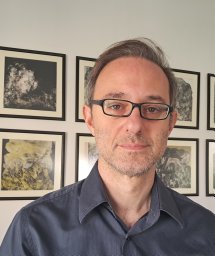
 Themos Stafylakis
· 9 previous affiliations
- OmiliaSince 2018
- Principal Researcher · Since 2018
- Omilia - Conversational IntelligenceSince 2018
- Senior Speech Scientist · Since 2019
- Speech Scientist · Since 2018
- Associate Professor · Since 2024
- Associate Professor (Elected) · Since 2023
- Research Affiliate · Since 2024
- Athena Research and Innovation Center In Information Communication & Knowledge TechnologiesSince 2024
- Researcher · Since 2024
- University of Nottingham2016–2018
- Research Fellow · 2016–2018
- Postdoctoral Researcher · 2011–2016
- PhD, Speaker Diarization · 2006–2011
- Imperial College London2004–2005
- MSc, Communication and Signal Processing · 2004–2005
Research Overview
Themos Stafylakis focuses on audio-visual speech recognition, multimodal representation learning, and visual question answering. His trajectory spans early work in speaker diarization to extensive contributions in deep learning architectures for lipreading and keyword spotting in unconstrained environments. Recently, his research has expanded to include knowledge-based visual question answering and audio-visual kinship verification.
Research Trajectory
The earliest work in the provided evidence centers on audio processing and speaker identification. In 2010, he investigated improvements to the Bayesian Information Criterion (BIC) for clustering audio segments, proposing a stricter penalty term to improve accuracy on benchmark datasets in A new penalty term for the BIC with respect to speaker diarization.
By 2017, his focus shifted significantly toward visual speech recognition and the application of deep learning to lipreading. He introduced an architecture combining spatiotemporal input layers, Residual Networks (ResNets), and Long Short-Term Memory (LSTM) networks in Combining Residual Networks with LSTMs for Lipreading. This work contributed to the broader area of Dense Supervision for Temporal and Iterative Models and established a foundation for his subsequent research in multimodal speech processing.
Throughout 2018, he expanded this architecture to tackle audiovisual word recognition in unconstrained, noisy environments. He detailed the integration of visual and auditory streams across a series of publications, demonstrating significant improvements on the Lipreading-In-The-Wild database. This sustained effort is captured in the preprint Pushing the boundaries of audiovisual word recognition using Residual Networks and LSTMs, its peer-reviewed counterpart Pushing the boundaries of audiovisual word recognition using Residual Networks and LSTMs, and a later 2022 consolidation of the methodology Pushing the boundaries of audiovisual word recognition using residual networks and LSTMs. Alongside sequence modeling, he explored representation learning for visual speech, extracting features designed to suppress variability from pose and illumination in Deep Word Embeddings for Visual Speech Recognition.
Simultaneously, he addressed the challenge of visual keyword spotting (KWS). He developed an end-to-end architecture capable of identifying unseen words using only video information in Zero-Shot Keyword Spotting for Visual Speech Recognition In-the-wild. He later continued this line of inquiry, participating in the development of audio-visual wake word detection in Seeing wake words: Audio-visual Keyword Spotting.
His work in 2018 also pushed toward fully end-to-end multimodal systems. He collaborated on End-to-End Audiovisual Speech Recognition, a model that learns to extract features directly from image pixels and audio waveforms, advancing the research direction of Independent Temporal Processing for Multimodal Fusion. In parallel, he investigated sequence modeling techniques for speech in the wild, collaborating on Audio-Visual Speech Recognition with a Hybrid CTC/Attention Architecture. This approach combined connectionist temporal classification (CTC) with attention mechanisms to force monotonic alignments, addressing the area of Relaxing the Conditional Independence Assumption in CTC and contributing to the broader fields of End-to-End Representation Learning for Raw Data Analysis and Multimodal Fusion through Feature Level Concatenation.
In 2023, his research expanded into new multimodal domains, particularly visual question answering and large-scale biometrics. He explored the integration of large language models (LLMs) for external knowledge retrieval, proposing an efficient in-context learning pipeline using LLaMA. This methodology was detailed in the preprint A Simple Baseline for Knowledge-Based Visual Question Answering and its conference version A Simple Baseline for Knowledge-Based Visual Question Answering. Additionally, he contributed to the creation of large-scale datasets for unconstrained environments, participating in the development of the KAN-AV dataset for audio-visual face and speech analysis in the wild, which introduced novel tasks such as cross-modal kinship matching.
Current Directions
The most recent papers in the evidence indicate a dual focus on knowledge-augmented vision-language tasks and multimodal biometrics. Recent work investigates knowledge-based visual question answering (KB-VQA), specifically addressing how to simplify complex pipelines by leveraging large language models for efficient in-context learning. Concurrently, his research addresses audio-visual face and speech analysis in unconstrained settings, exploring tasks such as kinship verification and cross-modal matching between facial and vocal characteristics.
Profile updated
Loading new papers…
Other researchers whose papers cluster into the same research directions — a proxy for overlapping technical interests and shared intellectual neighborhoods.
See something wrong? Report a mistake