

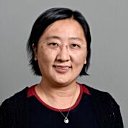
 Teresa Wu
· 1 previous affiliation
- Arizona State UniversitySince 2014
- Full Professor · Since 2014
- Assistant Professor · 2001–2006
Research Overview
Teresa Wu focuses on health and medical informatics, data-driven distributed decision support, and machine learning for clinical applications. Her trajectory spans from early work in functional brain network analysis to advanced transfer learning and generative models for medical imaging. Currently, she investigates multimodal alignment and diffusion models to address data scarcity and resolution challenges in specialized medical domains.
Research Trajectory
Wu’s early research involved statistical and structural learning methods for high-dimensional biological data. She participated in work on sparse inverse covariance estimation to model functional brain networks, as seen in Learning Brain Connectivity of Alzheimer's Disease from Neuroimaging Data, which sought to identify image-based markers for cognitive impairment. This foundational interest in network identification extended to broader methodological contributions, including her involvement in developing A Sparse Structure Learning Algorithm for Gaussian Bayesian Network Identification from High-Dimensional Data.
Transitioning toward patient-specific predictive modeling, she began focusing heavily on the research direction of Learning from Limited Data in Specialized Medical Domains. She led the development of Accurate Patient-Specific Machine Learning Models of Glioblastoma Invasion Using Transfer Learning, demonstrating that transfer learning could significantly improve the quantification of tumor cell density. Her lab subsequently expanded on this paradigm to handle complex, real-world clinical datasets. This included introducing A novel transfer learning model for predictive analytics using incomplete multimodality data and applying machine learning to neurodegenerative diseases in Early prediction of the Alzheimer's disease risk using Tau-PET and machine learning. To further mitigate data scarcity and hardware limitations, her group developed techniques for Addressing imaging accessibility by cross-modality transfer learning.
As generative models became more prevalent in medical imaging, Wu’s research adapted to evaluate and enhance these architectures. In Pseudo Supervised Metrics: Evaluating Unsupervised Image to Image Translation Models In Unsupervised Cross-Domain Classification Frameworks, her team introduced Domain-knowledge Inspired Pseudo Supervision (DIPS). This framework utilized Gaussian Mixture Models to create pseudo-labels, allowing standard supervised metrics to evaluate unsupervised translation models. This advanced methods for target risk estimation in unsupervised domain adaptation and provided domain-agnostic metrics for generative model evaluation. Addressing the physical limitations of scanning hardware, her group proposed Enhancing Amyloid PET Quantification: MRI-Guided Super-Resolution Using Latent Diffusion Models. This work leveraged a synthetic data generation pipeline and a latent diffusion model for resolution recovery to mitigate partial volume effects in Alzheimer’s disease research.
In 2025, her lab expanded its methodological toolkit across diverse clinical modalities. For time-series data, she guided the development of TP-CL: A novel temporal proximity contrastive learning approach for obstructive sleep apnea detection using single-lead electrocardiograms. In genomics, her team introduced Biologically Refined Imputation via Diffusion for Gene Expression. Returning to neuroimaging, she oversaw the creation of DinoAtten3D: Slice-Level Attention Aggregation of DinoV2 for 3D Brain MRI Anomaly Classification. This framework adapted 2D vision foundation models for 3D medical tasks using soft-attention mechanisms, contributing to areas such as attention mechanisms for volumetric medical image analysis, geometric latent space organization via supervised contrastive learning, and addressing class imbalance in clinical machine learning. Concurrently, her group explored anomaly detection using the forward process of diffusion models in AnoFPDM: Anomaly Detection with Forward Process of Diffusion Models for BrainMRI.
Most recently, Wu has participated in research addressing the fundamental challenges of training deep neural networks with synthetic and multimodal data. She collaborated on Informative Data Reweighting for Image Classification, which mitigates the negative impact of noise in synthetic samples generated by diffusion models during generative data augmentation. She also contributed to IBMA: Information Bottleneck-Based Multimodal Alignment, a framework that applies the Information Bottleneck principle to filter out modality-specific noise. This work advances techniques for information filtering for robust multimodal fusion and linear time mutual information estimation for large-scale learning.
Current Directions
The most recent work in the evidence indicates a strong focus on refining foundation models and generative architectures for complex, noisy, or multimodal clinical data. Current directions investigate how to effectively adapt large-scale 2D vision models for 3D medical imaging tasks and how to leverage diffusion models for both data imputation and super-resolution. Additionally, there is an ongoing emphasis on multimodal alignment—specifically, developing mathematically efficient methods to filter modality-specific noise without relying on restrictive statistical assumptions. This overarching agenda seeks to make deep learning more robust and applicable in specialized domains where high-quality, annotated data remains scarce.
Profile updated
Loading new papers…
Other researchers whose papers cluster into the same research directions — a proxy for overlapping technical interests and shared intellectual neighborhoods.
See something wrong? Report a mistake