

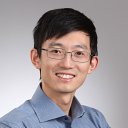
 Tengyu Ma
· 3 previous affiliations
- Stanford UniversitySince 2018
- Stanford University · Since 2018
- Meta (United States)Since 2017
- Visiting Scientist · Since 2017
- Research Scientist · 2017–2018
- Princeton University2012–2017
- PhD student · 2012–2017
2 other authors named Tengyu Ma: Tengyu Ma (Dalian University of Technology · 4 papers), Tengyu Ma (AMI - Advanced Machine Intelligence · 4 papers)
Research Overview
Tengyu Ma focuses on the theoretical foundations of machine learning, non-convex optimization, and the algorithmic mechanics of large language models. His trajectory spans early work on tensor decompositions and matrix completion to deep learning theory and reinforcement learning. Currently, his research investigates the capabilities of foundation models, including in-context learning, reasoning, and scalable optimization techniques.
Research Trajectory
Ma's early research established rigorous theoretical guarantees for non-convex optimization and representation learning. In Polynomial-Time Tensor Decompositions with Sum-of-Squares, he and his collaborators utilized sum-of-squares relaxations to improve the running times for tensor decomposition problems. Turning to matrix completion, he demonstrated in Matrix Completion has No Spurious Local Minimum that all local minima in the standard non-convex objective are global, explaining the empirical success of simple optimization algorithms. This focus on optimization landscapes continued with the development of a second-order algorithm in Finding approximate local minima faster than gradient descent, which achieves linear time complexity relative to dimension and training size. Concurrently, he explored representation learning and generative models. He contributed to the area of Denoising Embedding Spaces via Principal Component Removal by introducing Smooth Inverse Frequency (SIF) in A Simple but Tough-to-Beat Baseline for Sentence Embeddings, an unsupervised method that outperformed complex supervised models on textual similarity tasks. His collaborative work also analyzed the limitations of generative adversarial networks, showing in Generalization and Equilibrium in Generative Adversarial Nets (GANs) that trained distributions may fail to generalize despite appearing successful during training.
Moving into the 2020s, Ma expanded his theoretical investigations into reinforcement learning, robustness, and the implicit biases of neural networks. In the area of Density-Adaptive Regularization for Selective Shrinkage, he addressed heteroskedastic and long-tailed datasets with Heteroskedastic and Imbalanced Deep Learning with Adaptive Regularization, proposing a data-dependent technique to distinguish among mislabeled, ambiguous, and rare examples. His work in reinforcement learning advanced the broader direction of Bounding Exploration Complexity in Non-Linear Reinforcement Learning through Provable Model-based Nonlinear Bandit and Reinforcement Learning: Shelve Optimism, Embrace Virtual Curvature, which introduced an algorithm that provably converges to local maxima using nonlinear function approximations. He also investigated the mechanisms of generalization in deep learning. Contributing to the research direction of Curvature Regularization for Flat Minima, he rigorously analyzed Sharpness-Aware Minimization in How Does Sharpness-Aware Minimization Minimize Sharpness?.
This interest in loss landscapes and generalization extended to language models; in Same Pre-training Loss, Better Downstream: Implicit Bias Matters for Language Models, he demonstrated that models with identical pre-training losses can exhibit vastly different downstream performance, identifying the flatness of the loss landscape as a key predictor of transferability. Around this time, he also tackled fundamental statistical barriers, proving in Toward L_∞Recovery of Nonlinear Functions: A Polynomial Sample Complexity Bound for Gaussian Random Fields that nonlinear functions drawn from Gaussian Random Fields can be recovered with low worst-case error using a polynomial number of samples. Furthermore, he began exploring the emergent capabilities of large language models, contributing to the area of Implicit Bayesian Inference in Large Language Models with An Explanation of In-context Learning as Implicit Bayesian Inference, which posited that in-context learning arises when models infer shared latent concepts from pretraining documents with long-range coherence.
In recent years, Ma's research has deeply engaged with the algorithmic mechanics, reasoning capabilities, and scalable training of foundation models. He provided a theoretical foundation for prompting strategies in Chain of Thought Empowers Transformers to Solve Inherently Serial Problems, explaining how step-by-step generation allows transformers to bypass inherent depth constraints. Continuing his investigation into in-context learning, he proved in One Step of Gradient Descent is Provably the Optimal In-Context Learner with One Layer of Linear Self-Attention that a single-layer linear transformer mathematically executes a step of pre-conditioned gradient descent. His work on reasoning also extended to formal mathematics; in Formal Theorem Proving by Rewarding LLMs to Decompose Proofs Hierarchically, he designed a reinforcement learning algorithm that trains language models to autonomously decompose and solve complex theorems without relying on human-provided lemmas.
Alongside these theoretical insights, Ma has developed practical optimization techniques for large-scale training. He introduced a scalable second-order optimizer in Sophia: A Scalable Stochastic Second-order Optimizer for Language Model Pre-training, which utilizes a lightweight diagonal Hessian estimate to significantly accelerate training compared to standard methods. Most recently, he contributed to the broader area of Bridging Static Landscapes and Dynamic Optimization Trajectories by exploring the dynamics of learning rate schedules in Understanding Warmup-Stable-Decay Learning Rates: A River Valley Loss Landscape View, modeling the loss landscape to explain how sustained high learning rates navigate flat regions before decay phases reveal true model performance. Further advancing reinforcement learning and formal reasoning, Ma co-developed Scaling Self-Play with Self-Guidance, which addresses reward hacking and collapse in LLM self-play by assigning the model an additional role as a guide to score synthetic problems for relevance and naturalness, improving scaling in Lean4 formal theorem proving.
Current Directions
Recent work investigates the algorithmic capabilities and training dynamics of large language models. A major focus is understanding how transformers execute complex reasoning and learning tasks, such as demonstrating that linear self-attention performs implicit gradient descent and that chain-of-thought prompting enables models to solve inherently serial problems. Additionally, current research addresses the scalability of foundation model pre-training through novel optimization strategies, including lightweight second-order optimizers and theoretical frameworks for understanding learning rate schedules within complex loss landscapes. Finally, this work extends to scaling reinforcement learning and self-play for formal mathematical theorem proving, preventing reward hacking and collapse through self-guidance.
Profile updated
Loading new papers…
Other researchers whose papers cluster into the same research directions — a proxy for overlapping technical interests and shared intellectual neighborhoods.
See something wrong? Report a mistake