

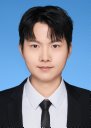
 Teng Hu
· 1 previous affiliation
- Shanghai Jiao Tong UniversitySince 2018
- PhD student · Since 2022
- Undergrad student · 2018–2022
Research Overview
Teng Hu focuses on generative modeling, video synthesis, and efficient model adaptation. His early work explored few-shot image generation and stroke-based rendering before expanding into complex video motion control and multimodal customization. Recently, his research investigates high-resolution video generation and the evaluation of instruction-guided video editing systems.
Research Trajectory
Teng Hu’s early research addressed the challenges of training generative models in data-constrained environments. In 2023, he introduced Phasic Content Fusing Diffusion Model with Directional Distribution Consistency for Few-Shot Model Adaption, a framework designed to prevent content degradation when adapting diffusion models with extremely limited samples. Concurrently, he developed Stroke-based Neural Painting and Stylization with Dynamically Predicted Painting Region, which utilized a phasic reinforcement learning strategy to dynamically predict painting regions, avoiding the boundary artifacts common in uniform-block rendering.
Moving into 2024, his work on few-shot generation expanded to industrial applications with AnomalyDiffusion: Few-Shot Anomaly Image Generation with Diffusion Model, leveraging the strong priors of latent diffusion models to synthesize authentic anomaly data. He also contributed to FEditNet++: Few-Shot Editing of Latent Semantics in GAN Spaces With Correlated Attribute Disentanglement, focusing on precise semantic control in generative adversarial networks, and designed SuperSVG: Superpixel-Based Scalable Vector Graphics Synthesis, a two-stage vectorization model that decomposes images into superpixels for fast, high-precision SVG generation.
A major theme in his trajectory emerged around controlling video dynamics without the need for extensive retraining, contributing to the research direction of The Performance Ceiling of Base Generative Models. He introduced MotionMaster: Training-free Camera Motion Transfer For Video Generation, a framework that disentangles camera and object movement to apply complex cinematic effects to AI-generated content. This approach was further refined in COMD: Training-free Video Motion Transfer With Camera-Object Motion Disentanglement, which bypassed the substantial computational overhead typically required for temporal camera modules.
Addressing broader computational bottlenecks, collaborative work explored the broader area of Scaling Visual Attention Beyond Quadratic Complexity through Exploring Real&Synthetic Dataset and Linear Attention in Image Restoration. This research introduced the RWKV-IR model, utilizing linear attention to maintain high performance with significantly lower overhead than standard Transformers. He also tackled work in the area of The Operational and Optimization Overhead of Multi-Stage Training by developing SaRA: High-Efficient Diffusion Model Fine-tuning with Progressive Sparse Low-Rank Adaptation, a memory-efficient method that repurposes low-magnitude parameters to learn new tasks, outperforming standard selective tuning approaches.
By 2025, his focus shifted toward advanced video customization and multimodal generation. He led the development of complex multi-subject video frameworks like PolyVivid: Vivid Multi-Subject Video Generation with Cross-Modal Interaction and Enhancement and HunyuanCustom: A Multimodal-Driven Architecture for Customized Video Generation. Both systems emphasize identity preservation across complex actions, integrating text, image, and video inputs to ensure subjects remain consistent throughout generated sequences. He also participated in developing UniAVGen: Unified Audio and Video Generation with Asymmetric Cross-Modal Interactions, a dual-branch Diffusion Transformer architecture designed for highly synchronized audio-visual synthesis.
Most recently, his collaborative research has pushed the boundaries of video resolution and evaluation. To enable native high-resolution generation, he was part of a team that introduced UltraVideo: High-Quality UHD Video Dataset with Comprehensive Captions, providing meticulously curated 4K and 8K clips. This data foundation was complemented by Transform Trained Transformer for Accelerating Native 4K Video Generation, which optimized the forward logic of full-attention models via multi-scale weight-sharing to handle spatiotemporal resolution scaling. Finally, contributing to the research direction Multi-Dimensional Quality Decomposition for Visual Media, he helped establish IVEBench: Modern Benchmark Suite for Instruction-Guided Video Editing Assessment, a comprehensive evaluation protocol highlighting the gap between temporal smoothness and instruction adherence in modern video language models.
Current Directions
The most recent papers in the evidence address the challenges of scaling video generation to ultra-high-definition formats and rigorously evaluating the precise control of these models. Recent work investigates architectural optimizations to mitigate the quadratic computational costs of full-attention mechanisms, specifically targeting native 4K video synthesis without altering core pretrained architectures. Concurrently, efforts are directed toward establishing comprehensive benchmarks and datasets that measure how accurately video editing models follow complex natural language instructions, moving beyond simple temporal consistency to ensure high-fidelity, instruction-aligned visual media.
Profile updated
Loading new papers…
Other researchers whose papers cluster into the same research directions — a proxy for overlapping technical interests and shared intellectual neighborhoods.
See something wrong? Report a mistake