

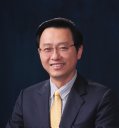
 Tei-Wei Kuo
· 3 previous affiliations
- National Taiwan UniversitySince 2001
- Full Professor · Since 2001
- City University of Hong Kong2019–2022
- Full Professor · 2019–2022
- The University of Texas at Austin1990–1994
- PhD student · 1990–1994
Research Overview
Tei-Wei Kuo focuses on systems architecture, non-volatile memory optimization, and efficient machine learning inference. His trajectory spans from foundational improvements in flash storage and mobile memory management to the development of adaptive neural networks and in-storage computing. Recently, his work emphasizes retrieval-augmented generation and early-exit frameworks for large language models.
Research Trajectory
The early phase of the research trajectory is characterized by a strong focus on the reliability and performance of non-volatile memory and mobile storage systems. This foundational systems expertise is evident in his 2014 keynote on Non-volatile memory innovation. As mobile workloads grew increasingly complex, he addressed critical Android memory management bottlenecks with Acclaim: Adaptive Memory Reclaim to Improve User Experience in Android Systems in 2020. This work introduced a memory reclaim scheme that prioritized foreground applications to minimize app slowdowns and crashes. Concurrently, he tackled the physical limitations of high-density 3D QLC flash memory in Shaving Retries with Sentinels for Fast Read over High-Density 3D Flash. By analyzing raw bit error rates, he proposed a sentinel-cell approach to dynamically infer optimal read voltages, mitigating the slow read performance inherent to high-density chips. This line of mobile and storage optimization continued with Pattern-Guided File Compression with User-Experience Enhancement for Log-Structured File System on Mobile Devices, which reduced write traffic on flash storage by intelligently compressing files based on their access patterns.
Around 2020, the trajectory expanded to include the efficient execution of machine learning models, particularly under strict hardware constraints. He participated in developing the Fully Nested Neural Network for Adaptive Compression and Quantization, which introduced an Ordered Dropout technique allowing a single model to be dynamically sliced for different hardware profiles without retraining. This contributed significantly to the research direction of Ordered Representations via Nested Dropout, a theme he later expanded upon in Variational Nested Dropout.
His background in storage systems naturally informed novel hardware-software co-designs for machine learning. To address the memory capacity limits of production-scale recommendation systems, he explored offloading embedding lookups directly to storage in RM-SSD: In-Storage Computing for Large-Scale Recommendation Inference. He also contributed to efficient data compression for deep learning with TRACE: A Fast Transformer-based General-Purpose Lossless Compressor, replacing sequential recurrent architectures with a highly optimized, single-layer Transformer to achieve significant speedups. During this period, he also engaged with weakly-supervised learning for medical imaging, collaborating on Bayes-MIL: A New Probabilistic Perspective on Attention-based Multiple Instance Learning for Whole Slide Images. This work introduced probabilistic uncertainty to improve the interpretability of attention weights in pathology diagnosis, and was followed by further methodological improvements in Retrieval-Augmented Multiple Instance Learning.
In recent years, the focus has shifted heavily toward the efficiency and architecture of large language models (LLMs), specifically through retrieval augmentation and adaptive inference. He contributed to ReFusion: Improving Natural Language Understanding with Computation-Efficient Retrieval Representation Fusion, which fused retrieved representations directly into a model's hidden states to avoid the computational overhead of long input sequences. This work aligns with the broader area of Automated Search for Multimodal Fusion Architectures. He further mapped this rapidly evolving landscape by co-authoring Retrieval-Augmented Generation for Natural Language Processing: A Survey, which explores architectural choices for dynamic knowledge interaction, touching upon areas such as Logit Level Fusion for Generative Model Decoding and Unified Architectures for Cross-Modal Perception and Generation.
Alongside LLM architectures, he has investigated dynamic computation to accelerate inference. This is exemplified by RAEE: A Robust Retrieval-Augmented Early Exit Framework for Efficient Inference, a training-free approach that skips unnecessary layers by retrieving the exit behaviors of semantically similar examples. This contributes to the research directions of Early Exiting to Prevent Overthinking in Deep Networks and Confidence Based Early Exiting for Efficient Inference. Despite this shift toward generative AI, he has maintained a steady output in core systems and hardware optimization, recently publishing Achieving Near-Zero Read Retry for 3D NAND Flash Memory and exploring spatial acceleration in DAWN: Accelerating Point Cloud Object Detection via Object-Aware Partitioning and 3D Similarity-Based Filtering.
Current Directions
The most recent work in the evidence points toward a dual focus on the architectural efficiency of large language models and the continued optimization of underlying hardware systems. A primary current direction involves refining Retrieval-Augmented Generation (RAG) systems. Rather than relying solely on prompt-level text concatenation, recent research investigates deeper architectural integrations, such as fusing retrieved representations directly into the hidden states of generative models to reduce computational overhead and improve natural language understanding.
Alongside RAG architectures, there is a strong emphasis on adaptive inference techniques for deep networks. This includes developing robust early-exit frameworks that dynamically bypass unnecessary computational layers during inference. By utilizing retrieved behaviors from similar examples, these frameworks aim to maintain or even improve accuracy while significantly accelerating processing times for large models. Finally, ongoing systems research continues to address the physical and architectural bottlenecks of modern hardware, exploring object-aware partitioning for 3D point cloud detection and advanced error mitigation strategies to achieve near-zero read retries in high-density NAND flash memory.
Profile updated
Loading new papers…
Other researchers whose papers cluster into the same research directions — a proxy for overlapping technical interests and shared intellectual neighborhoods.
See something wrong? Report a mistake