

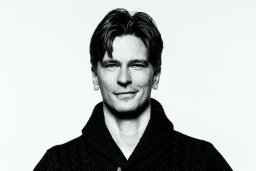
 Tarek R. Besold
· 15 previous affiliations
- Trust Tech VenturesSince 2026
- Founding Partner · Since 2026
- Sony AICurrent
- Current
- Principal Researcher · 2023–2026
- Calvin RiskSince 2022
- Advisor · Since 2022
- SonyAI2023–2026
- Senior Staff Research Scientist · 2023–2026
- Sony Europe2025–2026
- Branch Manager Sony Europe Ltd. Spain · 2025–2026
- IE University2026
- Advanced Venture Capital Program · 2026
- CertifAI2023–2025
- Advisor · 2023–2025
- Dekra (Germany)2021–2022
- Principal Researcher · 2021–2022
- Telefonica Research and Development2018–2020
- Principal Researcher · 2018–2020
- City University2017–2018
- Assistant Professor · 2017–2018
- University of Bremen2016–2017
- Postdoc · 2016–2017
- Free University of Bozen-Bolzano2015–2016
- Postdoc · 2015–2016
- Osnabrück University2011–2015
- Postdoc · 2015
- PhD, Cognitive Science, Artificial Intelligence · 2011–2014
- University of Amsterdam2010–2011
- MS student · 2010–2011
- MS student · 2004–2009
Research Overview
Tarek R. Besold focuses on neuro-symbolic artificial intelligence, explainable machine learning, and automated scientific discovery. His early work established foundational bridges between connectionist perception and symbolic logic to improve model comprehensibility. More recently, he investigates literature-based hypothesis generation and the application of interpretable AI to domains ranging from food computing to molecular property prediction.
Research Trajectory
Besold's early research concentrated on bridging the gap between connectionist and symbolic paradigms. He introduced frameworks for this integration in Integrating Logical and Sub-symbolic Contexts of Reasoning. A central theme of this work has been ensuring that machine learning models remain understandable to human users. In Ultra-Strong Machine Learning: comprehensibility of programs learned with ILP, he and his collaborators defined comprehensibility in a way that could be empirically measured through human participant trials, pushing back against the trend of evaluating models solely on predictive accuracy. He later synthesized the theoretical foundations and practical implementations of these hybrid systems in Neural-Symbolic Learning and Reasoning: A Survey and Interpretation, a comprehensive overview that maps the research direction of Integrating Neural Perception with Symbolic Logic and the broader area of Integrating Neural Perception with Symbolic Reasoning. Continuing this focus on interpretability, he contributed to Using ontologies to enhance human understandability of global post-hoc explanations of black-box models, which extended decision tree generation techniques using ontologies to guide and improve human understanding.
Drawing on interdisciplinary insights, Besold has also explored how cognitive science can inform artificial intelligence. He participated in research outlining Lessons from infant learning for unsupervised machine learning, which argued that studying human cognitive development could help overcome the limitations of current self-supervised algorithms. This interest in human-centric AI naturally extended into applied domains, particularly food computing and culinary generation. He directed work on Recipe 2.0: Information Presentation for AI-Supported Culinary Idea Generation, examining how AI can support human creativity, and developed robust models for ingredient extraction in Revisiting named entity recognition in food computing: enhancing performance and robustness. His applied research also encompasses sensory prediction; in Optimizing Learning Across Multimodal Transfer Features for Modelling Olfactory Perception, his team demonstrated how molecular foundation models could be repurposed to predict olfactory properties using significantly less labeled data.
A major recent focus has been the interpretability of knowledge graphs and their application to scientific discovery. In From Latent to Lucid: Transforming Knowledge Graph Embeddings into Interpretable Structures, Besold's group introduced KGEPrisma, a post-hoc explainable AI method that decodes latent representations into human-understandable rules and analogies. He further contributed to a unified mathematical framework for these techniques in Unifying Post-hoc Explanations of Knowledge Graph Completions. Concurrently, he has advanced the domain of Automated Knowledge Synthesis from Scientific Literature. He led the development of temporal graph-based approaches for literature-based discovery in Link prediction for hypothesis generation: an active curriculum learning infused temporal graph-based approach, and expanded this methodology in Literature-based Hypothesis Generation: Predicting the evolution of scientific literature to support scientists to predict novel scientific relationships while maintaining interpretability. Alongside these core methodological advances, he has investigated the practical deployment of AI systems, contributing to a practitioner survey in Towards More Practical Threat Models in Artificial Intelligence Security that highlighted the disconnect between academic threat models and real-world attacker capabilities.
Most recently, Besold has integrated his work in personalized data and neuro-symbolic theory. He oversaw the Gastro-Health Project: Revolutionizing Personalized Nutrition and Health Forecasting Through Integrated AI Technologies, an AI platform combining nutritional science and health forecasting. Returning to the theoretical foundations of his early career, his 2026 work From Neural Networks to Logical Theories: The Correspondence between Fibring Modal Logics and Fibring Neural Networks establishes a rigorous mathematical bridge between modern neural architectures, such as Transformers, and classical modal logic, providing a formal mechanism to translate black-box operations into precise logical theories.
Current Directions
Besold's most recent work investigates the formal mathematical correspondence between deep learning architectures and classical logic. By formalizing concepts such as "fibring," his research seeks to translate the latent operations of models like Transformers into interpretable logical theories, providing a rigorous foundation for verifiable AI. Concurrently, he continues to advance literature-based discovery, utilizing active curriculum learning and temporal graph embeddings to predict the evolution of scientific relationships and generate novel research hypotheses. His applied research also extends these predictive capabilities into healthcare, focusing on AI platforms that integrate personalized health data and nutritional science to forecast health outcomes and provide tailored dietary guidance.
Profile updated
Loading new papers…
Other researchers whose papers cluster into the same research directions — a proxy for overlapping technical interests and shared intellectual neighborhoods.
See something wrong? Report a mistake