

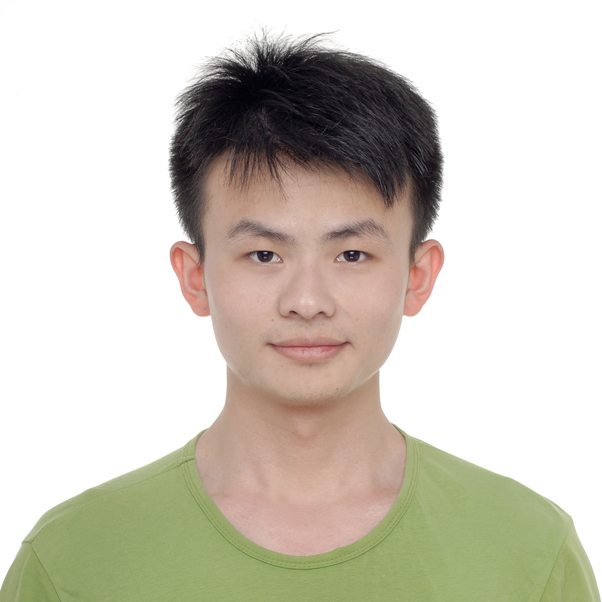
 Tao Yu
· 6 previous affiliations
- Apple (United States)Since 2026
- Machine Learning Researcher · Since 2026
- Intern · 2021–2022
- AWS AICurrent
- Current
- Amazon (United States)2023–2026
- Senior Applied Scientist · 2026
- Applied Scientist II · 2024–2026
- Applied Research Intern · 2023
- Cornell University2019–2024
- Doctor of Philosophy - PhD, Computer Science · 2019–2024
- Cornell Tech2019–2024
- PhD student · 2019–2024
- Shanghai Jiao Tong University2015–2019
- Bachelor of Science - BS, Mathematics · 2015–2019
9 other authors named Tao Yu: Tao Yu (Tsinghua University · 130 papers), Tao Yu (University of Hong Kong · 60 papers), Tao Yu (Chinese Academy of Sciences · 48 papers), Tao Yu (Chinese Academy of Sciences · 20 papers), Tao Yu (Limx Dynamics Inc. · LimX Dynamics · Tencent (China) · 14 papers), and 4 more
Research Overview
Tao Yu focuses on the design and optimization of large-scale machine learning systems, specifically targeting training and inference efficiency through low-precision methods, algorithm-hardware co-design, and robust representation learning. His work addresses the computational bottlenecks of foundation models by developing methods that maintain numerical accuracy while significantly reducing memory and throughput requirements. By leveraging non-Euclidean geometries and advanced quantization strategies, Yu aims to simplify the development and deployment of large language models (LLMs) on specialized hardware.
Research Trajectory
Yu’s early research was centered on graph representation learning and the mathematical foundations of embedding hierarchical data. In 2019, he participated in research aimed at Simplifying Graph Convolutional Networks, which sought to reduce the complexity of GCNs by removing non-linearities and collapsing weight matrices. This interest in structural efficiency evolved into a deep investigation of Discrete Tiling for Numerically Stable Hyperbolic Representations. Recognizing that hyperbolic space is naturally suited for hierarchical data but plagued by numerical instability on standard hardware, Yu developed methods to represent these spaces more accurately using multi-component floating-point formats.
Between 2022 and 2023, Yu expanded his focus to include alternative learning paradigms and more sophisticated geometric priors. He explored hyperdimensional computing (HDC) to understand its theoretical limits and improve its accuracy for parallel, single-pass learning. During this period, he also contributed to the development of Coneheads: Hierarchy Aware Attention, a second-author work that replaced standard dot-product attention with a hyperbolic alternative to better capture hierarchical relationships in natural language and vision tasks. To further bridge the gap between hyperbolic geometry and practical deep learning, he proposed using random Laplacian features to map hyperbolic embeddings into Euclidean space, allowing for the use of standard neural network layers while preserving geometric priors.
Since 2024, Yu’s work has shifted decisively toward the efficiency and scalability of LLMs, particularly in the context of industrial-scale pretraining. This transition is marked by a focus on low-precision training (e.g., FP8 and FP4) and the mitigation of training instabilities. He has developed strategies to eliminate memory-intensive "master weights" and has investigated the role of stochastic rounding in maintaining convergence when training with extremely low-precision formats. His recent work also touches upon the intersection of Zero-Shot Domain Generalization for Unseen Environments and the privacy-preserving aspects of federated learning, specifically addressing how to maintain momentum and scalability in asynchronous private settings.
Current Directions
Yu’s current research is primarily concerned with the next generation of LLM training and inference efficiency. A major pillar of this work is the development of near-lossless training recipes for ultra-low-precision datatypes like MXFP4. By combining stochastic rounding with variance-reduction techniques like the random Hadamard transform, Yu seeks to enable hardware-accelerated training that is significantly faster than current FP8 standards without sacrificing model quality.
Another significant direction involves the refinement of scaling laws to include architectural and inference-time considerations. Moving beyond traditional compute-optimal scaling, Yu is investigating Difficulty-Adaptive Test-Time Scaling for Reasoning Models and architectural configurations that optimize for inference throughput. This includes research into Distilling Large Language Models into Specialized Small Models to make foundation models more accessible for production environments. Additionally, he continues to contribute to optimization research, such as the development of block-periodic orthogonalization methods to improve the throughput of advanced optimizers on sharded GPU architectures.
Representative Work
Representing Hyperbolic Space Accurately using Multi-Component Floats This work addresses the fundamental problem of numerical error in hyperbolic embeddings. Because the volume of hyperbolic space grows exponentially, standard floating-point numbers quickly lose precision, leading to "ineluctable" errors. Yu proposed a multi-component floating-point representation that is feasible on GPUs, providing a numerically accurate solution for learning in hyperbolic space without the prohibitive cost of high-precision software simulation.
Understanding Hyperdimensional Computing for Parallel Single-Pass Learning In this paper, Yu provides a theoretical analysis of hyperdimensional computing (HDC), an energy-efficient paradigm using high-dimensional binary vectors. He identifies the limitations of HDC in expressing similarity matrices and demonstrates how these limits can be approached using random Fourier features. This work bridges the gap between emerging hardware-friendly algorithms and established kernel methods.
Collage: Light-Weight Low-Precision Strategy for LLM Training Yu introduced COLLAGE, a training strategy designed to reduce the memory overhead of LLM training. By replacing 32-bit master weights with a multi-component 16-bit representation, the method achieves the accuracy of high-precision mixed-precision training while significantly increasing throughput and reducing memory usage. This work is particularly relevant for training foundation models on memory-constrained hardware.
Shadow Cones: A Generalized Framework for Partial Order Embeddings This research presents a physics-inspired framework for embedding hierarchical data, such as taxonomies and directed acyclic graphs, into hyperbolic space. By modeling relationships as "shadows" cast by light sources, Yu resolved long-standing optimization difficulties in hyperbolic cone embeddings, achieving state-of-the-art performance in representing complex partial orders.
Training LLMs with MXFP4 As a lead contributor to this work, Yu developed a near-lossless training recipe for the MXFP4 datatype. The research identifies that unbiased gradient estimates via stochastic rounding are critical for convergence at this precision level. To mitigate the high variance introduced by block-level outliers in MXFP4, the paper utilizes the random Hadamard transform, providing a theoretically grounded approach to doubling hardware throughput compared to FP8.
Scaling Laws Meet Model Architecture: Toward Inference-Efficient LLMs This work extends the "Chinchilla" scaling laws by incorporating architectural hyperparameters like hidden size and MLP-to-attention ratios. Yu and his collaborators introduced conditional scaling laws that allow for the design of models optimized not just for training compute, but for inference speed. The resulting models demonstrate significant speedups in production environments while maintaining or improving upon the accuracy of established baselines.
Profile updated
Loading new papers…
Other researchers whose papers cluster into the same research directions — a proxy for overlapping technical interests and shared intellectual neighborhoods.
See something wrong? Report a mistake