

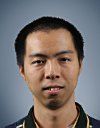
 Tao Wu
· 5 previous affiliations
- Huawei Technologies (China)Since 2020
- Principal Researcher · Since 2020
- Technical University of Munich2016–2020
- Postdoc · 2016–2020
- Postdoc · 2016
- Humboldt-Universität zu Berlin2015–2016
- Postdoc · 2015–2016
- University of Graz2010–2014
- PhD student · 2010–2014
6 other authors named Tao Wu: Tao Wu (Zhejiang University · 8 papers), Tao Wu (Zhejiang University · 6 papers), Tao Wu (Nanjing University · 3 papers), Tao Wu (3 papers), Tao Wu (ShanghaiTech University · 1 paper), and 1 more
Research Overview
Tao Wu focuses on structured convex optimization, probabilistic graphical models, and robust computer vision techniques. Early work addressed non-convex variational approaches for photometric stereo under inaccurate lighting conditions. More recently, the research trajectory has shifted toward developing combinatorial preconditioners for proximal algorithms on graphs and advancing probabilistic discriminative learning architectures.
Research Trajectory
The research trajectory of Tao Wu begins in the domain of robust computer vision, specifically addressing challenges in 3D reconstruction and photometric stereo. In 2017, Wu made significant contributions to A Non-convex Variational Approach to Photometric Stereo under Inaccurate Lighting. This work introduced a robust variational model designed to handle noise, outliers, and self-shadows when lighting calibration is either inaccurate or obtained via uncalibrated methods. By utilizing redescending M-estimators to enforce robustness against cast-shadows and specularities, and employing a computationally efficient alternating reweighted least-squares algorithm, the approach successfully refined both lighting intensities and directions while implicitly enforcing integrability.
Following this, Wu's focus expanded into the theoretical and practical aspects of optimization on graphs, a critical component for large-scale machine learning and vision tasks. As a contributing author, Wu participated in the development of novel preconditioning techniques for proximal optimization methods. This research, detailed in Combinatorial Preconditioners for Proximal Algorithms on Graphs, demonstrated how partitioning graphs into forests could yield effective preconditioners. The work proved that specific decompositions lead to theoretically optimal condition numbers and showed how ideal decompositions could be realized using matroid partitioning. Coupled with specialized solvers for the resulting scaled proximal subproblems, the preconditioned algorithm achieved competitive performance across various applications.
In 2019, Wu co-developed new architectures for probabilistic modeling, bridging traditional generative frameworks with deep learning methodologies. The paper Probabilistic Discriminative Learning with Layered Graphical Models advocated for the use of layered graphical models (LGMs) in discriminative tasks. By structuring LGMs with deep hierarchical and convolutional connections analogous to neural networks, and employing tensorized truncated variational inference, the research enabled efficient training via standard backpropagation frameworks. Additionally, the work introduced a soft-clamping strategy to effectively handle continuous-valued inputs during inference.
Returning to graph-based optimization in 2020, Wu contributed to further refinements in preconditioning strategies for structured convex optimization. The research presented in Optimization of Graph Total Variation via Active-Set-based Combinatorial Reconditioning proposed an adaptive preconditioner driven by a sharp analysis of the local linear convergence rate, which depends heavily on the "active set" at the current iterate. By leveraging nested-forest decompositions of inactive edges, this work provided guaranteed local linear convergence rates. The authors also proposed practical greedy heuristics to realize these nested decompositions, demonstrating the efficacy of the reconditioning strategy when applied to proximal gradient methods.
Current Directions
Based on the most recent papers in the evidence, which date to 2020, Wu's current research directions center on advanced optimization techniques and probabilistic modeling for machine learning and computer vision. A primary focus is the refinement of proximal algorithms for structured convex optimization on weighted graphs. This involves designing adaptive, active-set-based combinatorial preconditioners that dynamically adjust to the current iterate to guarantee local linear convergence. Additionally, recent work investigates the intersection of probabilistic graphical models and deep learning, specifically exploring how deep, hierarchically structured layered graphical models can be optimized for discriminative learning tasks using modern variational inference, soft-clamping strategies, and standard backpropagation techniques.
Profile updated
| Paper | Venue | Year |
|---|---|---|
| Probabilistic Discriminative Learning with Layered Graphical ModelsGitHubtum-vision/ | arXiv | 2019 |
Loading new papers…
Other researchers whose papers cluster into the same research directions — a proxy for overlapping technical interests and shared intellectual neighborhoods.
See something wrong? Report a mistake