

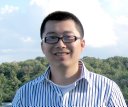
 Tao Jia
· 2 previous affiliations
- Southwest UniversitySince 2015
- Full Professor · Since 2015
- Chongqing Normal UniversitySince 2024
- Full Professor · Since 2024
1 other author named Tao Jia: Tao Jia (0 papers)
Research Overview
Tao Jia focuses on complex network dynamics, information diffusion, and scalable graph algorithms. His early work explored the quantitative patterns of scientific career evolution and social influence on directed networks. More recently, he investigates temporal community search, robust predictive modeling for neuroimaging, and the structural resilience of large-scale graphs under adversarial conditions.
Research Trajectory
Tao Jia’s research bridges the theoretical properties of complex systems with scalable algorithmic solutions for real-world networks. His early work in the science of science examined how scientists navigate their academic careers. In Quantifying patterns of research-interest evolution (2017), he developed a quantitative model capturing the predictable, exponential distribution of changes in researchers' interests, incorporating factors like research potential and subject proximity.
Moving into the 2020s, his focus expanded significantly into the mechanics of information diffusion and cascade prediction on social platforms. He addressed the challenge of forecasting how information spreads by combining network structure with temporal sequences in CasSeqGCN: Combining network structure and temporal sequence to predict information cascades (2022). To better capture the nuances of user intervention and reposting behavior, he proposed a novel latent space mapping technique in Independent Asymmetric Embedding for Information Diffusion Prediction on Social Networks (2022). These efforts contributed to the broader area of Modeling Asymmetric Social Influence in Multi-Agent Systems and work in Bridging the Topological Semantic Gap in Network Diffusion. Alongside his diffusion research, he developed foundational graph mining techniques, introducing a peeling-based framework to optimize conductance-based clustering in Scalable and Effective Conductance-Based Graph Clustering (2023).
In 2024, his work on graph algorithms matured to handle increasingly complex structural and temporal patterns. He extended clustering methodologies beyond simple edges to complex network motifs in PSMC: Provable and Scalable Algorithms for Motif Conductance Based Graph Clustering, providing theoretical quality guarantees while significantly reducing memory usage and computation time. He also tackled the dynamics of evolving networks in QTCS: Efficient Query-Centered Temporal Community Search. Concurrently, he applied his expertise in machine learning to medical imaging. By combining multiple brain imaging features, he developed an interpretable framework for diagnosing Major Depressive Disorder from resting-state fMRI in Multi-feature concatenation and multi-classifier stacking: An interpretable and generalizable machine learning method for MDD discrimination with rsfMRI, advancing the research direction of Stacked Generalization for Heterogeneous Ensemble Learning.
By 2025, his research integrated advanced graph neural networks (GNNs) and reinforcement learning to solve diverse computational challenges. Returning to fundamental network dynamics, he investigated spreading processes in Deciphering the overtaking phenomenon initiated by low-centrality nodes in spreading processes, demonstrating how periphery nodes can unexpectedly drive large outbreaks—a finding that advances the area of Temporal Network Models for Diffusion and Influence. He further formalized the evaluation of such models in Towards a performance characteristic curve for model evaluation: An application in information diffusion prediction. In applied graph learning, he utilized dual-agent reinforcement learning to compress large graphs while preserving their structural robustness profiles in Learning to Compress Graphs via Dual Agents for Consistent Topological Robustness Evaluation. His team also adapted GNNs for software engineering in A Multi-Feature Fusion Approach for Design Pattern Detection Based on Graph Neural Networks and explored recommendation systems in Generative Data Augmentation in Graph Contrastive Learning for Recommendation. Additionally, he revisited informetrics, analyzing publication graphs to understand academic disruptiveness in Innovation lineage structure: A graph structure in publications of scholars and its association with disruptiveness.
His most recent work in 2026 emphasizes the integration of deep learning with structural graph analysis to overcome computational bottlenecks. He introduced an attribute-augmented approach to community detection in NCSAC: Effective Neural Community Search via Attribute-Augmented Conductance, combining traditional graph metrics with reinforcement learning. In the neuroimaging domain, he addressed the combinatorial explosion of evaluating brain connectivity models by developing a core-set selection framework in Accelerating Benchmarking of Functional Connectivity Modeling via Structure-aware Core-set Selection, enabling large-scale evaluations on massive fMRI datasets using only a fraction of the data.
Current Directions
The most recent papers in the evidence address the intersection of deep learning, structural graph analysis, and computational efficiency. A major focus is the development of scalable frameworks to accelerate large-scale evaluations, such as using dual-agent reinforcement learning to compress graphs while preserving topological robustness, and employing structure-aware core-set selection to benchmark functional connectivity models in neuroimaging. Additionally, current work investigates the application of graph neural networks and contrastive learning to diverse domains, including software design pattern detection and recommendation systems. He also continues to explore fundamental network dynamics, particularly the mechanisms by which low-centrality nodes can initiate dominant spreading events in complex systems.
Profile updated
Loading new papers…
Other researchers whose papers cluster into the same research directions — a proxy for overlapping technical interests and shared intellectual neighborhoods.
See something wrong? Report a mistake