

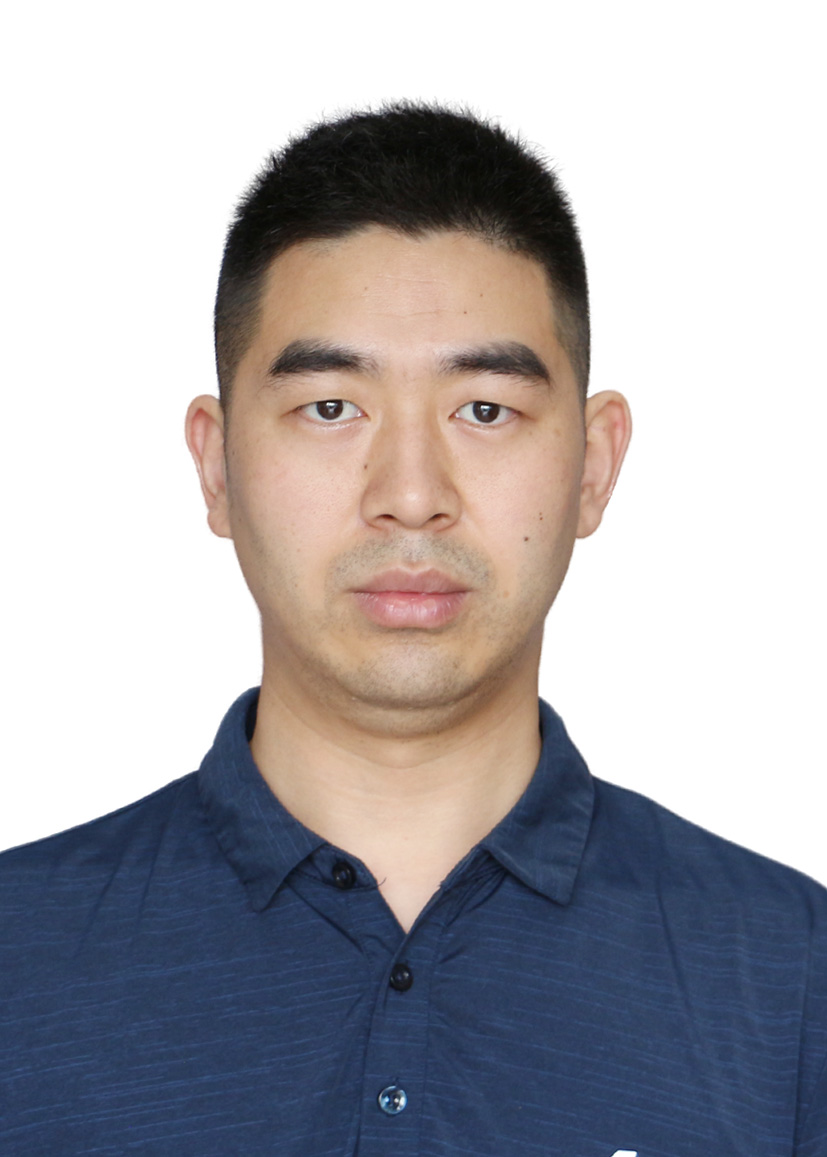
 Tao He
· 1 previous affiliation
- Sichuan UniversitySince 2014
- Researcher · Since 2026
- Assistant Professor · Since 2022
- PhD student · 2017–2021
- MS student · 2014–2017
4 other authors named Tao He: Tao He (University of Electronic Science and Technology of China · 20 papers), Tao He (GRG Banking Equipment Co, Ltd · 17 papers), Tao He (Cowarobot · University of South China · 8 papers), Tao He (Harbin Institute of Technology · 7 papers)
Research Overview
Tao He focuses on artificial intelligence architecture, medical imaging, and the integration of ordinary differential equations into neural networks. His trajectory spans from early spatiotemporal feature extraction to developing hyper-efficient, dynamic models for resource-constrained clinical environments. Currently, his research emphasizes test-time adaptation and mitigating representational drift in large vision-language models.
Research Trajectory
Tao He’s early research concentrated on computer vision and the extraction of complex spatiotemporal features from multi-modal data. In 2017, he led first-author work on Moving object recognition using multi-view three-dimensional convolutional neural networks, which addressed the challenging problem of identifying moving objects in video datasets. By combining 3D-CNNs with multi-view learning techniques, this work demonstrated how to capture more robust, view-related features from videos captured by different cameras, establishing a foundation in high-dimensional feature extraction.
As his career progressed through his doctoral studies at Sichuan University, his focus expanded into medical artificial intelligence and fundamental network mechanics. A critical priority became the intersection of predictive accuracy and clinical interpretability. In 2020, he published MediMLP: Using Grad-CAM to Extract Crucial Variables for Lung Cancer Postoperative Complication Prediction. This research tackled both binary and multi-label classification for perioperative mortality, proposing a novel multi-layer perceptron model that utilized gradient-weighted class activation mapping to extract crucial variables directly from electronic medical records.
Alongside his applied medical research, He investigated the theoretical bottlenecks of deep learning architectures. In 2022, he authored Subtraction Gates: Another Way to Learn Long-Term Dependencies in Recurrent Neural Networks. Traditional RNNs and LSTMs rely on multiplication gates to control information flow, which can still struggle with gradient vanishing or explosion over long sequences. This work proposed a novel subtraction-based gating mechanism to ensure more stable error flow during training, offering an alternative mathematical approach to learning long-term dependencies.
During this mid-career period, his broader research portfolio also addressed fundamental challenges in data distribution and visual semantics. He contributed to the research direction Boundary Refinement for Few-Shot Learning and the broader area of Semantic Knowledge Transfer for Long-Tail Learning, exploring how models can generalize when faced with rare categories or limited examples. Furthermore, his work in computer vision intersected with structured semantic mapping, engaging with themes such as Open-Vocabulary Scene Graph Generation and The Object Detection Bottleneck in Scene Graph Generation.
By 2024, He’s research synthesized his interests in medical imaging and mathematical network design, leading to a major focus on Ordinary Differential Equations (ODEs) as a tool for network efficiency. Medical image segmentation models, while highly accurate, often impose a heavy "computational tax" that makes them difficult to deploy on edge devices. To address this, he published A Lightweight U-like Network Utilizing Neural Memory Ordinary Differential Equations for Slimming the Decoder. This work demonstrated that by treating the decoding process as a continuous dynamical system, the parameter count and floating-point operations of U-like networks could be drastically reduced without sacrificing diagnostic performance.
This ODE-centric approach culminated in senior-author leadership. In 2025, he served as the principal investigator on MobileODE: An Extra Lightweight Network. This research introduced a hyper-efficient alternative to standard pointwise convolutions by modeling channel interactions as a dynamical system. The resulting Channelwise ODE Solver (COS) slashed channel interaction parameters by approximately 70% while improving accuracy across classification, detection, and segmentation tasks.
Simultaneously, He has applied his expertise in network mechanics to the emerging challenges of generative AI. In 2025, he led HalluRNN: Mitigating Hallucinations via Recurrent Cross-Layer Reasoning in Large Vision-Language Models. This architecture-level solution treats a model's layers as a sequence to be refined, integrating a lightweight recurrent module to adaptively correct "representational drift" and ensure visual grounding throughout the reasoning process.
Current Directions
The most recent papers in the evidence demonstrate a sustained effort to reframe discrete neural network components as continuous dynamical systems. By applying linear multistep numerical methods and ODE solvers to elements like skip connections and channel interactions, recent work investigates how to achieve sophisticated cross-scale feature fusion while maintaining strict parameter efficiency. This approach is particularly targeted at optimizing U-like networks for resource-constrained medical environments.
A second major direction involves dynamic adaptation during inference. Moving beyond static feature maps, current research explores the use of Test-Time Training (TTT) and dynamic multi-scale kernels. These plug-and-play modules allow networks to adaptively refine features for individual inputs—such as specific patient scans—restoring the dynamic context representation capability often lost in traditional static attention mechanisms.
Finally, He is actively addressing the reliability and scaling of large foundational models. This includes mitigating hallucinations in vision-language architectures through recurrent cross-layer reasoning, which aligns with his broader engagement in the research direction Non-Linear Reasoning Graphs for Large Language Models. Additionally, as these models require increasingly complex infrastructure, his corpus indicates involvement in the area of Overcoming the Hardware Homogeneity Assumption, ensuring that advanced architectures can be trained efficiently across the mixed hardware environments typical of modern data centers.
Profile updated
Loading new papers…
Other researchers whose papers cluster into the same research directions — a proxy for overlapping technical interests and shared intellectual neighborhoods.
See something wrong? Report a mistake