

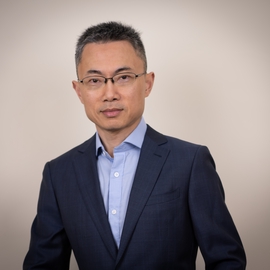
 Tao Gu
· 8 previous affiliations
- Deego Technology Pty LtdSince 2017
- Founder · Since 2017
- Macquarie UniversitySince 2020
- Full Professor · 2020–2026
- Current
- Shanghai Jiao Tong UniversitySince 2026
- Full Professor · Since 2026
- RMIT University2013–2020
- Associate Professor · 2013–2020
- University of Southern Denmark2009–2013
- Assistant Professor · 2009–2013
- Institute for Infocomm Research2005–2009
- Scientist · 2005–2009
- National University of Singapore2002–2005
- Doctor of Philosophy (Ph.D.), Computer Science · 2002–2005
- Nanyang Technological University1999–2001
- Master's degree, Electrical and Electronics Engineering · 1999–2001
Research Overview
Tao Gu focuses on intelligent sensing, mobile computing, and resource-efficient edge artificial intelligence. His trajectory spans from foundational work in low-power wireless networks and millimeter-wave sensing to decentralized federated learning for constrained devices. Recently, his research has expanded to address the privacy and reasoning capabilities of retrieval-augmented generation systems alongside cross-modal transfer learning for human sensing.
Research Trajectory
Gu's early trajectory, developed alongside his roles as a Professor at Macquarie University and founder of Deego Technology Pty Ltd, focused heavily on optimizing mobile systems and wireless communications. In 2019, his group investigated power-saving strategies for smartphones, developing a method for out-of-band coordination to reduce energy consumption during screen-off periods in Enabling Out-of-Band Coordination of Wi-Fi Communications on Smartphones. This work utilized existing beacon bits to coordinate Wi-Fi transmissions, mitigating idle listening without the need for energy-expensive coordination traffic. Concurrently, he began exploring how to efficiently deploy deep neural networks on constrained mobile hardware. This led to the development of release-and-inhibit control mechanisms in MDLdroidLite: a release-and-inhibit control approach to resource-efficient deep neural networks on mobile devices and a decentralized ChainSGD-reduce framework in MDLdroid: A ChainSGD-Reduce Approach to Mobile Deep Learning for Personal Mobile Sensing. These frameworks addressed the challenges of collaborative on-device training, advancing the broader research direction of Resource Efficient Machine Learning for Constrained Edge Devices.
Alongside mobile computing, Gu has maintained a strong focus on novel sensing modalities, particularly utilizing millimeter-wave (mmWave) radar and human body electrical responses. He introduced contact-free blood pressure measurement techniques in mmBP: Contact-Free Millimetre-Wave Radar Based Approach to Blood Pressure Measurement, a system he later extended and refined in mmBP+: Contact-Free Blood Pressure Measurement Using Millimeter-Wave Radar. His work in intelligent sensing also encompasses secure device pairing, demonstrated by his research on utilizing the human body's electrical response for touch-to-access authentication in Enabling secure touch-to-access device pairing based on human body's electrical response.
In 2023, Gu expanded his sensing research to multimedia and cross-modal applications. He explored facial expression recognition using radar in mmFER: Millimetre-wave Radar based Facial Expression Recognition for Multimedia IoT Applications and developed deep generative sensing techniques for RF-based gait recognition in XGait: Cross-Modal Translation via Deep Generative Sensing for RF-based Gait Recognition. During this period, he also addressed IoT security, proposing a chirp-level information-based key generation scheme for LoRa networks using perturbed compressed sensing in ChirpKey: A Chirp-level Information-based Key Generation Scheme for LoRa Networks via Perturbed Compressed Sensing. This method was subsequently adapted for collaborative key generation in Chirp-Level Information-Based Collaborative Key Generation for LoRa Networks via Perturbed Compressed Sensing.
As edge devices became increasingly central to his research, Gu's focus deepened on the area of Personalized Federated Learning for Heterogeneous Data. To tackle client heterogeneity and resource limitations in IoT environments, his group introduced an early-stopping strategy for federated learning in FLrce: Resource-Efficient Federated Learning with Early-Stopping Strategy. Building on this foundation, he collaborated on memory-efficient on-device learning techniques, co-developing a framework that utilizes ordered layer freezing and tensor operation approximation to reduce energy and memory requirements in Energy and Memory-Efficient Federated Learning With Ordered Layer Freezing.
Most recently, Gu's trajectory has incorporated the evaluation and optimization of large language models (LLMs) and retrieval-augmented generation (RAG) systems. In 2026, his group investigated the privacy surface of RAG architectures, demonstrating how knowledge asymmetry can be exploited to extract private database information in Fine-Grained Privacy Extraction from Retrieval-Augmented Generation Systems by Exploiting Knowledge Asymmetry. To improve the robustness of these systems, he introduced a collaborative critic-reasoner framework in From Extraction to Deduction: Resolving Functional Misalignment in RAG via a Collaborative Critic-Reasoner Framework, which forces models to rely on deductive reasoning rather than rote extraction when faced with conflicting retrieved documents. Concurrently, he has continued to advance edge AI through XTransfer: Modality-Agnostic Few-Shot Model Transfer for Human Sensing at the Edge, a framework that enables the transfer of pre-trained vision or text models to human sensing tasks like radar and IMU with minimal labeled data.
Current Directions
Recent work investigates the security, reasoning capabilities, and efficiency of modern AI systems deployed in both cloud and edge environments. A primary focus is the analysis and improvement of Retrieval-Augmented Generation (RAG) systems. This includes identifying privacy vulnerabilities—such as the extraction of sensitive data through knowledge asymmetry—and resolving functional misalignments by decoupling reasoning from answer extraction to improve accuracy in adversarial scenarios. Additionally, Gu continues to advance edge-based human sensing by exploring modality-agnostic transfer learning, enabling large pre-trained models to be efficiently repurposed for sensor-based activity recognition with minimal data and computational overhead.
Profile updated
Loading new papers…
Other researchers whose papers cluster into the same research directions — a proxy for overlapping technical interests and shared intellectual neighborhoods.
See something wrong? Report a mistake