

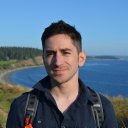
 Tankut Can
· 6 previous affiliations
- Emory UniversitySince 2024
- Assistant Professor · Since 2024
- Institute for Advanced Study2021–2024
- Researcher · 2021–2024
- City University of New York2017–2021
- Researcher · 2017–2021
- Stony Brook University2014–2017
- Researcher · 2014–2017
- University of Chicago2008–2014
- PhD student · 2008–2014
- Undergrad student · 2003–2008
Research Overview
Tankut Can focuses on the intersection of theoretical physics, cognitive science, and deep learning, applying principles from statistical mechanics to understand neural computation. Originally working in nonequilibrium physics, his trajectory has evolved to explore the mathematical foundations of recurrent neural networks and continuous attractor dynamics. His recent work investigates unsupervised methods for inferring neural flow fields and novel sampling strategies in large language models.
Research Trajectory
Beginning in 2020, his research applied methods from random matrix theory and mean-field theory to understand the mathematical underpinnings of recurrent neural networks (RNNs). In Theory of gating in recurrent neural networks, he and his collaborators established a framework for how multiplicative gating mechanisms—such as those found in LSTMs and GRUs—reshape network dynamics. This work demonstrated that gating enables flexible control over memory timescales and activity dimensionality, contributing to the broader area of The Stability Memory Trade-off in Recurrent Systems and informing efforts in the research direction of Mapping Computational Principles to Biological Neural Architectures. Building on this foundation, he provided a rigorous mathematical explanation for the trainability of these architectures in Gating creates slow modes and controls phase-space complexity in GRUs and LSTMs. By showing how gating generates long-lasting memories and controls phase-space complexity, this research advanced understanding in areas like Computation at the Edge of Chaos and the Input Driven Suppression of Chaos in Recurrent Networks.
Following his work on discrete-time RNNs, his focus expanded to continuous-time dynamical systems and optimization. To explore how neural networks implement computations requiring the storage of continuous variables, he co-developed gated neural ordinary differential equations (gnODEs). Introduced in Learning and Shaping Manifold Attractors for Computation in Gated Neural ODEs, this architecture combines the interpretability of low-dimensional dynamical systems with the robust memory capabilities of gated RNNs. He further analyzed these models in Trainability, Expressivity and Interpretability in Gated Neural ODEs, demonstrating how gnODEs can learn complex memory tasks through adaptive timescales. This research significantly contributed to the study of Continuous Attractor Manifolds for Parametric State Tracking. Concurrently, he investigated the implicit bias of optimization algorithms in overparameterized neural networks. In Flatter, Faster: Scaling Momentum for Optimal Speedup of SGD, he and his colleagues identified a principled scaling relationship between the momentum hyperparameter and the learning rate that maximally accelerates training without sacrificing generalization.
More recently, his trajectory has bridged theoretical machine learning with empirical neuroscience and large language models. Participating in a collaborative effort to uncover the hidden rules governing neural population activity, he contributed to Flow-field inference from neural data using deep recurrent networks. This work introduced an unsupervised deep learning framework that visualizes brain computations as physical flow fields, advancing research in the area of Nonlinear Dynamics in Functional Brain Connectivity. In a distinct but parallel line of inquiry regarding modern transformer architectures, he oversaw research on the internal representations of large language models. The resulting paper, Generating output diversity from prompt re-tokenization, presented evidence that trained LLMs learn subtoken structure and introduced a novel sampling strategy that leverages different token encodings of the same surface string to generate diverse completions in reasoning and coding tasks.
Current Directions
The most recent work in his research portfolio spans two primary domains: the inference of continuous dynamics from biological neural data, and the representational mechanics of large language models. In the intersection of neuroscience and machine learning, current efforts focus on developing unsupervised frameworks to extract interpretable, low-dimensional flow fields and attractors directly from neural population activity. This approach aims to translate complex brain computations into intuitive physical models. Simultaneously, in the domain of natural language processing, recent investigations explore the extent to which large language models encode subtoken structures. By manipulating prompt tokenization, this line of research seeks to develop novel sampling strategies that enhance output diversity and improve performance on complex reasoning and generation tasks.
Profile updated
Loading new papers…
Other researchers whose papers cluster into the same research directions — a proxy for overlapping technical interests and shared intellectual neighborhoods.
See something wrong? Report a mistake