

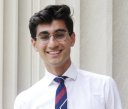
 Tanishq Kumar
· 1 previous affiliation
- Stanford UniversitySince 2025
- PhD student · Since 2025
Research Overview
Tanishq Kumar focuses on the science of deep learning, with a research program centered on the mathematical foundations of training dynamics, scaling laws, and model efficiency. His work investigates the mechanisms by which neural networks transition from memorization to generalization, the information-theoretic constraints of model pruning, and the multi-dimensional nature of scaling in large language models. By combining theoretical analysis with empirical studies in both artificial and biological systems, he seeks to characterize the fundamental phase transitions that occur during the learning process and to develop more efficient methods for model training and inference.
Research Trajectory
Kumar’s early research focused on the internal dynamics of neural networks during training, specifically addressing the phenomenon of grokking. In Grokking as the transition from lazy to rich training dynamics, he proposed that The Phase Transition from Memorization to Generalization is not merely a consequence of specific regularization techniques but represents a fundamental shift in how models represent information. This work characterizes grokking as a Beyond the Lazy Training Regime of Neural Networks, where a network moves from a "lazy" regime—behaving like a linear model with fixed features—to a "rich" regime where it learns the specific features necessary for task mastery. This perspective reframes grokking as a structural evolution of the model's internal representations rather than a simple optimization quirk.
Building on this theoretical foundation, Kumar contributed to the mathematical formalization of these dynamics in Asymptotic Dynamics for Delayed Feature Learning in a Toy Model. Utilizing Dynamical Mean Field Theory (DMFT), this research derived closed-form expressions for the gap between training and test loss, providing a quantitative characterization of the Temporal Dynamics of Weight Decay and Delayed Generalization. By isolating parameters such as Neural Tangent Kernel (NTK) alignment and network laziness, the work demonstrated how grokking emerges as a uniquely offline property during repeated training on the same dataset.
Parallel to his work on training dynamics, Kumar investigated the feasibility of sparse neural networks. In No Free Prune: Information-Theoretic Barriers to Pruning at Initialization, he addressed the "lottery ticket hypothesis" by examining why high-performance sparse networks are difficult to identify at the start of training. The study argues that the effective size of a sparse network includes the information encoded in its sparsity mask. Because high-performance masks must be heavily tuned to the data, the process of finding them inherently requires the computational expenditure that pruning at initialization seeks to avoid, establishing an information-theoretic limit on early-stage model compression.
Scaling and Model Efficiency
As his work progressed, Kumar shifted toward the practical constraints of deploying large-scale models, particularly the trade-offs between model size, data volume, and numerical precision. In Scaling Laws for Precision, he introduced Scaling Laws for Model Precision, arguing that precision constitutes a "third dimension" of scaling. This research demonstrates that training in low precision effectively reduces a model's parameter count and that Scaling Laws for Low Precision Models must account for the increased fragility of overtrained models during quantization. This work is particularly relevant to Mitigating Error Accumulation in Quantized Neural Networks, as it identifies how excessive pre-training on a fixed parameter budget can lead to performance collapses when models are compressed for inference.
Kumar has also participated in research examining the limits of data scaling. His contributions to studies on "catastrophic overtraining" suggest that the widely held assumption that more pre-training data always yields better downstream performance is flawed. This work indicates that training a language model for too long can make it "brittle" and more difficult to fine-tune, potentially leading to a decrease in performance on downstream tasks. Similarly, he has explored how reducing data diversity can, counter-intuitively, accelerate training in certain synthetic settings by biasing the training distribution away from the test distribution, offering new perspectives on curriculum learning and data filtering.
Current Directions
Kumar’s most recent work extends the science of deep learning into two distinct areas: systems neuroscience and inference optimization. In Do Mice Grok? Glimpses of Hidden Progress in Sensory Cortex, he bridges the gap between artificial intelligence theory and biological systems. The study investigates whether biological brains exhibit the same "hidden progress" toward generalization seen in neural networks after reaching apparent task mastery, suggesting that the phase transitions observed in deep learning may have analogues in the sensory cortex of animals.
On the computational side, Kumar has focused on breaking the sequential bottlenecks of large language model inference. In Speculative Speculative Decoding, he proposed the SAGUARO algorithm, which parallelizes the drafting and verification steps of the decoding process. By allowing a draft model to predict the outcomes of the target model's verification, this method achieves significant speedups over standard autoregressive generation and existing speculative decoding techniques. This move toward inference efficiency reflects a broader trajectory in his research from the theoretical study of how models learn to the practical optimization of how they are deployed.
Profile updated
Loading new papers…
Other researchers whose papers cluster into the same research directions — a proxy for overlapping technical interests and shared intellectual neighborhoods.
See something wrong? Report a mistake