

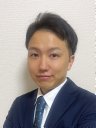
 Takahiro Maeda
· 6 previous affiliations
- Toshiba (Japan)Since 2025
- Research Engineer · Since 2025
- Toshiba CorporationSince 2025
- Researcher · Since 2025
- Toyota Technological Institute2015–2025
- PhD student · 2021–2025
- MS student · 2019–2021
- Undergrad student · 2015–2019
- Visiting Scholar · 2024
- Research Internship · 2023
- Intern · 2019
1 other author named Takahiro Maeda: Takahiro Maeda (1 paper)
Research Overview
Takahiro Maeda focuses on cloud-based robotics infrastructure, standardized benchmarking, and reproducible research in dexterous manipulation. His collaborative work centers on developing remote-access robot clusters and shared competitions that bridge the gap between simulation and reality. These efforts aim to democratize access to physical hardware and accelerate generalizable robot learning.
Research Trajectory
In 2021, Maeda participated in large-scale collaborative efforts aimed at solving the reproducibility crisis in robotics and addressing the persistent challenges of sim-to-real transfer. A major barrier in robotics research has been the limited access to standardized physical hardware, which makes it difficult to compare algorithms fairly or verify results outside of simulation. To address this, Maeda and collaborators introduced A Robot Cluster for Reproducible Research in Dexterous Manipulation. This project detailed the creation of a remote-access platform hosted at the Max Planck Institute for Intelligent Systems, allowing researchers globally to execute code on real dexterous manipulation hardware. By providing standardized physical systems alongside a massive dataset of robot hours, this infrastructure supports the broader area of Computational Offloading for Mobile Robots and advances the research direction of Scaling Robotic Control to High Dimensional Action Spaces. The project also required robust system design, contributing to the area of Unified Software Architectures for Seamless Robotic Sim-to-Real Transfer.
Building directly on this infrastructure, Maeda was part of the consortium that launched Real Robot Challenge: A Robotics Competition in the Cloud. Because dexterous manipulation remains an open problem, the competition was designed to coordinate the research community's efforts around a shared, physical benchmark. By allowing participants to test their algorithms on the remote robot cluster rather than relying solely on local hardware or pure simulation, the initiative contributes significantly to the research direction of Standardized Benchmarking for Generalizable Robotic Learning. Furthermore, by exposing algorithms to the physical constraints of real-world manipulation, the competition provided practical insights into the broader field of Overcoming the Reality Gap in Robotic Manipulation. Together, these 2021 projects represent a concerted effort to advance the area of Democratizing Robotics Research Through Low-Cost Hardware, ensuring that researchers without access to expensive physical labs can still contribute to state-of-the-art robotic learning.
Current Directions
The most recent papers in the evidence are from 2021, focusing heavily on shared robotic infrastructure and community-driven evaluation. Based on these collaborative projects, the primary themes of this work involve creating standardized, remote-access hardware platforms that allow researchers worldwide to test algorithms on physical systems. This focus addresses critical bottlenecks in reproducibility and sim-to-real transfer, particularly for complex tasks like dexterous manipulation. By shifting the evaluation of robotic learning algorithms from isolated, lab-specific setups to cloud-accessible, standardized clusters, this line of research seeks to establish more rigorous and accessible methodologies for the robotics community.
Profile updated
| Paper | Venue | Year |
|---|---|---|
| CacheFlow: Fast Human Motion Prediction by Cached Normalizing FlowGitHubmeaten/ | NeurIPS | 2025 |
Loading new papers…
Other researchers whose papers cluster into the same research directions — a proxy for overlapping technical interests and shared intellectual neighborhoods.
See something wrong? Report a mistake