

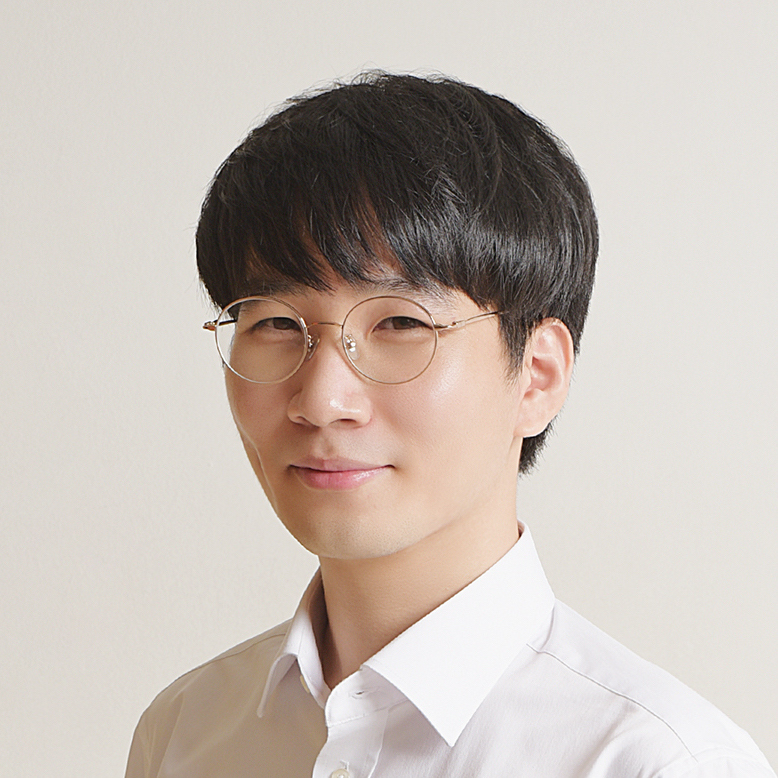
 Taesik Gong
· 8 previous affiliations
- Assistant Professor · Since 2024
- Current
- Visiting Scholar · 2024
- Nokia Bell Labs2023–2024
- Research Scientist · 2023–2024
- Bell Labs2023–2024
- Researcher · 2023–2024
- Doctor of Philosophy - PhD, Computer Science · 2017–2023
- Postdoc · 2023
- Master of Science - MS, Computer Science · 2016–2017
- Research Intern · 2022
- Research Intern · 2019
- Individual2012–2016
- Undergrad student · 2012–2016
Research Overview
Taesik Gong focuses on mobile sensing, edge computing, and robust machine learning in heterogeneous environments. His work addresses the challenges of deploying artificial intelligence on resource-constrained devices by developing methods for test-time adaptation and efficient on-device inference. Recently, his research has expanded to include preference-aligned memory construction for retrieval-augmented generation on mobile systems.
Research Trajectory
Gong's early research explored novel interaction and adaptation techniques for mobile devices. In 2019, he introduced MetaSense: few-shot adaptation to untrained conditions in deep mobile sensing, an adaptive system designed to handle the diverse user and device conditions that degrade model performance in the wild. That same year, he developed Knocker: Vibroacoustic-based Object Recognition with Smartphones, a system that leverages vibroacoustic responses to identify objects when a user simply knocks on them with a smartphone, streamlining mobile interactions.
A major theme in his subsequent work is overcoming domain shift in mobile sensing, particularly through test-time adaptation (TTA). In 2022, he presented NOTE: Robust Continual Test-time Adaptation Against Temporal Correlation. This work addressed the failure of existing TTA methods when processing non-i.i.d. (temporally correlated) test data streams, advancing the broader area of Test-Time Adaptation Beyond Batch Normalization and contributing to the research direction of Robust Learning from Temporally Correlated Data Streams. Building on this, he introduced SoTTA: Robust Test-Time Adaptation on Noisy Data Streams in 2023. By combining high-confidence input filtering with entropy-sharpness minimization, SoTTA prevents catastrophic performance collapses caused by outliers or adversarial attacks, further expanding work in the area of Class Balanced Memory Management for Continual and Streaming Learning.
Alongside adaptation algorithms, Gong investigated the practical challenges of evaluating personalized models. He developed DAPPER: Label-Free Performance Estimation after Personalization for Heterogeneous Mobile Sensing (2023), a method to estimate model performance without ground-truth labels, which is critical for the research direction of Personalizing Activity Recognition Across Heterogeneous Users and Sensors. During this period, he also explored weakly-supervised learning for audio applications, presenting LanSER: Language-Model Supported Speech Emotion Recognition (2023). LanSER utilizes pre-trained large language models to infer weak emotion labels from speech transcripts, reducing the reliance on costly human-annotated datasets.
As his focus expanded to the hardware-software co-design of edge AI, Gong began addressing the orchestration of neural workloads on resource-constrained wearables. In 2023, he and his collaborators detailed Synergy: Towards On-Body AI via Tiny AI Accelerator Collaboration on Wearables, a runtime system that manages tiny AI accelerators across a network of devices to improve throughput and reduce power consumption. This system was further formalized in the 2024 publication Collaborative Inference via Dynamic Composition of Tiny AI Accelerators on MCUs, which provides device-agnostic programming interfaces to maximize the inference throughput of concurrent AI models on the body. Continuing to optimize edge hardware, he introduced DEX: Data Channel Extension for Efficient CNN Inference on Tiny AI Accelerators (2024), a technique that packs spatial information into idle hardware processors during initial network layers to improve accuracy without increasing inference latency.
In 2025, Gong's collaborative work began advocating for systemic shifts in how AI perceives the physical world. He participated in the development of AI Should Sense Better, Not Just Scale Bigger: Adaptive Sensing as a Paradigm Shift, which argues against the diminishing returns of simply scaling models and datasets, proposing instead an adaptive sensing framework. This perspective aligns with the broader research direction of Reducing the Carbon Footprint of Large Scale Machine Learning. Concurrently, he contributed to Frequency Composition for Compressed and Domain-Adaptive Neural Networks (2025), which unifies model compression and domain adaptation by training quantized models on low-frequency shapes and adapting them using high-frequency details.
Most recently, his research group has tackled the memory constraints of deploying generative AI on mobile devices. In 2026, he oversaw the development of From Volume to Value: Preference-Aligned Memory Construction for On-Device RAG. This work introduces the EPIC framework, which drastically reduces indexing memory requirements for Retrieval-Augmented Generation by storing only information that aligns with specific user preferences.
Current Directions
The most recent papers in the evidence indicate a focus on optimizing advanced artificial intelligence for resource-constrained edge and mobile environments. Current work investigates adaptive sensing paradigms that prioritize efficient data acquisition over massive model scaling, aiming to improve environmental sustainability and system efficiency. Additionally, recent research addresses the deployment of generative models on local hardware, specifically exploring preference-aligned memory construction to enable efficient, personalized Retrieval-Augmented Generation (RAG) on devices with strict memory limitations.
Profile updated
Loading new papers…
Other researchers whose papers cluster into the same research directions — a proxy for overlapping technical interests and shared intellectual neighborhoods.
See something wrong? Report a mistake