

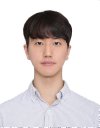
 Taebum Kim
· 6 previous affiliations
- FriendliAISince 2021
- Researcher · Since 2021
- Seoul National University2013–2023
- PhD student · 2019–2023
- Undergrad student · 2013–2019
- Software Platform Lab2019
- PHD Student · 2019
- DataMining Lab2018
- Undergraduate Intern · 2018
- Computational & Theoretical Astrophysics Group2016–2017
- Undergraduate Intern · 2016–2017
- Korea Air Force Academy2014–2016
- Sergeant · 2014–2016
Research Overview
Taebum Kim focuses on the design and optimization of systems for large-scale deep learning, with a particular emphasis on memory efficiency, distributed training, and the integration of imperative and symbolic programming models. His work addresses the fundamental bottlenecks that arise when training and deploying massive neural networks, such as Large Language Models (LLMs), across heterogeneous hardware environments. By developing novel scheduling algorithms and framework architectures, Kim seeks to bridge the gap between the high-level usability of deep learning frameworks and the low-level performance requirements of modern hardware accelerators.
Research Trajectory
Kim’s research trajectory reflects a transition from algorithmic approaches to machine learning challenges toward system-level optimizations for high-performance computing. In 2019, his work was situated within the domain of knowledge distillation and model compression. During this period, he participated in research addressing the problem of transferring knowledge from large, complex models to smaller, more efficient ones in environments where the original training data is unavailable due to privacy or confidentiality constraints. This early work highlighted the challenges of operating within restricted data manifolds and set the stage for a career-long interest in model efficiency.
By 2021, Kim’s focus shifted toward the architectural foundations of deep learning frameworks. He identified a critical tension in the field: the trade-off between the imperative programming style preferred by researchers for its flexibility and the symbolic graph execution required by systems for high performance. As a lead researcher, he developed systems to enable the co-execution of these two paradigms, ensuring that dynamic Python features—which often lack symbolic representations—do not become a barrier to execution or optimization. This work established a foundation for handling the increasing complexity of model architectures that do not fit neatly into static computational graphs.
In 2023, Kim’s research moved into the optimization of large-scale distributed systems, specifically addressing the "memory wall" encountered during the training of LLMs. His recent work focuses on Balancing Memory Load in Pipeline Parallel Training, a critical area as model sizes outpace the growth of individual GPU memory. This phase of his research is characterized by a deep engagement with hardware-software co-design, exploring how to mitigate bottlenecks related to Video RAM (VRAM) capacity and interconnect speeds.
Current Directions
Kim’s current research is centered on several interconnected themes within high-performance machine learning systems. A primary area of interest is Memory Balanced Scheduling for Pipeline Parallel Training. In standard pipeline parallelism, early stages of the model must store intermediate activations for significantly longer durations than later stages, leading to a structural memory imbalance that limits the maximum achievable batch size. Kim’s work proposes methods to redistribute these memory loads, thereby improving hardware utilization and training throughput.
Beyond pipeline parallelism, Kim is investigating methods for Hiding Memory Latency with Asynchronous Software Pipelining. This involves optimizing the movement of data between system RAM and GPU memory to ensure that accelerators do not remain idle while waiting for model weights or activations. This is particularly relevant in the context of Overcoming the PCIe Bottleneck in Offloaded LLM Inference, where the bandwidth of the PCIe bus often becomes the primary constraint when running models that exceed the capacity of a single GPU's VRAM.
Additionally, Kim is exploring Predictive Parameter Prefetching for Sparse Model Inference. This research direction addresses the unique challenges of Mixture-of-Experts (MoE) models and large-scale recommendation systems. Because these models only activate a subset of their parameters for any given input, Kim is developing techniques to predictively load the necessary parameters into high-bandwidth memory just before they are needed, further mitigating the effects of the memory wall in sparse, large-scale architectures.
Representative Work
In the 2019 paper Knowledge Extraction with No Observable Data, Kim contributed to a method for distilling knowledge from a pre-trained teacher network into a student network without access to the original training dataset. This work addressed a significant gap in the literature, as most distillation techniques rely on observing the data manifold used during the teacher's training. By enabling distillation in data-starved or privacy-sensitive environments, this research provided a framework for model compression in industrial and medical domains where data sharing is restricted.
As the lead author of Terra: Imperative-Symbolic Co-Execution of Imperative Deep Learning Programs, Kim addressed the usability-performance gap in deep learning frameworks. While imperative programming (e.g., PyTorch) offers ease of use, it often misses the optimization opportunities available to symbolic graph-based systems (e.g., TensorFlow 1.x). Terra introduced a system that allows for the simultaneous execution of imperative Python code and optimized symbolic graphs. This approach ensures that even when a program contains features that cannot be easily converted to a symbolic representation—such as third-party library calls or complex dynamic control flows—the system can still maintain high performance without sacrificing the flexibility of the Python ecosystem.
Kim’s 2023 work, BPipe: Memory-Balanced Pipeline Parallelism for Training Large Language Models, represents a significant advancement in distributed training efficiency. BPipe targets the "memory imbalance" inherent in pipeline parallelism, where early GPUs in a pipeline consume disproportionately more memory due to the long-term storage of activations required for the backward pass. By implementing a system that intelligently transfers these intermediate activations from memory-strained early GPUs to underutilized later GPUs, BPipe enables the use of larger batch sizes and reduces the need for costly recomputation. The system demonstrated training speedups of up to 2.17x, illustrating the impact of memory-aware scheduling on the scalability of LLM training.
Through these projects, Kim has consistently focused on the technical constraints of hardware—specifically memory capacity and transfer latency—and developed software-level solutions that allow machine learning researchers to push the boundaries of model scale and complexity. His work remains grounded in the practical realities of modern GPU clusters and the evolving requirements of the deep learning community.
Profile updated
Loading new papers…
Other researchers whose papers cluster into the same research directions — a proxy for overlapping technical interests and shared intellectual neighborhoods.
See something wrong? Report a mistake