

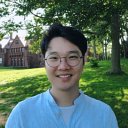
 Tae-Hyun Oh
· 7 previous affiliations
- Associate Professor · Since 2025
- Doctor of Philosophy (Ph.D.), Computer Vision and Machine Learning · 2012–2017
- MS student · 2010–2012
- 포항공과대학교2020–2025
- Associate Professor · 2023–2025
- Assistant Professor · 2020–2023
- Associate Professor · 2023–2025
- Assistant Professor · 2020–2023
- Research director (연구 단장) · 2021–2023
- Meta (United States)2019–2020
- Postdoc Researcher · 2019–2020
- Postdoctoral Associate · 2017–2019
- Postdoctoral Associate · 2017–2019
Research Overview
Tae-Hyun Oh focuses on vision-centric multimodal perception, spatial artificial intelligence, and 3D scene understanding. His trajectory spans early work in robust low-rank matrix recovery to foundational contributions in audio-visual learning and neural scene representations. Currently, his research addresses embodied exploration, high-dynamic-range neural rendering, and generative synthesis for complex 3D environments.
Research Trajectory
Tae-Hyun Oh’s early research focused on robust optimization and low-level computer vision. In 2013, he collaborated on Partial Sum Minimization of Singular Values in RPCA for Low-Level Vision, which refined Robust Principal Component Analysis by minimizing the partial sum of singular values rather than the traditional nuclear norm. This approach improved data recovery and outlier rejection in scenarios with limited observations, contributing to the broader area of Mitigating the Uniform Shrinkage Bias in Low Rank Recovery. He continued to explore rank minimization techniques in subsequent work, applying them to computational photography in Robust High Dynamic Range Imaging by Rank Minimization.
Transitioning toward geometric computer vision and spatial modeling, he introduced Globally Optimal Manhattan Frame Estimation in Real-Time in 2016. By integrating a Branch-and-Bound optimization framework with 2D Extended Gaussian Images, this work achieved significant computational speedups for estimating the dominant orthogonal axes of a scene. This methodology advanced the research direction of Constant Time Spatial Aggregation with Integral Images.
Between 2018 and 2019, his focus expanded into deep learning for cross-modal perception and video analysis. He developed Learning to Localize Sound Source in Visual Scenes, a two-stream attention network capable of correlating audio and visual signals to localize sound sources in an unsupervised or semi-supervised manner. This work became a key contribution to the field of Audio-Visual Disentanglement in Multi-Source Environments. During this period, he also explored the extraction of subtle visual signals in Learning-Based Video Motion Magnification, utilizing deep convolutional neural networks and synthetic datasets to magnify imperceptible motions without excessive noise. Further investigating cross-modal correlations, he presented Speech2Face: Learning the Face Behind a Voice., a self-supervised framework that reconstructs plausible facial images from short audio recordings by learning natural voice-face co-occurrences.
In 2021, his research addressed the scaling of representations for both 3D scenes and multimodal data. He proposed Acorn: adaptive coordinate networks for neural scene representation, which utilized an adaptive, multiscale block-coordinate decomposition to efficiently represent gigapixel images and complex 3D models. Concurrently, he introduced VATT: Transformers for Multimodal Self-Supervised Learning from Raw Video, Audio and Text, a convolution-free architecture that extracts rich, modality-agnostic representations from unlabeled data using multimodal contrastive losses.
In recent years, leading a research group as a principal investigator, his work has increasingly centered on generative synthesis, 3D reconstruction, and embodied AI. In the domain of Learning 3D Facial Animation from In-the-Wild Video, his lab developed LaughTalk: Expressive 3D Talking Head Generation with Laughter, a framework that captures the social nuances of articulate speech and authentic laughter using a curated dataset of in-the-wild expressions. Addressing the area of Geometry-Conditioned Generative Synthesis for Sim-to-Real Transfer, his group presented Robust 3D Shape Reconstruction in Zero-Shot from a Single Image in the Wild, tackling the complex challenge of recovering 3D object shapes from unconstrained, real-world monocular images.
His lab's output in 2026 reflects a broad engagement with advanced multimodal and generative problems. For dynamic scene reconstruction, they introduced HDR-NSFF: High Dynamic Range Neural Scene Flow Fields, which recovers high-quality dynamic HDR scenes from monocular videos with alternating exposures. In video analysis, they developed SMART: Selective Multimodal Aggregation and Refinement over Time for Video Summarization, a framework that integrates audio, speech, and facial expressions with visual captions through a progressive temporal attention strategy. To improve generative solvers, they proposed the Measurement-Consistent Langevin Corrector for Stabilizing Latent Diffusion Inverse Problem Solvers, a module that aligns generation trajectories with learned distributions while maintaining consistency with original measurements. They also addressed spatial instability in user interfaces with Spatially Stable GUI Grounding via Zoom Consistency Loss, enabling models to accurately process high-resolution screens in a single forward pass. Finally, bridging 3D representations with vision-language models, they presented GaussExplorer: 3D Gaussian Splatting for Embodied Exploration and Reasoning, a framework that enables question-driven exploration and compositional reasoning within 3D environments.
Current Directions
The most recent papers in the evidence indicate a strong focus on integrating spatial 3D representations with advanced multimodal reasoning and generative models. A primary direction involves embodied AI, where recent work leverages 3D Gaussian Splatting combined with Vision-Language Models to allow agents to explore and reason about complex 3D scenes based on compositional language queries.
Additionally, current research addresses the stabilization and fidelity of generative models in inverse problems and rendering. This includes developing correctors for latent diffusion models to prevent artifacts during tasks like deblurring, as well as advancing neural scene flow fields to reconstruct high-dynamic-range environments from dynamic monocular video. Across these domains, the overarching theme is the creation of robust, physics-aware, and spatially grounded AI systems capable of interpreting and synthesizing complex real-world data.
Profile updated
Loading new papers…
Other researchers whose papers cluster into the same research directions — a proxy for overlapping technical interests and shared intellectual neighborhoods.
See something wrong? Report a mistake