

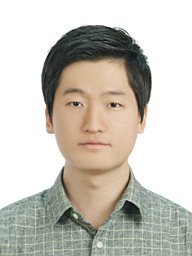
 Tae-Ho Kim
· 7 previous affiliations
- Nota Inc.Since 2020
- CTO · Since 2020
- NOTA IncorporatedSince 2020
- CTO & Co-Founder · Since 2020
- CEO & Co-Founder · 2015–2017
- Researcher · 2017–2020
- MS student · 2013–2015
- Research Intern · 2011–2012
- KAIST Institute for Artificial Intelligence2017–2020
- Senior Research Scientist · 2017–2020
- Bain & Company2012
- Research Assistant · 2012
- Research intern
- Research Intern
Research Overview
Tae-Ho Kim focuses on efficient machine learning, model compression, and the deployment of large-scale models on resource-constrained edge devices. His trajectory spans neural network quantization, structural pruning for large language models, and optimized vision-language architectures. Recent work investigates advanced quantization techniques for mixture-of-experts models and zero-shot visual reasoning in industrial applications.
Research Trajectory
Early work involved optimizing neural networks for strict hardware constraints. In 2021, he contributed to Uniform-Precision Neural Network Quantization via Neural Channel Expansion, addressing the challenge that uniform-precision quantization often ignores heterogeneous sensitivity across different network layers. The research proposed a neural architecture search method to selectively expand channels in quantization-sensitive layers, balancing inference accuracy with hardware limitations such as FLOP constraints.
By 2023, his focus expanded to accelerating foundational computer vision models. He directed the development of MobileSAMv2: Faster Segment Anything to Everything, which significantly sped up the mask decoding stage of the Segment Anything Model. By replacing exhaustive grid-search prompts with object-aware bounding boxes generated by a lightweight detector, the approach achieved a 16x speedup while improving zero-shot object proposal performance. This work advanced several research areas, including Bounding Box Priors for Robust Interactive Segmentation, Sparse Region Proposals for Efficient Object Detection, and Class Agnostic Localization for Open World Object Detection.
In 2024, he continued to push the boundaries of on-device machine learning. He led EdgeFusion: On-Device Text-to-Image Generation, combining compact model architectures with advanced distillation techniques and synthetic training data to achieve high-quality, sub-second image generation on mobile Neural Processing Units. This research contributed to the broader direction of Tensor Tiling for Memory Constrained Edge Accelerators. Concurrently, he participated in research on large language model efficiency with Shortened LLaMA: A Simple Depth Pruning for Large Language Models. This study demonstrated that depth pruning—removing entire transformer blocks—is highly effective for memory-constrained inference. By combining one-shot pruning with continued pretraining, the models achieved up to 80% compression, aligning with work in the areas of Understanding the Performance Cliff in Model Pruning and Structured Pruning for Hardware Aligned Model Compression.
The following year, he co-developed UniForm: A Reuse Attention Mechanism for Efficient Transformers on Resource-Constrained Edge Devices, introducing an architecture that consolidates attention computations across multiple heads into a single shared matrix to minimize memory overhead. He also guided Efficient LLaMA-3.2-Vision by Trimming Cross-attended Visual Features, which identified and pruned redundant visual features based on attention patterns to reduce KV cache size and inference latency in large vision-language models.
In 2026, his research addressed the complexities of quantizing Mixture-of-Experts (MoE) architectures. He led the development of DREAM-MoE: Downstream Routing Error-Aware Margin-Preserving Quantization for Mixture-of-Experts Large Language Models, introducing a calibration objective to prevent "expert-shift"—a failure mode where compressed models select incorrect neural network experts. The method maintained the relative ranking of experts during 3-bit and 4-bit quantization by accounting for how errors propagate through routing decisions. He further refined MoE quantization with SRA-MoE: Output-Aware Selective Router Alignment for MoE Quantization, a method that prioritizes aligning routing decisions for tokens that most significantly impact the model's final output. Alongside these architectural optimizations, he explored zero-shot applications in specialized domains, directing Diverse Knowledge Selection for Enhanced Zero-shot Visual Question Answering and Zero-Shot Industrial Anomaly Segmentation with Image-Aware Prompt Generation. The latter dynamically generated context-aware prompts using image tagging and large language models to improve anomaly detection across diverse industrial scenarios.
Current Directions
Recent work investigates the intersection of extreme model compression and complex architectural paradigms, particularly focusing on Mixture-of-Experts (MoE) large language models. A primary challenge in this domain is maintaining accurate routing decisions when models are quantized to low bit-widths; current efforts address this by developing calibration objectives that preserve expert rankings and prioritize high-impact tokens. Additionally, ongoing research explores the efficient deployment of large vision-language models. This involves designing mechanisms to prune redundant visual features in cross-attention layers and developing dynamic, image-aware prompting strategies to enable robust zero-shot reasoning in specialized applications, such as industrial anomaly detection and visual question answering.
Profile updated
Loading new papers…
Other researchers whose papers cluster into the same research directions — a proxy for overlapping technical interests and shared intellectual neighborhoods.
See something wrong? Report a mistake