

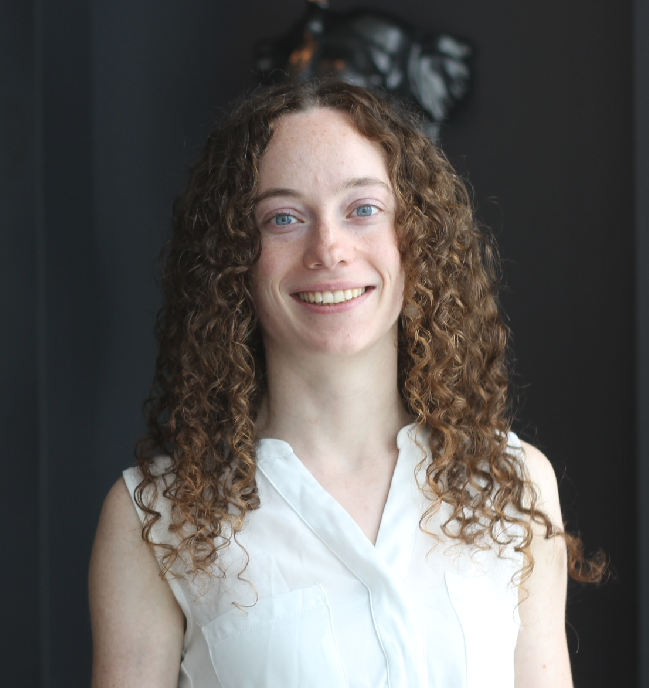
 Syrielle Montariol
· 7 previous affiliations
- Sorbonne UniversitéSince 2026
- Researcher · Since 2026
- Postdoc · 2025–2026
- Postdoc · 2023–2025
- Postdoc · 2021–2022
- Université Paris-Sud2018–2021
- PhD student · 2018–2021
- PhD student · 2018–2021
- MS student · 2014–2017
Research Overview
Syrielle Montariol focuses on natural language processing, vision-language modeling, and computational models of semantic change. Her early work explored how word meanings evolve over time using contextualized embeddings and historical text data. More recently, she investigates multimodal reasoning, commonsense anomaly detection, and the development of interpretable models for complex visual and causal environments.
Research Trajectory
Montariol's early research investigated temporal variations in language, focusing on how word meanings evolve across different contexts and time periods. She explored methods to build time-varying representations from historical text data, beginning with an Empirical Study of Diachronic Word Embeddings for Scarce Data. This foundational work culminated in her thesis, Models of diachronic semantic change using word embeddings., which proposed approaches to extract and aggregate contextualized representations using pre-trained language models like BERT to quantify semantic shifts. During this period, she also expanded these techniques to cross-lingual settings in Measure and Evaluation of Semantic Divergence across Two Languages and applied optimal transport methods in Transport Optimal pour le Changement Sémantique à partir de Plongements Contextualisés. To improve the efficiency and clarity of these models, she developed Scalable and Interpretable Semantic Change Detection, contributing to research directions such as contextualized and multi-prototype word representations and measuring semantic evolution beyond frequency trends.
Following her work on semantic change, Montariol broadened her focus to include low-resource natural language processing and complex reasoning tasks. In Effectiveness of Data Augmentation and Pretraining for Improving Neural Headline Generation in Low-Resource Settings, she evaluated multilingual encoder-decoder models against composite architectures. This work demonstrated the resilience of out-of-the-box models in low-data regimes and introduced new semantic evaluation metrics to complement standard ROUGE scores. Her interest in reasoning led to the development of CRAB: Assessing the Strength of Causal Relationships Between Real-world Events, a benchmark designed to test how well large language models navigate non-binary causal networks. The study highlighted that while models are improving, they still struggle with complex structures like colliders and confounders, often hallucinating stronger causal links than humans perceive.
More recently, her trajectory has shifted toward multimodal architectures and vision-language models. She introduced ConVQG: Contrastive Visual Question Generation with Multimodal Guidance, a framework utilizing a dual contrastive objective to ensure generated questions are deeply grounded in both visual and textual constraints, thereby avoiding generic image-only or text-only shortcuts. In the domain of remote sensing, she collaborated on Checkmate: interpretable and explainable RSVQA is the endgame, a two-stage model that prioritizes transparency by grounding answers in specific image regions. Alongside the model, this work introduced a massive dataset designed to eliminate shortcut learning biases, directly contributing to the area of Coordinate Anchored Reasoning for Multimodal Models.
Continuing her investigation into the limitations of multimodal models, she developed CAVE: Detecting and Explaining Commonsense Anomalies in Visual Environments, a benchmark revealing that state-of-the-art models struggle to perceive subtle commonsense violations in real-world images. Returning to low-resource settings with a focus on in-context learning, she presented PICLe: Pseudo-annotations for In-Context Learning in Low-Resource Named Entity Detection, a framework where language models self-generate and verify training demonstrations to outperform standard few-shot methods. Finally, her collaborative work on DynaVieW: Schema-Guided World Modeling for Understanding Hierarchical Visual Dynamics addresses physical consistency in video world models by learning interleaved sequences of images and structured JSON schema descriptions to master visual dynamics.
Current Directions
The most recent papers in the evidence indicate a strong focus on enhancing the reasoning capabilities, interpretability, and robustness of vision-language models. Recent work investigates how multimodal systems process complex visual environments, from detecting subtle commonsense violations in real-world images to grounding answers in specific regions of remote sensing data. Additionally, current research addresses the physical consistency of video world models by integrating hierarchical, schema-guided text descriptions with visual states. Alongside these multimodal efforts, there is an ongoing interest in optimizing large language models for low-resource scenarios, particularly through self-generated pseudo-annotations that stabilize in-context learning dynamics.
Profile updated
Loading new papers…
Other researchers whose papers cluster into the same research directions — a proxy for overlapping technical interests and shared intellectual neighborhoods.
See something wrong? Report a mistake