

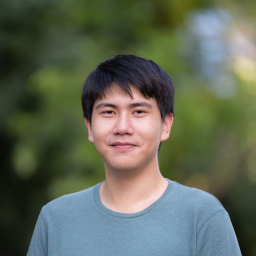
 Suwei Yang
· 2 previous affiliations
- Grab Holdings Inc.Since 2019
- PhD student · Since 2019
- National University of SingaporeSince 2019
- PhD student · Since 2019
Research Overview
Suwei Yang focuses on the intersection of machine learning, automated reasoning, and combinatorial search. Their work addresses the challenges of scalability in complex systems, ranging from environmental predictive modeling to the optimization of graph neural networks and the development of efficient sampling algorithms for formal methods. By leveraging structural properties within data and logical formulas, Yang’s research seeks to mitigate the computational costs associated with high-dimensional state spaces and large-scale graph structures.
Research Trajectory
Yang’s early research involved the application of machine learning to environmental challenges, specifically focusing on predictive modeling in data-scarce environments. In Predicting Forest Fire Using Remote Sensing Data And Machine Learning, Yang developed a cost-effective approach to forest fire prediction in Southeast Asia. This work addressed the limitations of traditional systems, such as the Canadian Forest Fire Danger Rating System, which rely on expensive ground-based instrumentation. By utilizing remote sensing data, Yang demonstrated how machine learning could provide a scalable alternative for developing countries, focusing on the identification of peatland fire risks through satellite-derived features.
In 2022, Yang’s focus shifted toward the structural optimization of deep learning models and the scalability of sampling techniques. This period marked a transition from applied environmental modeling to more fundamental algorithmic contributions in graph theory and formal methods. In the domain of graph representation learning, Yang contributed to the development of Deep network Dynamic Graph Partitioning (DDGP) in Dynamic Graph Segmentation for Deep Graph Neural Networks. This research addressed the problem of spatial concept drift in large-scale graphs, where different regions of a graph exhibit varying distributions that can degrade the performance of a single global model. By partitioning graphs into subgraphs where vertices share similar distributions, the work enabled the training of expert networks that collectively improve learning outcomes on complex, non-homogeneous datasets.
Simultaneously, Yang addressed scalability in the context of formal methods and automated reasoning. In INC: A Scalable Incremental Weighted Sampler, Yang introduced a novel approach to weighted sampling. This work is situated within the broader challenge of navigating large combinatorial spaces, providing a method to sample from weighted distributions more efficiently than previous incremental approaches. This contribution laid the groundwork for Yang’s subsequent focus on the "state-space explosion" problem that characterizes modern automated reasoning and formal verification.
Current Directions
Yang’s recent research directions are increasingly centered on the structural properties of combinatorial problems and the efficiency of symbolic representations. A primary theme in this current work is Structural Caching for Scaling Combinatorial Search. This area of inquiry addresses the exponential growth of possible configurations in problems such as SAT solving, robot path planning, and database query optimization. Yang explores how recurring structural symmetries in real-world problems can be exploited through caching mechanisms to prevent redundant computations and manage the state-space explosion.
Closely related to this is the investigation of Structure Preserving Logical Inference. Standard automated reasoning systems often require the conversion of complex, hierarchical logical formulas into Conjunctive Normal Form (CNF). Yang’s work considers the "tax" imposed by this conversion, which often flattens and obscures the inherent structure of the original problem. By focusing on non-clausal reasoning, Yang seeks to develop solvers that maintain and utilize the hierarchical nature of logical formulas to improve efficiency and interpretability.
Furthermore, Yang is engaged with Compressing State Spaces with Binary Decision Diagrams. This direction is critical for fields such as formal verification and reactive synthesis, where explicit state-tracking methods quickly exhaust available memory. By utilizing decision diagrams, Yang’s research aims to represent and manipulate vast state spaces symbolically, allowing for the verification of systems that would otherwise be computationally intractable. This trajectory reflects a consistent move toward more abstract and structurally-aware methods for managing complexity in both machine learning and symbolic logic.
Representative Work
- Predicting Forest Fire Using Remote Sensing Data And Machine Learning (2021): Establishes a machine-learning framework for environmental risk assessment using remote sensing, prioritizing cost-effectiveness and scalability in developing regions.
- Dynamic Graph Segmentation for Deep Graph Neural Networks (2022): Proposes a partitioning algorithm to mitigate spatial concept drift in large graphs, facilitating the use of mixture-of-expert models for improved GNN performance.
- INC: A Scalable Incremental Weighted Sampler (2022): Introduces an incremental algorithm for weighted sampling, addressing scalability issues in formal methods and combinatorial analysis.
Profile updated
Loading new papers…
Other researchers whose papers cluster into the same research directions — a proxy for overlapping technical interests and shared intellectual neighborhoods.
See something wrong? Report a mistake