

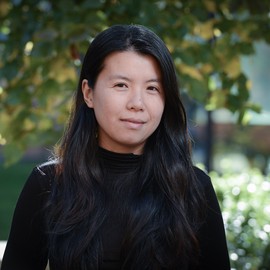
 Susan Wei
· 5 previous affiliations
- Monash UniversitySince 2024
- Associate Professor · Since 2024
- The University of Melbourne2018–2024
- Assistant Professor · 2018–2024
- University of Minnesota2016–2018
- Assistant Professor · 2016–2018
- Postdoc · 2014–2016
- PhD student · 2009–2014
Research Overview
Susan Wei focuses on statistical machine learning, with particular emphasis on Bayesian deep learning, variational inference, and singular learning theory. Her trajectory bridges foundational statistical mechanics and modern neural network generalization, demonstrating how the geometric singularities of loss landscapes govern model behavior. Her most recent work investigates probabilistic interpretability, AI alignment, and uncertainty quantification using tabular foundation models.
Research Trajectory
Early in her observed trajectory, Wei explored the fundamental trade-offs between fairness and accuracy in machine learning models. In The fairness-accuracy Pareto front, she and her collaborators utilized multi-objective optimization—specifically the Chebyshev scalarization scheme—to map optimal trade-offs rather than relying on single-metric compromises. This methodology provided a more comprehensive framework for practitioners to explore and select classifiers that satisfy both ethical constraints and performance requirements. This work contributed to the research direction of Navigating Non-Convex Pareto Fronts Beyond Linear Scalarization and the broader area of Causal Frameworks for Algorithmic Fairness.
Following this, her focus shifted deeply into the mathematical foundations of deep learning, specifically through the lens of Singular Learning Theory (SLT). Classical statistical tools often fail for neural networks because their parameter spaces contain geometric singularities, rendering standard approximations invalid. She articulated this paradigm shift in Deep Learning Is Singular, and That's Good (and its subsequent version Deep Learning Is Singular, and That's Good), arguing that the Real Log Canonical Threshold (RLCT) serves as a rigorous measure of a model's effective complexity and explains the generalization capabilities of "flat" minima. This foundational argument advanced the research direction of Singular Learning Theory and Neural Phase Transitions and the area of The Information Geometry of Singular Learning Machines.
Building on SLT, she addressed the practical challenges of Bayesian Neural Networks (BNNs). Because BNNs are singular models, traditional variational inference struggles to approximate their complex, non-Gaussian posteriors. In a series of manuscripts culminating in formal publication—including Variational Bayesian Neural Networks via Resolution of Singularities, an expanded preprint Variational Bayesian Neural Networks via Resolution of Singularities, and the final journal article Variational Bayesian Neural Networks via Resolution of Singularities—she designed a new class of normalizing flows utilizing a generalized gamma base distribution. This approach directly incorporated the asymptotic forms of singular posteriors. This theoretical correction to the variational objective resolved long-standing discrepancies between downstream predictive performance and traditional variational bounds, significantly contributing to the research direction of Singular Learning Theory for Neural Network Generalization.
To make these theoretical insights practically measurable, she and her colleagues formalized novel complexity metrics. In Quantifying degeneracy in singular models via the learning coefficient, she introduced the Local Learning Coefficient (LLC) to capture the degeneracy of loss landscapes. By recognizing that traditional complexity measures fail to account for the geometric singularities inherent in deep learning, the LLC offers a more accurate reflection of a model's true capacity. This work was later refined and presented as The Local Learning Coefficient: A Singularity-Aware Complexity Measure, which provided a scalable estimator for the LLC applicable to architectures ranging from deep linear networks to large transformer models.
Continuing her work in Bayesian Deep Learning, she investigated the "Cold Posterior Effect" (CPE), a phenomenon where tempering the posterior improves predictive performance despite contradicting standard Bayesian theory. In Temperature Optimization for Bayesian Deep Learning (and its companion preprint Temperature Optimization for Bayesian Deep Learning), she proposed a data-driven approach to systematically estimate the optimal temperature directly from data, maximizing test log-predictive density. By treating the temperature as a model parameter to be learned rather than a hyperparameter to be tuned via grid search, this research offered a systematic resolution to one of the most persistent heuristic practices in the field.
Most recently, her trajectory has expanded into AI alignment and tabular foundation models. She participated in a position paper on AI safety, You Are What You Eat - AI Alignment Requires Understanding How Data Shapes Structure and Generalisation, which argued for transitioning alignment from empirical trial-and-error to a rigorous discipline grounded in how data shapes internal model logic. In parallel, she advanced uncertainty quantification for tabular data in TabMGP: Martingale Posterior with TabPFN. This work leveraged the TabPFN foundation model as an engine for Martingale Posteriors, providing principled epistemic uncertainty estimates without requiring complex priors or likelihood specifications.
Current Directions
The most recent papers in the evidence indicate a dual focus on the rigorous foundations of AI alignment and the advancement of probabilistic inference using foundation models. Work in 2025 and 2026 investigates how the mathematical structure of training data shapes the internal logic and generalization capabilities of neural networks, framing AI safety as an engineering discipline rather than an empirical exercise. Concurrently, recent research addresses uncertainty quantification in tabular domains, exploring how transformer-based foundation models can be integrated with Martingale Posteriors. This approach yields robust, Bayesian-style epistemic uncertainty estimates for interpretable parameters without the need for traditional likelihood specifications.
Profile updated
Loading new papers…
Other researchers whose papers cluster into the same research directions — a proxy for overlapping technical interests and shared intellectual neighborhoods.
See something wrong? Report a mistake