

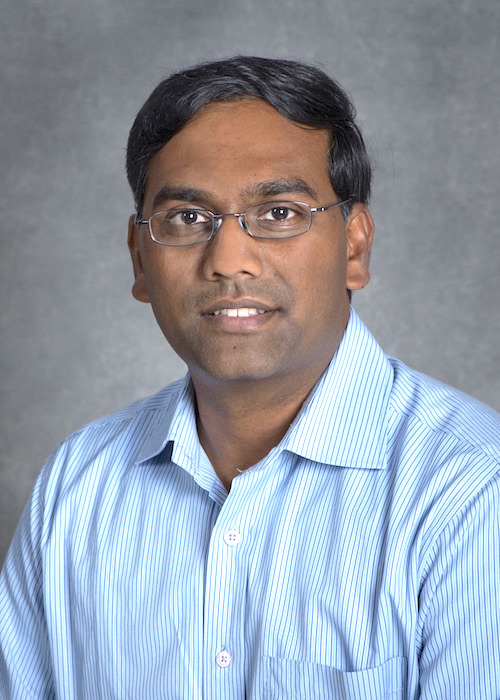
 Suren Byna
· 4 previous affiliations
- The Ohio State UniversitySince 2023
- Full Professor · Since 2023
- Current
- Lawrence Berkeley National LaboratorySince 2010
- Visiting Faculty · Since 2023
- Senior Computer Scientist · 2022–2023
- Computer Scientist · 2010–2022
- NEC (United States)2009–2010
- Researcher · 2009–2010
- Illinois Institute of Technology2007–2009
- Research Assistant Professor · 2007–2009
Research Overview
Suren Byna focuses on high-performance computing, parallel I/O optimization, and large-scale storage systems. His trajectory spans early collaborative work on auto-tuning frameworks for complex I/O stacks to extensive empirical characterizations of data access patterns in production supercomputers. Recent work investigates the performance behaviors and reliability challenges of multi-layer storage subsystems under production loads.
Research Trajectory
In the early 2010s, Byna participated in collaborative efforts to optimize parallel I/O performance for large-scale scientific applications. The modern parallel I/O stack—comprising layers such as HDF5, MPI-IO, and Lustre—features complex inter-dependencies that often lead users to rely on sub-optimal default settings, resulting in poor bandwidth. Byna contributed to the development of benchmark-guided auto-tuning systems designed to navigate this vast parameter search space. For example, in A framework for auto-tuning HDF5 applications, the research team introduced a framework utilizing genetic algorithms to transparently adjust I/O parameters, significantly improving throughput without requiring application recompilation or code modification.
By the mid-2010s, this focus expanded to address the mismatch between write and read patterns in massive scientific simulations. As data volumes grew, static data layouts became a bottleneck for analytic applications. Byna took a leading role in designing dynamic strategies for data access. As the second author of Usage Pattern-Driven Dynamic Data Layout Reorganization, he helped propose a framework that dynamically recognizes data usage patterns and replicates data of interest across multiple optimized layouts, thereby improving read performance for downstream analytics. During this period, he also collaborated on extending user-defined functions for multi-dimensional scientific data, participating in the design of ArrayUDF: User-Defined Scientific Data Analysis on Arrays to facilitate complex operations—such as computing moving averages and fluid flow vorticity—directly on structural arrays.
Moving into the late 2010s and early 2020s, Byna's trajectory shifted toward large-scale empirical characterizations of production storage systems. As high-performance computing platforms evolved, understanding actual I/O behavior in the wild became critical for designing next-generation architectures. Byna was a primary contributor to this empirical work. In Revisiting I/O behavior in large-scale storage systems: the expected and the unexpected, he and his colleagues analyzed a year's worth of telemetry from a production parallel storage system, uncovering spatial and temporal patterns that challenged existing assumptions about HPC workloads. He continued this line of inquiry as the second author of Uncovering Access, Reuse, and Sharing Characteristics of I/O-Intensive Files on Large-Scale Production HPC Systems, further detailing how scientific applications interact with underlying storage infrastructure at scale.
Current Directions
The most recent papers in the evidence, spanning 2021 and 2022, indicate a continued focus on the complexities of modern supercomputer storage, particularly regarding reliability and multi-tier architectures. Recent collaborative work investigates the access patterns and performance behaviors of multi-layer I/O subsystems operating under heavy production loads.
Additionally, as HPC platforms increasingly adopt solid-state drives (SSDs) to meet the massive data demands of scientific simulations and artificial intelligence models, Byna has participated in research examining the impact of storage faults. This includes developing methodologies to understand how complex HPC applications behave when subjected to SSD-related failures and data corruption, aiming to ensure the resilience and reliability of next-generation high-performance computing infrastructures.
Profile updated
Loading new papers…
Other researchers whose papers cluster into the same research directions — a proxy for overlapping technical interests and shared intellectual neighborhoods.
See something wrong? Report a mistake