

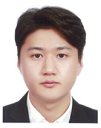
 Sunjae Yoon
· 4 previous affiliations
- ChungAng UniversitySince 2026
- Assistant Professor · Since 2026
- 중앙대학교Since 2026
- 조교수 · Since 2026
- Postdoctoral Research Scientist · 2025–2026
- Doctor of Philosophy - PhD, Electrical Engineering · 2021–2025
- Postdoc · 2025
- Master of Science - MS, Electrical Engineering · 2019–2021
- Undergrad student · 2015–2019
Research Overview
Sunjae Yoon focuses on visual generative AI and multimodal reasoning, developing systems that synthesize and understand complex visual environments. His trajectory spans early work in video-language alignment and moment retrieval to recent advancements in diffusion models and 3D scene generation. Currently, he investigates physical AI and vision-language frameworks to bridge generative capabilities with real-world cognitive reasoning.
Research Trajectory
Yoon’s early research concentrated on bridging the semantic gap between natural language and untrimmed video content. In 2020, he introduced VLANet: Video-Language Alignment Network for Weakly-Supervised Video Moment Retrieval, a framework that localizes specific video segments from text queries without relying on expensive frame-level annotations. By pruning irrelevant proposals and employing a cascaded attention mechanism, this work advanced the area of Weakly Supervised Temporal Action Localization. He expanded on multimodal reasoning with Structured Co-reference Graph Attention for Video-grounded Dialogue (2021), which explicitly resolved pronoun references across text and video modalities to improve spatio-temporal reasoning in dialogue systems. Continuing his focus on retrieval, he developed Selective Query-Guided Debiasing for Video Corpus Moment Retrieval (2022). This work addressed spurious correlations between frequent objects and specific actions, contributing to the broader area of Video Corpus Moment Retrieval by forcing models to learn genuine multi-modal interactions rather than relying on dataset biases.
In 2024, Yoon’s methodological scope broadened to include frequency-domain analysis and generative modeling. Applying his expertise in temporal data to new domains, he proposed Causal Localization Network for Radar Human Localization With Micro-Doppler Signature, which introduced a fine-grained task for temporally localizing human subjects using radar signals. Concurrently, he addressed the challenges of augmenting sensor data with SimPSI: A Simple Strategy to Preserve Spectral Information in Time Series Data Augmentation, a technique that maintains crucial signal integrity, advancing the research direction of Frequency Domain Augmentation for Time Series Learning.
This deep understanding of structural and frequency-based representations naturally extended into his work on diffusion models, particularly for complex image and video editing. To tackle the glitchy outputs often seen when animating human figures, he introduced TPC: Test-time Procrustes Calibration for Diffusion-based Human Image Animation (2024), a mathematical alignment method applied at inference time to improve visual fidelity and temporal consistency. He then tackled the difficult problem of altering an object's motion without disrupting the surrounding scene. With DNI: Dilutional Noise Initialization for Diffusion Video Editing (2024), he developed a framework that dilutes structural information in initial latent noise, making significant contributions to the area of Overcoming Structural Rigidity in Video Diffusion Editing. He further expanded this toolkit with FRAG: Frequency Adapting Group for Diffusion Video Editing (2024). In the domain of Non-Rigid Image Editing with Diffusion Models, he developed FlexiEdit: Frequency-Aware Latent Refinement for Enhanced Non-rigid Editing (2024). By selectively refining high-frequency components of latents, FlexiEdit enables dramatic pose or layout changes while preserving object identity, advancing the area of Structural Preservation via Attention Feature Injection.
Moving into 2025 and 2026, Yoon’s research has increasingly focused on 3D generation, zero-shot multimodal alignment, and model optimization. He addressed the flickering contours common in 2D-to-3D character translation with Occlusion-robust Stylization for Drawing-based 3D Animation (2025), utilizing flow-depth edge detection in a single-stage architecture. In the realm of 3D scene representation, he collaborated on GADA: Geometry-Aware Deformable Aggregation for Image-Based Gaussian Splatting (2026), which replaces rigid visibility heuristics with learnable offsets to recover sharp high-frequency details. Returning to his foundational interest in video retrieval, he co-developed GranAlign: Granularity-Aware Alignment Framework for Zero-shot Video Moment Retrieval (2026), a system that dynamically rewrites queries to resolve granularity mismatches between text and video without task-specific training. Finally, he contributed to Diffusion Negative Preference Optimization Made Simple (2026), streamlining the alignment of generative models with human preferences by using a single-network architecture to halve computational costs.
Current Directions
Recent work investigates the intersection of high-fidelity 3D generation, efficient multimodal alignment, and generative model optimization. The most recent papers in the evidence address the refinement of 3D Gaussian Splatting through geometry-aware aggregation, enabling sharper high-frequency details and faster rendering in generated scenes. Concurrently, his research explores zero-shot frameworks for video moment retrieval that resolve semantic and granularity mismatches between text and video modalities. Another active direction involves streamlining preference optimization for diffusion models, focusing on single-network architectures that align generative outputs with human preferences and safety guidelines while significantly reducing computational overhead.
Profile updated
Loading new papers…
Other researchers whose papers cluster into the same research directions — a proxy for overlapping technical interests and shared intellectual neighborhoods.
See something wrong? Report a mistake