

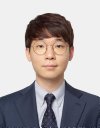
 Sungyong Baik
· 3 previous affiliations
- Hanyang UniversitySince 2022
- Assistant Professor · Since 2022
- Seoul National University2015–2022
- PhD student · 2017–2022
- MS student · 2015–2017
- University of Toronto2010–2015
- Undergrad student · 2010–2015
Research Overview
Sungyong Baik focuses on meta-learning, few-shot generalization, and robust image restoration. His early work developed adaptive architectures for visual tracking and domain adaptation, later expanding into task-adaptive optimization for model-agnostic meta-learning. His current research investigates test-time adaptation, generative priors for dense prediction tasks, and techniques for mitigating parameter interference during model merging.
Research Trajectory
Baik's early research addressed the challenge of adapting visual models to dynamic environments with limited data. He introduced a memory-augmented convolutional recurrent neural network in Learning to Remember Past to Predict Future for Visual Tracking (2019), which modeled the temporal evolution of appearance features to enable fast adaptability without online training. Expanding this focus to changing environmental conditions, he developed a few-shot domain adaptation framework in Domain Adaptation of Learned Features for Visual Localization (2020). This work bridged the domain gap using minimal target examples, contributing to the broader area of Addressing Overfitting in Few-Shot Learning.
A significant portion of Baik's subsequent work investigated model-agnostic meta-learning (MAML) to improve how networks generalize from sparse data. In Meta-Learning with Task-Adaptive Loss Function for Few-Shot Learning (2021), he proposed tailoring auxiliary loss functions to distinct tasks rather than relying on a uniform loss. He further refined MAML in Learning to Forget for Meta-Learning via Task-and-Layer-Wise Attenuation (2022), addressing the conflicts that arise when tasks are forced to share a common initialization by selectively attenuating prior knowledge.
Concurrently, Baik explored efficiency and adaptability in low-level vision tasks. He addressed the research direction of The Perception-Distortion Tradeoff by introducing a neural architecture search method in Searching for Controllable Image Restoration Networks (2021), which shared early layers across tasks to drastically reduce computational costs for 4K image processing. With collaborators, he also investigated adaptive video frame interpolation in Test-Time Adaptation for Video Frame Interpolation via Meta-Learning (2022), utilizing test-time information to handle diverse motion scenarios. In the domain of network compression, he participated in developing a filter pruning technique based on batch normalization parameters in Batch Normalization Tells You Which Filter is Important (2022), a method that intersects with the broader area of Out-of-Distribution Detection via Batch Normalization Statistics.
In 2023, Baik's research incorporated generative frameworks, specifically Normalizing Flows, to handle complex visual distributions. He co-authored SANFlow: Semantic-Aware Normalizing Flow for Anomaly Detection, which mapped image features to location-specific distributions based on local semantic complexity to better separate anomalies in the latent space. He also contributed to Learning Controllable Degradation for Real-World Super-Resolution via Constrained Flows, introducing a framework to synthesize realistic low-resolution images with non-linear artifacts. This approach improved super-resolution models on real-world photos, advancing work in areas such as Low Frequency Anchoring for Image Restoration and Synthesis.
Returning to few-shot paradigms in 2024, Baik addressed class-incremental learning in CLOSER: Towards Better Representation Learning for Few-Shot Class-Incremental Learning, focusing on balancing the transferability and discriminability of learned representations to prevent catastrophic forgetting. He also continued his optimization of MAML by designing a task-adaptive weight update rule in Learning to Learn Task-Adaptive Hyperparameters for Few-Shot Learning. In parallel, he led research in the direction of Test-Time Adaptation for Robust Inference with LAN: Learning to Adapt Noise for Image Denoising. Rather than updating the denoising network's parameters, this work proposed adapting the input noise itself to handle unseen noise distributions, contributing to the area of Generalizing Image Restoration Across Diverse Sensor Noise Profiles.
Current Directions
The most recent papers in the evidence indicate a shift toward leveraging large-scale generative models and optimizing model integration. Recent work investigates the use of text-to-image diffusion models for dense prediction tasks, specifically exploring how to generate pixel-level annotation masks for semantic segmentation without requiring manual human effort or extensive prompt tuning, as detailed in SeeDiff: Off-the-Shelf Seeded Mask Generation from Diffusion Models (2025). Additionally, Baik is addressing the challenges of model merging, focusing on techniques like sharpness-aware fine-tuning to mitigate parameter interference when combining multiple trained networks in Mitigating Parameter Interference in Model Merging via Sharpness-Aware Fine-Tuning (2025).
Profile updated
Loading new papers…
Other researchers whose papers cluster into the same research directions — a proxy for overlapping technical interests and shared intellectual neighborhoods.
See something wrong? Report a mistake