

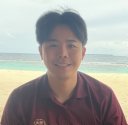
 Sungmin Cha
· 12 previous affiliations
- Meta (United States)Since 2026
- Research Scientist · Since 2026
- New York University2023–2025
- Faculty Fellow · 2023–2025
- Assistant Professor/Faculty Fellow · 2023–2025
- Mind Lab2016–2023
- Research Assistant · 2016–2023
- Seoul National University2021–2023
- PhD student · 2021–2023
- LG AI Research (South Korea)2021–2022
- Intern · 2021–2022
- NAVER Cloud (South Korea)2020–2021
- Research Internship · 2020–2021
- Naver (South Korea)2020–2021
- Intern · 2020–2021
- Sungkyunkwan University2018–2021
- PhD student · 2018–2021
- Visiting scholar · 2020
- MS student · 2016–2018
- Pukyong National University2009–2016
- Undergrad student · 2009–2016
Research Overview
Sungmin Cha focuses on continual learning, machine unlearning, and efficient post-training strategies for large language and generative models. His trajectory spans from early work in image denoising and class-incremental learning to developing cost-efficient algorithms that enable neural networks to adapt sequentially without catastrophic forgetting. Currently, he investigates parameter-efficient unlearning and the interplay between alignment and distillation in foundational models.
Research Trajectory
His early research addressed image denoising and self-supervised learning. He introduced an adaptive fine-tuning approach for offline supervised models in Fully Convolutional Pixel Adaptive Image Denoiser. Building on this, he developed GAN2GAN: Generative Noise Learning for Blind Denoising with Single Noisy Images, a method that learns to simulate noise and refine denoising estimates without prior knowledge of noise characteristics.
Transitioning into continual learning, he sought to mitigate catastrophic forgetting in neural networks. He proposed CPR: Classifier-Projection Regularization for Continual Learning, which utilizes entropy maximization to project a classifier's output probability toward a uniform distribution. Addressing the specific challenges of class-incremental semantic segmentation, he developed SSUL: Semantic Segmentation with Unknown Label for Exemplar-based Class-Incremental Learning to model unknown classes and reduce semantic drift, contributing to the broader area of Balancing Backbone Plasticity and Classifier Alignment in Continual Learning. He further refined exemplar-based methods by investigating the biases introduced by mini-batch imbalances in Rebalancing Batch Normalization for Exemplar-Based Class-Incremental Learning.
Expanding his focus to model privacy and data protection, he engaged with the research direction of Machine Unlearning via Gradient Ascent. He introduced Learning to Unlearn: Instance-Wise Unlearning for Pre-trained Classifiers, a robust method for deleting information from pre-trained models while maintaining predictive performance on remaining data. Concurrently, he advanced self-supervised approaches with Regularizing with Pseudo-Negatives for Continual Self-Supervised Learning.
In recent years, his work has increasingly focused on the evaluation, efficiency, and post-training lifecycle of large language models (LLMs) and generative models. Critiquing standard evaluation protocols, he investigated the area of Over-tuning in Automated Machine Learning through Hyperparameters in Continual Learning: A Reality Check, demonstrating that conventional hyperparameter tuning often overestimates algorithmic capacity. He applied a similar critical lens to unlearning metrics, overseeing Reference-Specific Unlearning Metrics Can Hide the Truth: A Reality Check, which proposed Functional Alignment for Distributional Equivalence (FADE) to better assess whether a model has truly forgotten targeted information.
To make unlearning scalable for foundational models, he developed the LoKU framework in Towards Robust and Parameter-Efficient Knowledge Unlearning for LLMs. This work advanced several research directions, including Parameter Efficient Machine Unlearning for Large Models, Preserving Model Utility During Machine Unlearning, and Continual Unlearning for Large Language and Generative Models. He also explored the fundamental mechanics of generative model compression in Why Knowledge Distillation Works in Generative Models: A Minimal Working Explanation, framing distillation as a strategic trade-off between precision and recall.
Now a Research Scientist at Meta Superintelligence Labs, his most recent trajectory addresses the intersection of alignment, distillation, and real-time adaptation. He demonstrated that preference alignment must precede distillation to avoid a mathematical "low-recall trap" in Why Alignment Must Precede Distillation: A Minimal Working Explanation. Returning to continual learning, he guided a paradigm shift in Forget Forgetting: Continual Learning in a World of Abundant Memory alongside Cost-Efficient Continual Learning with Sufficient Exemplar Memory. This work argues that when storage is plentiful, the primary bottleneck shifts from stability (forgetting) to plasticity (learning new tasks), introducing Weight Space Consolidation to restore plasticity. Finally, he collaborated on benchmarking the limits of LLM adaptation to dynamic facts in Can Large Language Models Keep Up? Benchmarking Online Adaptation to Continual Knowledge Streams.
Current Directions
The most recent papers in the evidence investigate the post-training lifecycle of Large Language Models, specifically the interplay between alignment, distillation, and continuous adaptation. Recent work addresses the structural ordering of model optimization, proving that aligning models before distilling them prevents the loss of rare behaviors. Another major theme is the re-evaluation of continual learning under modern hardware constraints; rather than focusing solely on preventing catastrophic forgetting, current research emphasizes maintaining model plasticity in environments where memory is abundant but computational efficiency is critical. Additionally, parameter-efficient unlearning remains a core focus, ensuring that large-scale models can selectively erase sensitive or outdated information without degrading their general reasoning and generative capabilities.
Profile updated
Loading new papers…
Other researchers whose papers cluster into the same research directions — a proxy for overlapping technical interests and shared intellectual neighborhoods.
See something wrong? Report a mistake