

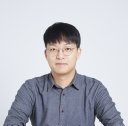
 Sungjoon Park
· 8 previous affiliations
- 강남언니 팀Since 2025
- AI Applied Scientist · Since 2025
- 한국자살예방협회Since 2026
- AI전략위원회 · Since 2026
- Kyung Hee UniversitySince 2026
- 객원교수 · Since 2026
- 국가인공지능전략위원회Since 2025
- Advisory Member · Since 2025
- SoftlyAI2022–2025
- CEO · 2022–2025
- Doctor of Philosophy - PhD, Computer Science · 2016–2022
- UpStage (South Korea)2020–2021
- Research Engineer · 2020–2021
- Seoul National University2012–2014
- Master's degree, Psychometrics, Quantitative Psychology · 2012–2014
1 other author named Sungjoon Park: Sungjoon Park (LG AI Research (South Korea) · 3 papers)
Research Overview
Sungjoon Park focuses on natural language processing, with an emphasis on language modeling for Korean, dialogue systems for mental health counseling, and the analysis of online community dynamics. His trajectory spans foundational work in word vector representations and temporal event modeling to large-scale benchmark creation for non-English languages. Recently, his research addresses privacy-preserving mental health monitoring and the detection of norm violations in live-stream chats.
Research Trajectory
Park’s early research investigated the fundamental properties of word embeddings and their application to morphologically rich languages. He introduced Rotated Word Vector Representations and their Interpretability (2017), exploring techniques to make dense vector spaces more interpretable for downstream analysis. Building on this foundation, he addressed the specific linguistic structures of the Korean language in Subword-level Word Vector Representations for Korean (2018), demonstrating how subword modeling can better capture the morphological complexity of Korean text compared to traditional word-level approaches.
Concurrently, his research group explored the temporal dynamics of events and narratives. In Hierarchical Dirichlet Gaussian Marked Hawkes Process for Narrative Reconstruction in Continuous Time Domain (2018), he guided the development of probabilistic models capable of reconstructing narratives by treating events as self-exciting point processes. This work contributes to the research direction of Continuous Time Dynamics for Social Network Cascades and the broader area of Modeling Bursty Event Sequences with Hawkes Processes. By integrating hierarchical Dirichlet processes, the methodology also intersected with research areas such as Scalable Inference for Self-Exciting Temporal Point Processes and Nonparametric Inference of Latent Topic Counts.
Moving into applied dialogue modeling, Park investigated the structure of counseling interactions. His work on Conversation Model Fine-Tuning for Classifying Client Utterances in Counseling Dialogues (2019) advanced the research area of Specialized Dialogue Systems for Data Scarce Domains. By focusing on the unique conversational roles and dependencies inherent in therapist-client interactions, this research also informed the area of Asymmetric Participant Modeling for Structured Dialogue.
A major milestone in his trajectory is the development of comprehensive evaluation frameworks for non-English natural language understanding. Park spearheaded a large-scale collaborative effort to create KLUE: Korean Language Understanding Evaluation (2021). This benchmark introduced eight distinct tasks for Korean—including semantic textual similarity, named entity recognition, machine reading comprehension, and dialogue state tracking. Built entirely from scratch, the KLUE project emphasized strict attention to copyright compliance, diverse source corpora, and rigorous ethical protocols to mitigate risks in language model evaluation.
Current Directions
The most recent papers in the evidence address the application of natural language processing to user-generated content in specialized, high-stakes environments, specifically focusing on mental health and online safety.
One major focus is privacy-preserving mental health monitoring. With collaborators, Park participated in the development of FedTherapist: Mental Health Monitoring with User-Generated Linguistic Expressions on Smartphones via Federated Learning (2023). This research explores how continuous speech and keyboard inputs can be analyzed directly on mobile devices using federated learning. By keeping linguistic data on-device, the system overcomes the privacy limitations of traditional passive monitoring systems that rely on proxy features like app usage or location data.
Additionally, his recent work investigates the dynamics of toxicity in real-time online communities. He guided research on Analyzing Norm Violations in Live-Stream Chat (2023), which tackles the unique challenges of moderating platforms like Twitch and YouTube Live. Unlike traditional forum threads on platforms such as Reddit or Twitter, live-stream chats are ephemeral and lack a clear thread structure. This work focuses on developing NLP approaches capable of detecting hate speech and norm violations in these fast-paced, unstructured conversational environments.
Profile updated
Loading new papers…
Other researchers whose papers cluster into the same research directions — a proxy for overlapping technical interests and shared intellectual neighborhoods.
See something wrong? Report a mistake