

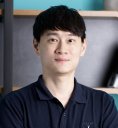
 Sung Whan Yoon
· 2 previous affiliations
- Associate Professor · Since 2020
- Current
- Postdoc · 2017–2020
- PhD student · 2013–2017
- MS student · 2011–2013
- Undergrad student · 2007–2011
Research Overview
Sung Whan Yoon focuses on machine learning and information theory, with specific emphasis on few-shot learning, model robustness, and distributed systems. His early work addressed error-correcting codes and distributed storage capacity before shifting toward task-adaptive neural network architectures. His current research investigates the theoretical foundations of generative models, machine unlearning, and federated learning in complex semantic environments.
Research Trajectory
Sung Whan Yoon’s early research focused on coding theory and the optimization of distributed storage systems. In 2015, he introduced Two-Dimensional Error-Pattern-Correcting Codes, presenting two-dimensional cyclic codes designed to correct known error patterns within bit arrays, with applications for storage and display devices. By 2019, his work expanded into the structural and security challenges of distributed networks. He participated in research on the capacity of clustered distributed storage systems, including Capacity of Clustered Distributed Storage. This work derived closed-form expressions for system capacity and analyzed resource trade-offs to minimize cross-cluster traffic, contributing to the broader area of Information Flow Graphs for Distributed Storage Repair. Alongside this, he collaborated on Secure Clustered Distributed Storage Against Eavesdropping, investigating the interplay between storage overhead, bandwidth requirements, and security constraints when storage nodes are dispersed across multiple clusters and subjected to eavesdropping.
Transitioning into machine learning, his focus shifted toward few-shot learning and the development of task-adaptive architectures. He developed TapNet: Neural Network Augmented with Task-Adaptive Projection for Few-Shot Learning, advancing the research direction of Task Aware Feature Adaptation for Few Shot Learning and the related area of Task-Adaptive Feature Representations for Few-Shot Learning. Expanding on these projection techniques, he introduced Task-Adaptive Clustering for Semi-Supervised Few-Shot Classification, a method that iteratively refines a task-specific projection space using unlabeled data to categorize new classes with minimal supervision. He also addressed the challenge of learning novel concepts without catastrophic forgetting in XtarNet: Learning to Extract Task-Adaptive Representation for Incremental Few-Shot Learning.
By 2024, his work on incremental learning evolved to emphasize consistent training strategies across different learning stages, as detailed in MICS: Midpoint Interpolation to Learn Compact and Separated Representations for Few-Shot Class-Incremental Learning. Concurrently, he explored decentralized and communication-efficient systems. His research group investigated complex data heterogeneity in federated learning through Benchmarking Federated Learning for Semantic Datasets: Federated Scene Graph Generation. Bridging computer vision and wireless communications, he proposed a task-adaptive framework in Transmit What You Need: Task-Adaptive Semantic Communications for Visual Information, which significantly reduces wireless data traffic by transmitting only the specific semantics required for downstream computer vision tasks. In the domain of signal processing, he also contributed to RiSi: Spectro-temporal RAN-agnostic Modulation Identification for OFDMA Signals, utilizing spectro-temporal analysis and flattened convolutions to identify modulation types in time-varying wireless communications.
His most recent trajectory emphasizes the theoretical foundations of model robustness, generative models, and machine unlearning. He provided a unified framework for understanding data augmentation in A Flat Minima Perspective on Understanding Augmentations and Model Robustness, proving that certain augmentations force models into flat minima to improve generalization bounds against distribution shifts. He extended this geometric analysis to diffusion models in Understanding Flatness in Generative Models: Its Role and Benefits, demonstrating that flatter loss landscapes reduce exposure bias and enhance robustness to model quantization.
Addressing vulnerabilities in unlearning systems, he co-authored Unlearning’s Blind Spots: Over‑Unlearning and Prototypical Relearning Attack. This work introduced the Spotter framework to ensure precise data removal without damaging retained data or leaving structural traces, contributing to the research direction of Preserving Model Utility During Machine Unlearning. Additionally, he explored the intersection of quantum computing and reinforcement learning in Quantum Robust Inner Minimization for Reinforcement Learning with Quadratic Speed-Up in Query Complexity, leveraging quantum superposition to accelerate the search for worst-case environmental scenarios in robust reinforcement learning environments.
Current Directions
Recent work investigates the theoretical properties of neural network loss landscapes, particularly the role of "flat minima" in ensuring model robustness and generalization. This research spans both discriminative models, where data augmentation strategies are analyzed for their impact on generalization bounds, and generative architectures like diffusion models, where flatness is shown to mitigate exposure bias and improve quantization robustness.
Additionally, current research addresses the security and precision of machine unlearning, developing frameworks to prevent accidental damage to retained data and defend against knowledge recovery attacks. Emerging directions also explore the intersection of quantum computing and reinforcement learning, utilizing quantum algorithms to achieve quadratic speed-ups in robust optimization for complex environments. Finally, ongoing work in distributed systems continues to refine federated learning benchmarks and semantic communication protocols for decentralized edge intelligence.
Profile updated
Loading new papers…
Other researchers whose papers cluster into the same research directions — a proxy for overlapping technical interests and shared intellectual neighborhoods.
See something wrong? Report a mistake